Sci-Fi

  • Rafael Portillo – La isla de los dinosaurios aka The Island of the Dinosaurs (1967)

    1961-1970AdventureMexicoRafael PortilloSci-Fi

    Image Hosted by ImageShack.us

    29f7c043f76a2bde437fd0d52a185152

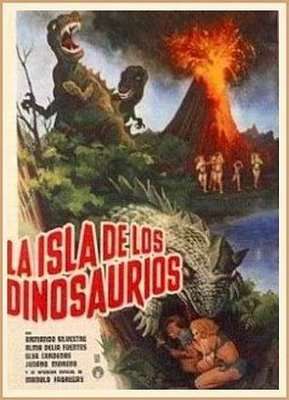
    A group of scientists in search of lost Atlantis are plane wrecked on an uncharted island full of stock footage monsters fresh from One Million BC. Occasionally we get an original papier mache monster peaking out from behind an alcove, but for the most part this is typical Mexican filmmaking for the period. With Armond Silvestre and Alma Delia Fuentes.Read More »

  • Fritz Lang – Metropolis [Full Version 2010] (1927)

    1921-1930ArthouseFritz LangGermanySci-FiWeimar Republic cinema

    29f7c043f76a2bde437fd0d52a185152

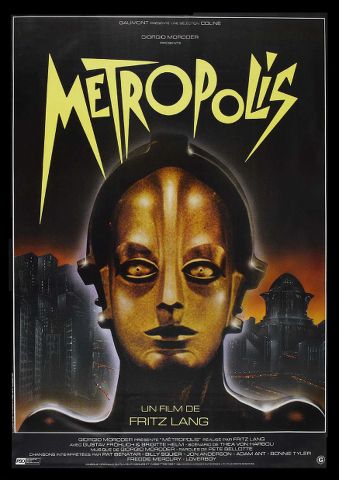
    “Metropolis is not one film, Metropolis is two films joined by the belly, but with divergent, indeed extremely antagonistic, spiritual needs. Those who consider the cinema as a discreet teller of tales, will suffer a profound disillusion with Metropolis. Whait it tells us is trivial, pretentious, pedantic, hackneyed romanticism. But if we put before the story the plastic-photogenic basis of the film, then Metropolis will come up to any standards, will overwhelm us as the most marvelous picture book imaginable.”
    — Luis Buñuel: Metropolis. In: Great Film Directors. Edited by Leo Braudy, Morris Dickstein. New York 1978, p. 590Read More »

  • Chris Marker – La Jetée (1962)

    1961-1970Amos Vogel: Film as a Subversive ArtChris MarkerFranceSci-FiShort Film

    29f7c043f76a2bde437fd0d52a185152

    Review (taken from Turner Classic Movies)

    Quote:
    “This is the story of a man marked by an image of his childhood,” begins La Jetee (1962), one of the most instantly recognizable and acclaimed short films ever made. Using only still photographs, voiceover narration, sound effects and music, it tells the story of a World War III survivor whose vivid memories make him the subject of time travel experiments. In only one shot of the film–that of “the Woman” opening her eyes in the morning–does the image move. Through such deceptively simple means Chris Marker explores the paradoxes of time travel and, on a deeper philosophical level, the relationships between image and memory, and word and image.Read More »

  • Aleksandr Sokurov – Dni Zatmenija AKA The Days Of Eclipse (1988)

    1981-1990Aleksandr SokurovPhilosophyRussiaSci-Fi

    Quote:
    The bridge film between his (Sokurov’s) first decade’s essays into historicized metafilm and the subsequent, fame-making fata morganas is Days of the Eclipse(1988), a patience-testing post-apocalyptic dawdle (based on a novel by the Strugatsky brothers) that plays more like aimless third-world doc than science fiction. Concerning a young doctor stuck in the middle of a rocky wasteland (actually, Turkmenistan, though it could easily pass for any post-colonial hunk of Africa), Daysis maddeningly oblique, visually erratic, and utterly disconnective. Angels, earthquakes, talking corpses, Stalinist iconography, and visual disjunctions may figure in, but for the most part Sokurov designed the film as an elusive tissue of non-happenings and mysterious nexuses, all of it sucking the dusty air of Soviet-satellite poverty.Read More »
  • Christian Nyby & Howard Hawks – The Thing from Another World (1951)

    1951-1960Christian NybyChristian Nyby and Howard HawksCultHoward HawksSci-FiUSA

    29f7c043f76a2bde437fd0d52a185152

    A spaceship lands in Arctic wastes, its only passenger a six-and-a-half-foot-tall frozen vegetable with a brain. (“An intellectual carrot — the mind boggles.”) That spells trouble for the small troupe of soldiers and scientists, plus a reporter and the token fabulous babe. Directed by Christian Nyby, The Thing has the hallmarks of movies by producer Howard Hawks: taut, snappy camaraderie and a preference for men of action over men of thought. Whereas 1951’s other big spaceman movie, The Day the Earth Stood Still, took the liberal view that a visitor from another world would be benign, superior and peace-loving, this one suggests an interplanetary Cold War, with a creature (played by James Arness, later Sheriff Matt Dillon of Gunsmoke fame) who’s angry, hungry and hard to reason with. Humankind’s only logical response to this vegetable invader: cook ‘im! (But don’t eat ‘im.) –Richard Corliss, TIme MagazineRead More »

  • Ishirô Honda – Chikyu Boeigun AKA The Mysterians (1957)

    Japan1951-1960AsianIshirô HondaKaiju-eigaSci-Fi
    Chikyû Bôeigun (1957)
    Chikyû Bôeigun (1957)

    Aliens arrive on Earth and ask permission to be given a certain tract of land for their people to live on. But when they are discovered to be invaders, responsible for the giant robot that is destroying cities, the armed forces attempt to stop them with every weapon available. -imdbRead More »

  • Various – Gojira Fantajî: SF Kôkyô Fantajî aka Godzilla Fantasia (1984)

    1981-1990AsianItalyOvidio G. AssonitisSci-Fi
    Godzilla Fantasia (1984)

    Quote:
    In 1954, Akira Ifukube was asked by Toho to score Gojira (Godzilla), a giant monster film to be directed by Ishiro Honda. Many of Ifukube’s colleagues tried to convince him not to take the job, thinking the film would not be a success. Ifukube did not listen to his detractors and accepted the project. As a result, his score for Gojira has become one of the most famous film scores in history and propelled Ifukube to heights of fame that no other Japanese film composer has ever reached. Additionally, Ifukube regarded his Gojira music as the best score he had ever written for a motion picture.Read More »

  • Yevgeni Sherstobitov – Tumannost Andromedy (1967)

    1961-1970CultSci-FiUSSRYevgeni Sherstobitov

    Free Image Hosting at www.ImageShack.us

    29f7c043f76a2bde437fd0d52a185152

    plot:
    Film is set in the future. A spaceship named “Tantra” is exploring the unknown part of the
    Universe, and gets trapped by the “Iron Star”. It’s powerful force of gravity is to hold the
    spaceship for 20 years. The crew is facing a very tough survival challenge, being surrounded
    by the invisible predators. The predators can eat human flesh right through the heavy
    spacesuit. Only the light can scare them away.Read More »

  • Andrei Yermash – Konets vechnosti AKA The End of Eternity (1987)

    1971-1980Andrei YermashSci-FiUSSR

    Quote:
    Based on a novel by Isaac Asimov, the film deals with the idea that some people could get immortality by means of controlling the time periods inside the special lab-city called “Vechnost”. They look like people but they are trained to work for Vechnost forever, as a part of its mechanism. They correct time holes, help people from other times to solve their problems by means of a special mind operating system. Everyone from Vechnost is immortal and they live in a very futuristic looking place in the center of time . As some periods of time get blocked from them, two engineers are sent to solve the problem but the operation starts to go wrong.Read More »

Back to top button