

Ali gets out from prison more recently. He needs money to go to Germany. Therefore, he accepts the offer to kill a businessman. When he completes mission there is a huge trickery: money is fake.Read More »
Ali gets out from prison more recently. He needs money to go to Germany. Therefore, he accepts the offer to kill a businessman. When he completes mission there is a huge trickery: money is fake.Read More »
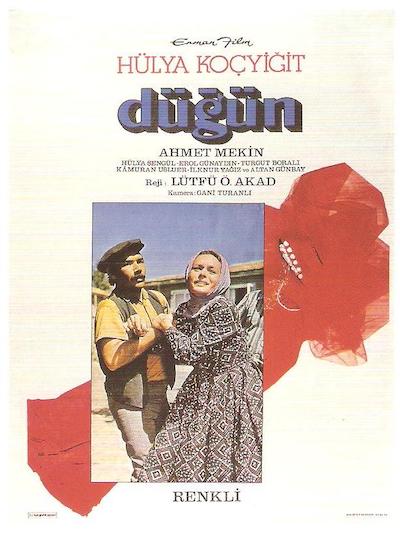
The Wedding, which is the second part of Akad’s trilogy, depicts the struggles of a migrant Anatolian family to adapt to and survive in the very different conditions of urban Istanbul, is one of the best presentations of internal migration in Turkish cinema. Akad uses the experiences of a provincial family as his medium for drawing attention to a period of disintegrating feudal relationships and burgeoning proletarianism. And this strikes the kind of political chord that is rarely encountered now in Turkish cinema; an approach that is borne out by the film’s ‘happy ending’. The Wedding is profoundly impressive as a film that explores and comments on the painful period of change sweeping Turkey at the time, but also for its standpoint, a combination of social realism and socialist reality.Read More »
Quote:
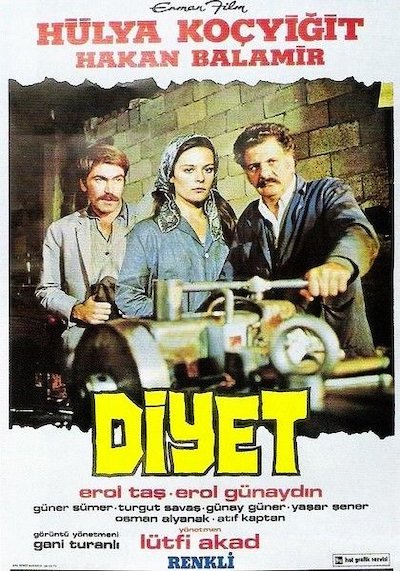
Lütfi Akad completes with Diyet (Blood Money) his trilogy based on internal migration. Diyet depicts the struggles of a migrant Anatolian family to adapt to and survive in the very different conditions of urban Istanbul. Akad uses the experiences of a provincial family as his medium for drawing attention to a period of disintegrating feudal relationships and burgeoning proletarianism. And this strikes the kind of political chord that is rarely encountered now in Turkish cinema.Read More »
Quote:
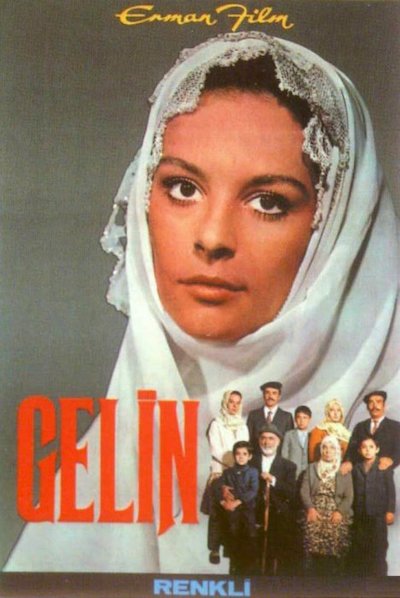
The Bride, which depicts the struggles of a migrant Anatolian family to adapt to and survive in the very different conditions of urban Istanbul, is one of the best presentations of internal migration in Turkish cinema. It is also the first, and most accomplished film in Ömer Lütfi Akad’s celebrated trilogy, which with The Wedding (Dügün, 1973) and Blood Money (Diyet) has earned a respected place in world cinema for its thematic unity. The Bride masterfully exposes the evolution of ‘little Anatolia’ in Istanbul, a phenomenon that would go on to acquire far larger dimensions.Read More »

IMDB:
In the absence of his father, a little boy and his mother live by themselves on a poor suburb for years. Boy impatiently waits his father’s return, till the day a wounded outlaw takes refuge in their home.Read More »
Quote:
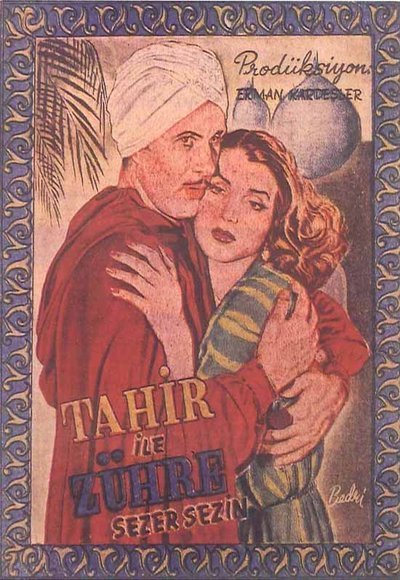
The film narrates the struggle of Tahir and Zühre, two lovers trying to reunite. Zühre is a princess while Tahir is the son of a vizier. Growing up together in the palace, the two are deeply in love with each other. However, Bekir, one of the heirs to the dynasty, opposes their marriage. Bekir spreads rumors about Tahir in order to prevent their marriage. So, Tahir falls out of favor with the Sultan due to the rumors about him. Tahir and Zühre will have to make sacrifices to be together. (Yiğitalp Ertem)Read More »

Ömer Lütfi Akad, aka Lütfi Ömer Akad, (b. 1916) is a Turkish film director, who directed movies from 1948-1974. In 1949, he debuted as a film director with Vurun Kahpeye (“Kill the Whore”) an adaptation of Halide Edip Adıvar’s book of the same title. He became one of the pioneers of the period in the “Director Generation”. The 1970s trilogy, The Bridge; The Wedding; and The Sacrifice, is considered his masterpiece. Afterwards, he withdrew from movie making instead directing adaptations for TV.Read More »

Quote:
Set along the Turkish-Syrian frontier, this terse, elemental tale of smugglers contending with a changing social landscape brought together two giants of Turkish cinema. Director Lütfi Ö. Akad had already made some of his country’s most notable films when he was approached by Yılmaz Güney—a rising action star who would become Turkey’s most important and controversial filmmaker—to collaborate on this neo-western about a quiet man who finds himself pitted against his fellow outlaws. Combining documentary authenticity with a tough, lean poetry, Law of the Border transformed the nation’s cinema forever—even though it was virtually impossible to see for many years.Read More »

Imdb User Review:
Watch it like that you can’t watch any movie after this time,it gives you unbelievable moments…
29 August 2006 | by hashus (Turkey)
Lütfi Akad is one of the most important directors of Turkey, he gave our cinema very useful things, a lot of things started with his camera…he was different, he moved cinema from sets to streets, he gave to watchers real world,real people, no star… his actors didn’t act in front of the camera, they lived in white-screen…
And I think Akad’s the best movie is Vesikali Yarim, because he always directs real stories which everybody can live them, but in this story we can’t find anything from us…but we forgot one important thing : director is Lütfi Akad…so again we find us in the white-screen between actors. He can do this. Although story is not from us, he can move us his movie…In this movie, he asked us “Who deserve the real love?” and “Does love deserve the reality?” I won’t say anything about answers but if you watch this movie, you will see them easily…Read More »