John M. Stahl

  • Otto Preminger & John M. Stahl – Forever Amber (1947)

    1941-1950ClassicsDramaJohn M. StahlOtto PremingerUSA

    Quote:
    They said it couldn’t be done, but they did it: Kathleen Winsor’s “notorious”, bestselling bodice-ripper Forever Amber actually made it to the screen in 1947 with full censorial approval. Of course, it was necessary to tone down the more erotic passages of Winsor’s novel, but the end result pleased fans of the book and bluenosed nonfans alike. A last-minute replacement for British import Peggy Cummins, Linda Darnell steps into the role of 17th century blonde bed-hopper Amber as though she’d been born to play it. Read More »

  • John M. Stahl – Only Yesterday (1933)

    1931-1940ClassicsDramaJohn M. StahlUSA

    A one-night fling during World War I results in a young girl getting pregnant. Years later, she meets him again. Now a successful businessman, he doesn’t even remember her, but tries to seduce her.Read More »

  • John M. Stahl – Back Street (1932)

    1931-1940DramaJohn M. StahlRomanceUSA

    The Criterion Channel writes:
    The first of three film adaptations Universal made of Fannie Hurst’s tear-jerking novel chronicles the fate-battered relationship of Ray (Irene Dunne) and Walter (John Boles), two star-crossed lovers seemingly thwarted from being together by circumstances and time. Tracing their relationship across decades—as the married Walter ascends to prominence as a wealthy financier while Ray remains in the background as the perpetual “other woman”—BACK STREET offers a beautifully restrained and deeply affecting vision of self-sacrifice in the name of love.
    Read More »

  • John M. Stahl – Holy Matrimony (1943)

    John M. Stahl1941-1950ComedyRomanceUSA
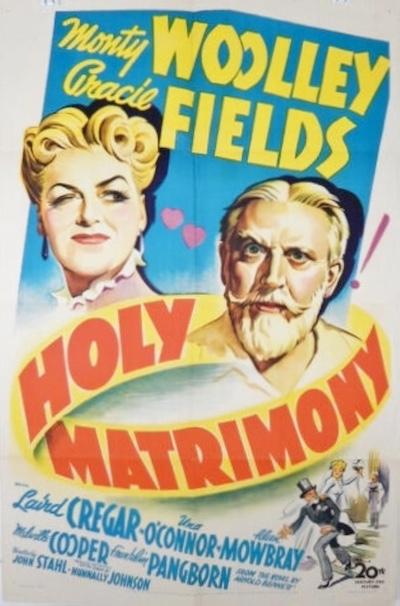
    Holy Matrimony (1943)
    Holy Matrimony (1943)

    Summary by All Movie Guide:
    A man trying to leave his fame behind discovers the perils of choosing to be the wrong unknown person in this farcical British comedy. Priam Farli (Monty Woolley) is an eccentric but famous and well-respected artist who prefers to work in total seclusion — so much so that he’s spent the last 20 years creating his paintings while living on an isolated island in the Pacific, with only his valet, Henry Leek (Eric Blore), for company. When word reaches Farli that he is to be knighted by King Edward VII (Edwin Maxwell), the artist reluctantly sails back to Great Britain with Leek, but en route, his devoted servant dies. Seeing a perfect opportunity to once again escape the public eye, Farli poses as Leek and claims that the great painter was the one who passed away. Read More »

  • John M. Stahl – When Tomorrow Comes (1939)

    1931-1940DramaJohn M. StahlRomanceUSA

    A concert pianist unhappily married to a mentally ill woman falls in love with a waitress.Read More »

  • John M. Stahl – The Walls of Jericho (1948)

    1941-1950DramaJohn M. StahlUSA

    After County Attorney Dave Connors helps Julian Norman with her shiftless father, Jefferson Norman, she leaves Jericho, Kansas to college to study for a law degree.A few years later, Algeria Wedge, the new bride of Dave’s best friend, Tucker Wedge, makes overtures and plays for Dave, much to the displeasure of Dave’s hard-drinking wife Belle. Angered by Dave’s rebuffs, Algeria induces the state political boss to back Tucker for a Congress race against Dave. Meanwhile, Julia has returned to Jericho, with her law degree, and she and Dave fall in love.Read More »

  • John M. Stahl – Leave Her to Heaven [+Commentary] (1945)

    1941-1950ClassicsFilm NoirJohn M. StahlUSA

    29f7c043f76a2bde437fd0d52a185152

    A fevered yet clinical study of jealousy, Leave Her to Heaven is probably John M. Stahl’s best-known film. In many ways, it is far removed from the sober, intense concentration of Stahl’s major and underseen ’30s soap operas; his early movies were deliberately plain and spare, while Leave Her to Heaven is overpoweringly artificial and rococo, with intimations of neurotic fantasies churning away underneath its lacquered, rotogravure images. Immediately pulsing with the thumping drums of Alfred Newman’s stormy score, the film proceeds very slowly at first, as Stahl builds a dreamlike Technicolor atmosphere around his three leads, Gene Tierney, Cornel Wilde, and Jeanne Crain. These actors are eerily one-dimensional, and Stahl uses their limitations as performers to his advantage, making them look like sleepwalkers in a sort of Life magazine nightmare.Read More »

Back to top button