Japan

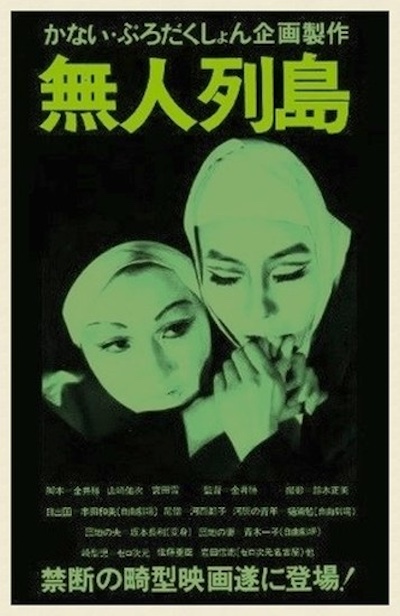
  • Katsu Kanai – Mujin rettô AKA The Desert Archipelago (1969)

    1961-1970ArthouseAsianJapanKatsu Kanai
    Mujin rettô (1969)
    Mujin rettô (1969)

    KatsuKanai wrote:
    The Deserted Archipelago was my first independently directed and produced film. The film won the Grand Prix at the Nyon International Film Festival and garnered considerable attention both overseas and in Japan. The film follows an extremely simple story of a plain boy who matures into manhood while constantly manipulated by nuns. But woven into this narrative are my own experiences and the history of postwar Japan as well as a series of fantasies. The result is a multifaceted and multilayered objet, the birth of a newly sur-realistic filmmaking. On August 15th, the day the war ended, I was in the third year of primary school. That day, when the reality that I had known turned completely upside down, I was saddled with the trauma of no longer being able to believe in anything. Searching here and there for some kind of spiritual salvation, I finally found the existentialism of Albert Camus. From there, I was able to build up my own kind of existentialism and this film is best understood as based in that “Kanai Katsu Existentialism.” The film was praised by European film scholars Max Tessier and Tony Rayns and was screened as part of “Eiga: 25 Years of Japanese Film,” a special program at the 1984 Edinburgh International Film Festival.Read More »

  • Hisatora Kumagai – Shanhai rikusentai aka Naval Brigade at Shanghai (1939)

    1931-1940Hisatora KumagaiJapanWar
    Shanhai rikusentai (1939)
    Shanhai rikusentai (1939)

    This film attempts to reconstruct the tension of the Battle of Shanghai through an episode in an understated way, introducting its story in a documentary mode. In the film story, Japan’s marine regiment protects Japanese residents and Chinese refugees-women and young children-from rampant street fighting, Shanhai Rikusentai unsparingly uses its first eight minutes for an official-mannered self-justification of the war. From the viewpoint of explaining Japan’s military operation,the narration refers to the city s spatial division in sync with maps on screen.
    [Dissonance to Affinity: An Ideological Analysis of Japanese Cinema in the 1930s]Read More »

  • Susumu Hani – Bwana Toshi no uta AKA The Song of Bwana Toshi (1965)

    Susumu Hani1961-1970ClassicsDramaJapan
    Bwana Toshi no uta (1965)
    Bwana Toshi no uta (1965)

    Quote:
    On the border of Kenya and Tangoniga in East Africa, a Japanese, Toshio Kataoka, finally arrived here. A Japanese academic survey team came to build a comprehensive research facility. But in the village where Toshio finally arrived after more than three days of travel, no one could help him, leaving only a letter of disconnection. At the end of his rope, the handsome man asked the local youth for help through a boy he knew. However, in the village where the clan chief led by the boy, not to mention the conveners, even the cattle were used all day long. Despite this, handsome man still worked hard. Because of this opportunity, Toshio was called “toshi” by everyone in the village and became close to him.Read More »

  • Susumu Hani – Yôsei no uta AKA Mio (1972)

    Susumu Hani1971-1980ArthouseDramaJapan
    Yôsei no uta (1972)
    Yôsei no uta (1972)

    Susumu Hani’s six-year-old daughter Mio plays an orphaned Japanese girl who, for some reason, ends up in Sardinia. She starts going to school, quickly learns Italian, and befriends a boy named Raphael. One of Hani’s stranger concepts for a film, made enjoyable by the great naturalistic acting that’s found in most of his work.Read More »

  • Kenji Mizoguchi – Gion no shimai AKA Sisters of the Gion (1936)

    Kenji Mizoguchi1931-1940ClassicsDramaJapan
    Gion no shimai (1936)
    Gion no shimai (1936)

    Umekichi, a geisha in the Gion district of Kyoto, feels obliged to help her lover Furusawa when he asks to stay with her after becoming bankrupt and leaving his wife. However her younger sister Omocha tells her she is wasting her time and money on a loser. She thinks that they should both find wealthy patrons to support them. Omocha therefore tries various schemes to get rid of Furusawa, and set themselves up with better patrons.Read More »

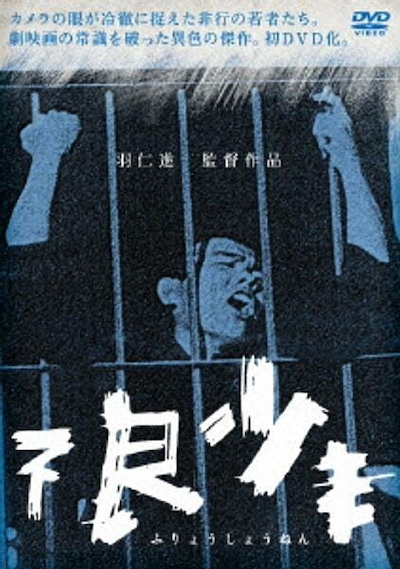
  • Susumu Hani – Furyô shônen AKA Bad Boys (1961)

    Susumu Hani1961-1970ArthouseDramaJapan
    Furyô shônen (1961)
    Furyô shônen (1961)

    An improvisational film depicting life in a boys’ reform school.

    Quote:
    Susumu Hani’s first feature was this gritty pseudo docudrama of juvenile delinquency based upon a collection of papers, ‘Wings That Couldn’t Fly’, written by the inmates of a boy’s prison. The film follows a young man who drifts into petty crime, is arrested, imprisoned, reformed and released. True stories of other inmates are interwoven into his experience to create a startling document of crime and punishment.Read More »

  • Susumu Hani – Kanojo to kare AKA She and He (1963)

    1961-1970ArthouseDramaJapanSusumu Hani
    Kanojo to kare (1963)
    Kanojo to kare (1963)

    In a sterile building complex, a woman gains a sense of altruism after encountering a street beggar and his blind orphan, much to her husband’s disapproval.Read More »

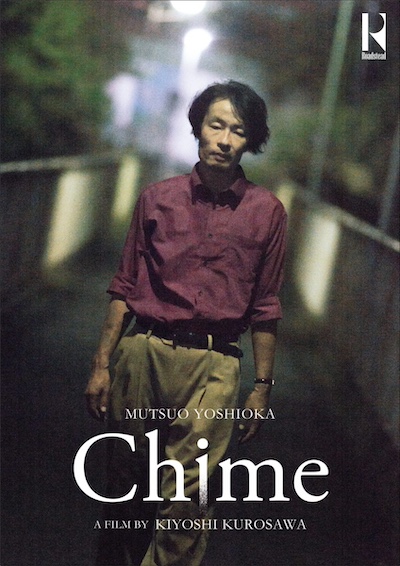
  • Kiyoshi Kurosawa – Chime (2024)

    Kiyoshi Kurosawa2021-2030HorrorJapanThriller
    Chime (2024)
    Chime (2024)

    The life of a schoolteacher is disrupted by a chime that brings with it an increasing sense of dread.Read More »

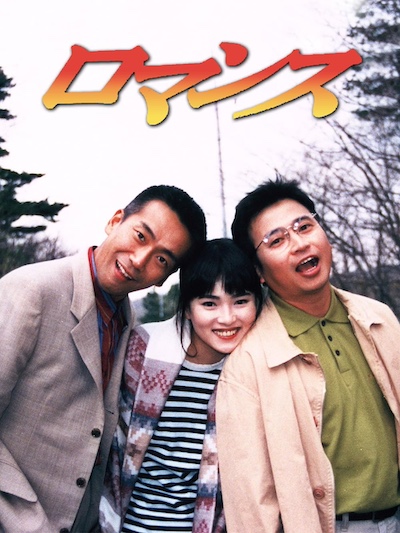
  • Shunichi Nagasaki – Romansu AKA Some Kinda Love (1996)

    Shunichi Nagasaki1991-2000ComedyDramaJapan
    Romansu (1996)
    Romansu (1996)

    Anzai is a town planner; his former classmate Shibata is a developer not averse to bending the rules and paying the odd sweetener. Both men have their lives turned upside down by a chance encounter with Kiriko, a young woman whose obsession with UFOs reflects her inability to stay in one place for long. She seems interested in both of them, and unable to decide between them…Read More »

Back to top button