Japan

  • Naomi Kawase – Moe no suzaku AKA The God Suzaku (1997)

    Naomi Kawase1991-2000ArthouseAsianJapanJapanese Female Directors
    Moe no suzaku (1997)
    Moe no suzaku (1997)

    Quote:
    Set in the mountains of rural Nara prefecture, the film centers on the Tahara family who eke out a living from the local ancient cedar forests. The head of the family, Kyozo, becomes fixated by plans to build a tunnel to improve the accessibility of the area. Construction begins, but is halted halfway through. Fifteen years later building has still not restarted, and the family is destitute. Against this backdrop, some family affairs develop. Kyozo’s daughter, Michiru, starts to fall in love with Eisuke, her cousin. Eisuke, meanwhile, finds himself attracted to his aunt.Read More »
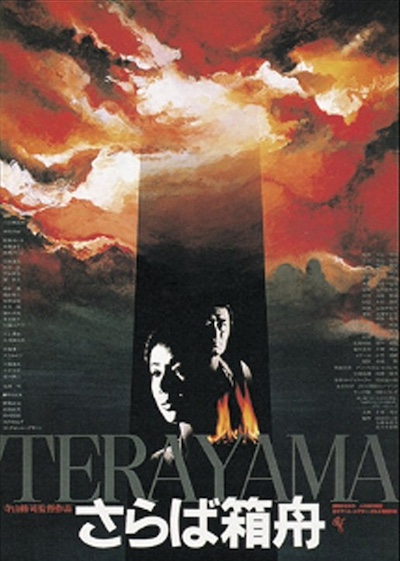
  • Shûji Terayama – Saraba hakobune AKA Farewell to the Ark (1984)

    Shuji Terayama1981-1990ArthouseFantasyJapan
    Saraba hakobune (1984)
    Saraba hakobune (1984)

    A surreal, isolated village sees its inhabitants gradually leave behind their mutual traditions and superstitions as they leave for the city. Among them are two cousins who love each other and who get into a quarrel with other villagers.Read More »

  • Jun’ya Satô – Bakuto kirikomi-tai AKA Gambler’s Counterattack (1971)

    1971-1980AsianCrimeJapanJun'ya Satô
    Bakuto kirikomi tai (1971)
    Bakuto kirikomi tai (1971)

    Synopsis (from Letterboxed):
    Aiba is a gang boss who has just got out of jail, and finds everything has changed. His old gang has broken up, and only a few people still respect him. So he becomes a consultant to another gang who are about to be clobbered by a much larger gang moving in from out of town. Aiba proves a crafty tactician, and does very well at playing gangs off against each other in order to save the smaller gang. His advice is not always taken by those he tries to help, but he is generally proved right.Read More »

  • Jun Ichikawa – Sûtsu wo kau AKA Buy a Suit (2008)

    Jun Ichikawa2001-2010DramaJapan
    Sûtsu wo kau (2008)
    Sûtsu wo kau (2008)

    Quote:
    “Veteran director Jun Ichikawa (Tony Takitani), who died suddenly the night that he finished editing this film (originally a private project), reveals his more personal and playful side while filming with nothing more than a few friends as actors and a camcorder. The film follows Yuki’s visit to Tokyo in search of her missing brother, Hisashi, and their later reunion with Hisashi’s ex-wife. Ichikawa’s camerawork and plain sets draw out a more affectionate and gentle side of these characters and their connection amidst the barren Tokyo cityscape.”Read More »

  • Norifumi Suzuki – Kyôfu joshikôkô: bôkô rinchi kyôshitsu AKA Terrifying Girls’ High School: Lynch Law Classroom (1973)

    Norifumi Suzuki1971-1980DramaExploitationJapan
    Kyôfu joshikôkô bôkô rinchi kyôshitsu (1973)
    Kyôfu joshikôkô bôkô rinchi kyôshitsu (1973)

    Synopsis
    Three new students at a super-strict girl’s school must face off with a repressive school administration, the sadistic, murderous student discipline brigade and corrupt politicians over the murder/suicide of one of their friends. They’re approached by a blackmailer (Tsunehiko Watase) who promises to help them exact vengeance in exchange for setting up a corrupt local politician, and aided by a independent Yakuza biker chick (Reiko Ike). – IMDbRead More »

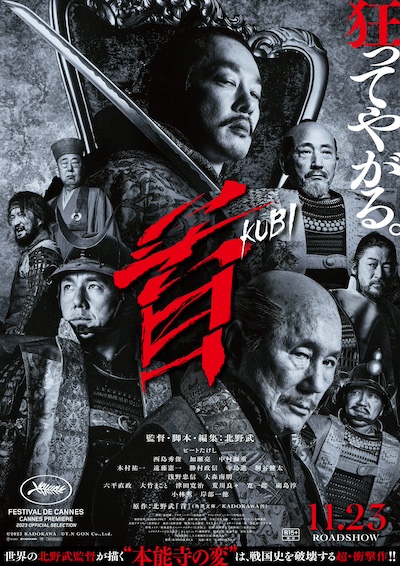
  • Takeshi Kitano – Kubi (2023)

    Takeshi Kitano2021-2030ActionEpicJapan
    Kubi (2023)
    Kubi (2023)

    Lord Oda Nobunaga plans to control Japan where rival warlords battle by waging war against several clans. His vassal Araki Murashige stages a rebellion and promptly disappears.Read More »

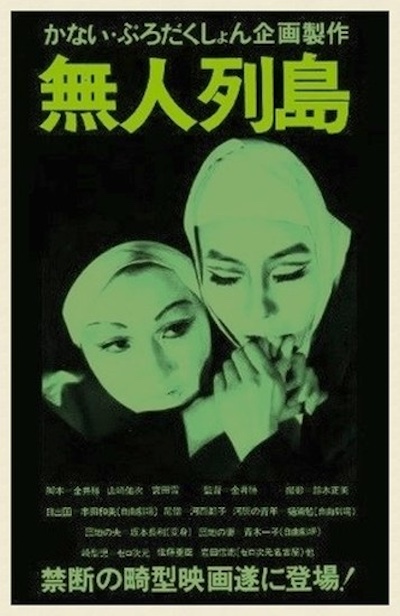
  • Katsu Kanai – Mujin rettô AKA The Desert Archipelago (1969)

    1961-1970ArthouseAsianJapanKatsu Kanai
    Mujin rettô (1969)
    Mujin rettô (1969)

    KatsuKanai wrote:
    The Deserted Archipelago was my first independently directed and produced film. The film won the Grand Prix at the Nyon International Film Festival and garnered considerable attention both overseas and in Japan. The film follows an extremely simple story of a plain boy who matures into manhood while constantly manipulated by nuns. But woven into this narrative are my own experiences and the history of postwar Japan as well as a series of fantasies. The result is a multifaceted and multilayered objet, the birth of a newly sur-realistic filmmaking. On August 15th, the day the war ended, I was in the third year of primary school. That day, when the reality that I had known turned completely upside down, I was saddled with the trauma of no longer being able to believe in anything. Searching here and there for some kind of spiritual salvation, I finally found the existentialism of Albert Camus. From there, I was able to build up my own kind of existentialism and this film is best understood as based in that “Kanai Katsu Existentialism.” The film was praised by European film scholars Max Tessier and Tony Rayns and was screened as part of “Eiga: 25 Years of Japanese Film,” a special program at the 1984 Edinburgh International Film Festival.Read More »

  • Hisatora Kumagai – Shanhai rikusentai aka Naval Brigade at Shanghai (1939)

    1931-1940Hisatora KumagaiJapanWar
    Shanhai rikusentai (1939)
    Shanhai rikusentai (1939)

    This film attempts to reconstruct the tension of the Battle of Shanghai through an episode in an understated way, introducting its story in a documentary mode. In the film story, Japan’s marine regiment protects Japanese residents and Chinese refugees-women and young children-from rampant street fighting, Shanhai Rikusentai unsparingly uses its first eight minutes for an official-mannered self-justification of the war. From the viewpoint of explaining Japan’s military operation,the narration refers to the city s spatial division in sync with maps on screen.
    [Dissonance to Affinity: An Ideological Analysis of Japanese Cinema in the 1930s]Read More »

  • Susumu Hani – Bwana Toshi no uta AKA The Song of Bwana Toshi (1965)

    Susumu Hani1961-1970ClassicsDramaJapan
    Bwana Toshi no uta (1965)
    Bwana Toshi no uta (1965)

    Quote:
    On the border of Kenya and Tangoniga in East Africa, a Japanese, Toshio Kataoka, finally arrived here. A Japanese academic survey team came to build a comprehensive research facility. But in the village where Toshio finally arrived after more than three days of travel, no one could help him, leaving only a letter of disconnection. At the end of his rope, the handsome man asked the local youth for help through a boy he knew. However, in the village where the clan chief led by the boy, not to mention the conveners, even the cattle were used all day long. Despite this, handsome man still worked hard. Because of this opportunity, Toshio was called “toshi” by everyone in the village and became close to him.Read More »

Back to top button