Japan

  • Shin’ya Tsukamoto – Tetsuo (1989) (HD)

    1981-1990AsianCultJapanShinya Tsukamoto

    A strange man known only as the “metal fetishist”, who seems to have an insane compulsion to stick scrap metal into his body, is hit and possibly killed by a Japanese “salaryman”, out for a drive with his girlfriend. The salaryman then notices that he is being slowly overtaken by some kind of disease that is turning his body into scrap metal, and that his nemesis is not in fact dead but is somehow masterminding and guiding his rage and frustration-fueled transformation.Read More »

  • Akio Jissôji – Ijmete kudasai Henrietta AKA Arietta (1989)

    1981-1990Akio JissojiDramaEroticaJapan

    29f7c043f76a2bde437fd0d52a185152

    Synopsis:
    A young widow (Keiko Kaja) becomes an SM call girl to pay off the debts accumulated by her yakuza husband. She’s a depressed woman, merely going through the motions of existence, subjected to every cruel whim concocted by her clients. She’s dedicated to the misery – even finding comfort in it – stumbling through life like a zombie.Read More »

  • SABU – Ryu san AKA Mr. Long (2017)

    2011-2020ActionDramaJapanSABU

    29f7c043f76a2bde437fd0d52a185152

    Long is a Taiwanese killer known for his sword skills. After Long fails a Tokyo mission, he moves to a small town where no one knows about him.Read More »

  • Heinosuke Gosho – Entotsu no mieru basho AKA Where Chimneys Are Seen (1953)

    1951-1960AsianClassicsDramaHeinosuke GoshoJapan

    Quote:
    Winner of the International Peace Prize at the 1953 Berlin Film Festival and considered “one of the really important postwar Japanese films, Where Chimneys Are Seen focuses primarily on the interconnected lives of two couples in a lower-middle-class neighborhood in Senju, a poor industrial section of Tokyo. The narrative is structured as a series of juxtaposed scenes that dramatize this connection and show the cause and effect of events on the couples’ lives. As part of this structure, there is the central motif of the chimneys and the kinds of “lyrical” interludes for which Gosho is famous.Read More »

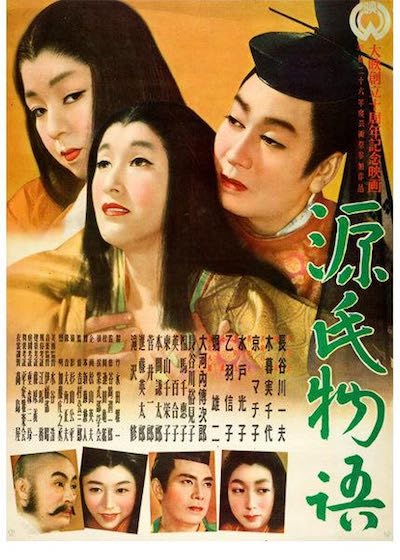
  • Kôzaburô Yoshimura – Genji monogatari (1951)

    1951-1960ClassicsDramaJapanKôzaburô Yoshimura

    Synopsis:
    Based on the classic novel by Murasaki Shikibu, written over 1000 years ago. Genji, the son of the emperor, has gained renown among the nobility of Kyoto for his charm and good looks, yet he cannot stop himself from pursuing the one object of desire he must never obtain: his father’s young and beautiful bride. Following the tragic consequences of his obsession, Genji wanders from one affair to another, always seeking some sort of resolution to his life.
    — IMDb.Read More »

  • Yuriko Furuhata – Cinema of Actuality: Japanese Avant-Garde Filmmaking in the Season of Image Politics (2013)

    2011-2020BooksJapanYuriko Furuhata

    During the 1960s and early 1970s, Japanese avant-garde filmmakers intensely explored the shifting role of the image in political activism and media events. Known as the “season of politics,” the era was filled with widely covered dramatic events from hijackings and hostage crises to student protests. This season of politics was, Yuriko Furuhata argues, the season of image politics. Well-known directors, including Oshima Nagisa, Matsumoto Toshio, Wakamatsu Kōji, and Adachi Masao, appropriated the sensationalized media coverage of current events, turning news stories into material for timely critique and intermedial experimentation. Cinema of Actuality analyzes Japanese avant-garde filmmakers’ struggle to radicalize cinema in light of the intensifying politics of spectacle and a rapidly changing media environment, one that was increasingly dominated by television. Furuhata demonstrates how avant-garde filmmaking intersected with media history, and how sophisticated debates about film theory emerged out of dialogues with photography, television, and other visual arts.Read More »

  • Tokuzô Tanaka – Daisatsujin orochi aka The Betrayal (1966)

    1961-1970AsianCultJapanTokuzô Tanaka

    Synopsis:
    A naively honorable samurai (played by Raizo) comes to the bitter realization that his devotion to moral samurai principles makes him an oddity among his peers, and a very vulnerable oddity in consequence. He takes the blame for the misdeeds of others, with the understanding that he will be exiled for one year and restored to the clan’s good graces after the political situation dies down. As betrayal begins to heap upon betrayal, he realizes he’ll have to live out his life as a master-less ronin, if not hunted down and killed.
    — Letterboxd.Read More »

  • Kiyoshi Kurosawa – Tokyo Sonata (2008)

    2001-2010DramaJapanKiyoshi Kurosawa

    29f7c043f76a2bde437fd0d52a185152

    Quote:
    After a retreat to the atmospheric and spectral Loft and Retribution that reinforce Kiyoshi Kurosawa’s reputation as a horror filmmaker, Tokyo Sonata continues in the vein of his idiosyncratically personal (and arguably, more interesting), yet equally unsettling films that began with Bright Future. As the film begins, the family patriarch, middle-aged senior administrative manager, Ryuhei (Teruyuki Kagawa) has been notified that the company has outsourced his job to China (where his salary would pay for three language-fluent office workers) and, without portable skills that could be applied to another department, will be immediately laid off from work. Reluctant to tell his family for fear of undermining his authority, Ryuhei continues the pretext of leaving for work with his briefcase each morning, spending his days alternately lining up at a job placement office and a charity lunch service on the park.Read More »

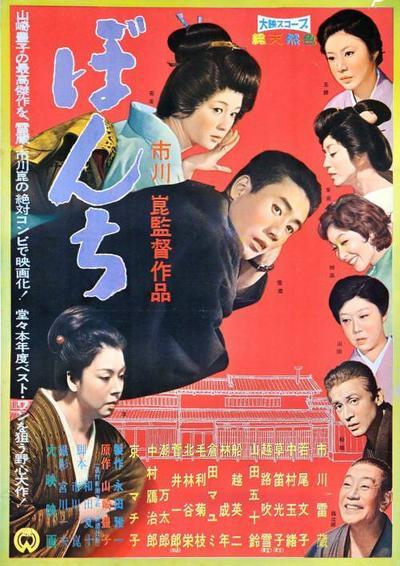
  • Kon Ichikawa – Bonchi (1960)

    1951-1960AsianDramaJapanKon Ichikawa

    29f7c043f76a2bde437fd0d52a185152

    Where Ichikawa skewered patriarchal family values in Her Brother, in this savage satire he hoists the matriarchal system on its own apron strings. Raizo Ichikawa (“in his best role yet”-Variety) is the scion of an Osaka merchant family whose traditional power is matrilineal. Instructed by his overbearing mother and grandmother to give them an heiress for the family business, he stands by helplessly as wife after wife is thrown out of the house for producing sons. Driven to a life of dissipation-his mistresses also fail to produce daughters-in the end he is just too tired to care. Ichikawa’s frighteningly funny picture of the matriarchy’s efforts to perpetuate itself was received as antifeminist, if not downright misogynistic, but Joan Mellon suggests that the target once again is “the institution of the family [which] places its own survival ahead of the needs and feelings of individuals.” If this looks forward to The Makioka Sisters, so does Donald Richie’s comment, “We find this cruel matriarchal story…told in terms of the most transcendental beauty.”Read More »

Back to top button