

Followed by Shindo: kohen Ryota no maki, available here:
The eldest daughter of a noble family is in love with an aviator while being courted by a fellow aristocrat she thinks is a dullard.Read More »
Followed by Shindo: kohen Ryota no maki, available here:
The eldest daughter of a noble family is in love with an aviator while being courted by a fellow aristocrat she thinks is a dullard.Read More »
A wickedly funny account of the search for a long-lost girlfriend, which broadens into a witty meditation on memory itself.Read More »
Quote:
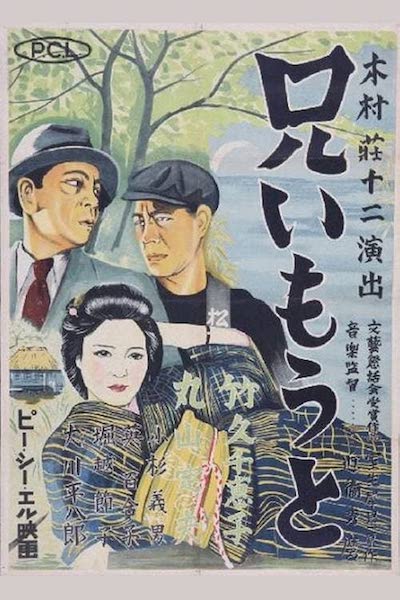
It was directed by Sotoji Kimura, a completely obscure, yet fairly successful Shochiku director, who by account on his few films that are available today apparently was associated with the 1930’s jun-bungaku (“pure literature”) movement, an attempt to strengthen the reputation of Japanese cinema by translating reputable high-brow literature for the screen.Read More »

From japantimes.co.jp
With 48 feature installments from 1969 to 1995, the “Tora-san” series not only set a Guinness World Record, but kept its Shochiku production studio afloat for decades. While it was drawing fans as reliably as the sunrise, the series was derided by some critics as formulaic: In every episode the titlular peddler hero, played by Kiyoshi Atsumi, returns from his wanderings to his home in Shibamata, a neighborhood in Tokyo’s shitamachi (old downtown), where he reunites with his half-sister Sakura (Chieko Baisho) and other familiar faces. Also, in every episode a new woman comes into his life and, since Tora-san is a bumbler at love, soon leaves it.Read More »

Nami is a staff member at an exclusive department store. Her libido is chiefly satisfied alone, until a co-worker talks her into subbing on a porno modeling job. Her appearance in the magazine Red Porno has no end of complications for her.Read More »

One of Japan’s most important 20th century literary figures, nominated for the Nobel Prize,, and as an unrepentant Japanese nationalist who wanted the powers of the Emperor to be restored.
During the time of mass movement rising in late 60’s all over the world, an internationally acclaimed author, poet, playwright, actor, film director and critic Yukio Mishima, took part in a heated discussion with 1,000 members of the student movement at the University of Tokyo in 1969, just a year before Mishima’s ritual suicide. The original master footage of his last debate with students has been found after 50 years from the filming.Read More »

Quote:
It takes place in the 1730’s, when Shogun Yoshimune and his deputy, Muneharu, were struggling for control. As a way of fomenting dissent by embarrassing him, Muneharu drags out the Shogun’s former concubines; to stop this, Yoshimune sends a group of his top female ninjas, under Tsurugi (Abe), to kill the women before Munharu’s men can get to them, triggering a ninja war. Complicating matters, turns out one of the concubines may have had a bastard son by Yoshimune, and whoever gets proof of that lineage will really hold the whip hand.Read More »
Synopsis
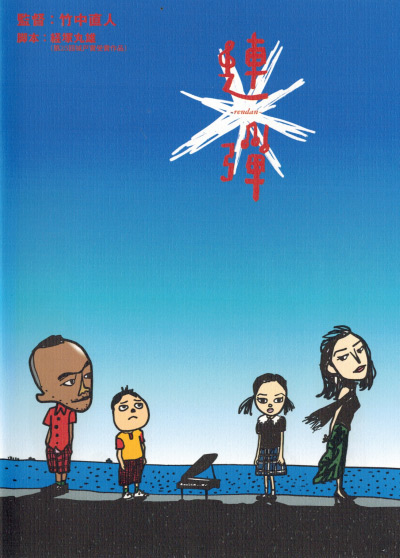
Shotaro and Minako are arguing. Minako has confessed her infidelity to her husband and informs him of her intention to leave him. She has ceased to enjoy living with a submissive husband. Minako, who works for a construction company, loves her job and is progressing in her successful career, while her husband eagerly takes care of the house and the kids. He buys groceries, he cooks, he does the laundry – constantly. The couple’s arguing intensifies until Minaka files for divorce. Their older daughter Mari isn’t that upset by her parent’s problems as she’s more interested in the piano piece she’s got to play with her mother at a concert organized by her music school; admittedly, she’s also rather interested in her music teacher. But her younger brother Toru feels betrayed by his mother and can’t manage to reconcile himself to his father’s role as a housewife. A partial reconciliation occurs at Minako and Mari’s concert, where their entrance on stage is met with loud applause.Read More »

Shochiku Studio of Japan commissioned several directors to create films reflecting on the themes of Ozu Yasujiro on the centenary of the director’s birth. Here we find Inoue Yoko, an apparently single young woman who is pregnant, searching for a small cafe that was often visited by a Taiwanese composer whose life she is researching. She herself is back from Taiwan and receiving help from a book store clerk, but she first has to contend with the her own reality which includes her parents.Read More »