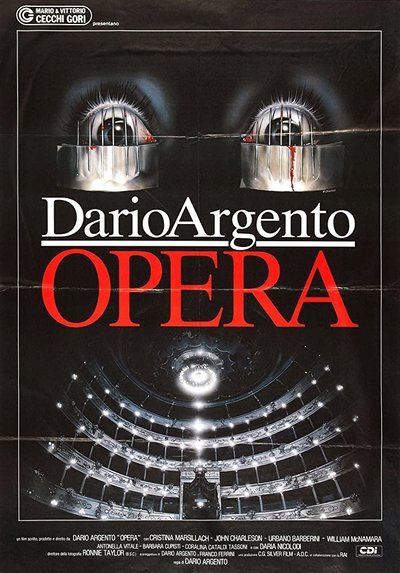
When a young opera singer takes over the leading role in an avant-garde presentation of Verdi’s Macbeth, she triggers the madness of a crazed fan who repeatedly forces the diva to watch the brutal murders of her loved ones. Will the woman’s recurring nightmare hold the key to the identity of this psychopath or does an even more horrific evil lay waiting in the wings?Read More »
Italy
-
Dario Argento – Opera (1987)
1981-1990Dario ArgentoGialloItalyThriller -
Dario Argento – La sindrome di Stendhal (1996)
1991-2000Dario ArgentoGialloHorrorItaly
Anna Manni is a policewoman trying to capture a vicious serial rapist and killer. The problem is that she suffers from Stendhal’s syndrome, a psychosomatic disease that gives her dizziness and hallucinations when she is exposed to the sight of paintings and artistic masterpieces. When the maniac lures her into a trap inside Florence’s famous Uffizi museum, her troubles are just beginning…Read More »
-
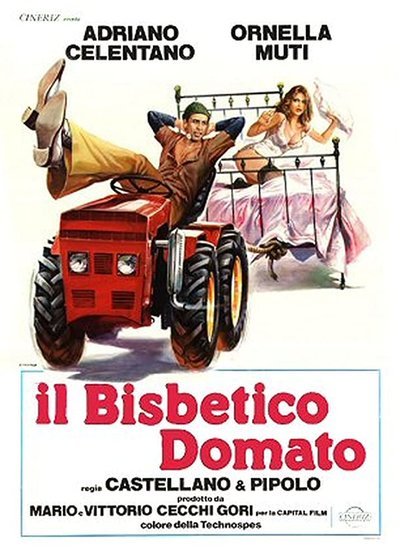
Franco Castellano & Giuseppe Moccia – Il bisbetico domato AKA The Taming of the Scoundrel (1980)
1971-1980ComedyFranco CastellanoGiuseppe MocciaItalyRomanceA grouchy farmer, known around his small Italian town as being wonderful to his employees, but actively driving everyone else away, is in for a surprise when a beautiful girl from the city, ends up on his stoop after her car breaks down in the rain.Read More »
-
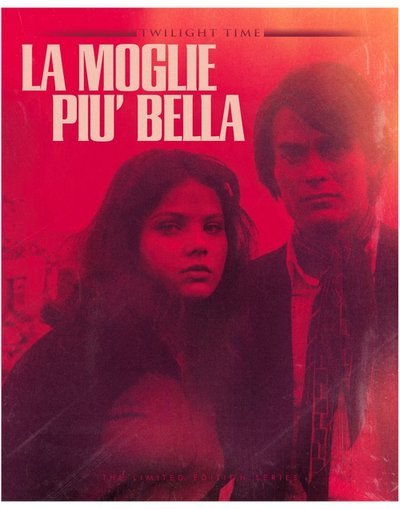
Damiano Damiani – La moglie più bella AKA The Most Beautiful Wife (1970)
1961-1970Damiano DamianiDramaItalyQuote:
Based on the story of Franca Villa and Filippo Melodia. In Sicily, as a Mafia boss leaves for prison, he advises Vito, a young man who’s his potential successor, to marry a virtuous and poor woman. Vito’s eye settles on Francesca, only 15, but lovely and self-possessed. Among her virtues are high self worth and forthright speech, so although she falls in love with Vito, she won’t bow down to him. Believing he’s losing face, he has his boys kidnap her and he rapes her. Then, he tells her he’ll still marry her. Instead, she files charges. Her parents, brother, and neighbors refuse to support her. Will she break? Will Vito continue his assaults?Read More » -
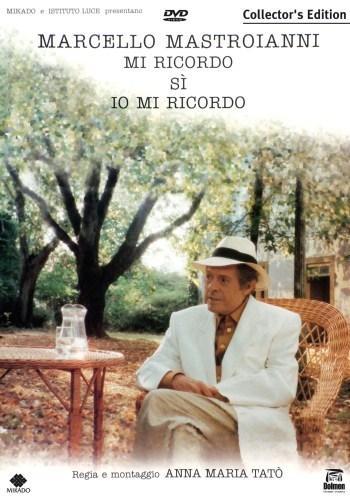
Anna Maria Tatò – Marcello Mastroianni: mi ricordo, sì, io mi ricordo AKA Marcello Mastroianni: I Remember [Full version + extras] (1997)
Documentary1991-2000Anna Maria TatòItalySynopsis:
In 1996, Marcello Mastroianni talks about life as an actor. It’s an anecdotal and philosophical memoir, moving from topic to topic, fully conscious of a man ^Óof a certain age^Ô looking back. He tells stories about Fellini and De Sica’s direction, of using irony in performances, of constantly working (an actor tries to find himself in characters). He’s diffident about prizes, celebrates Rome and Paris, salutes Naples and its people. He answers the question, why make bad films; recalls his father and grandfather, carpenters, his mother, deaf in her old age, and his brother, a film editor; he’s modest about his looks. In repose, time’s swift passage holds Mastroianni inward gaze.Read More » -
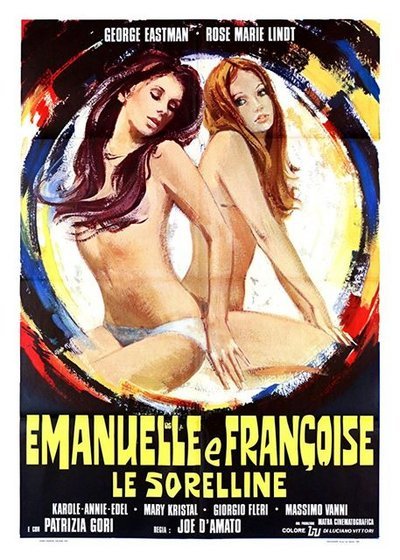
Joe D’Amato – Emanuelle e Françoise le sorelline AKA Emanuelle’s Revenge AKA Emanuelle and Francoise (1975)
1971-1980ExploitationGialloItalyJoe D'AmatoSynopsis:
Emanuelle (Lindt) is out to avenge her sister (Gori), who committed suicide after escaping from her sadistic lover Carlo (Eastman). So she chains him up in her basement, drugs him, and forces him to watch her having sex. Carlo starts hallucinating all kinds of bloody horrors and cannibalistic doings, so he decides he has to break free and kill Emanuelle.Read More » -
Emilio Ghione – I topi grigi (1918) (HD)
1911-1920CrimeEmilio GhioneItalySilentQuote:
I topi grigi, an eight-part serial produced by Tiber Film in Rome, is part of the complex saga of Za la Mort, an apache and outlaw who was the protagonist of 12 films, four serials, three novels and various theatrical shows created between 1914 and 1930 by Emilio Ghione (1879-1930).
Thanks to his alter ego Za, Ghione would eventually become a genuinely popular star. On one hand he incarnated the role of fearless hero and was the emblem of muscular masculinity. On the other he was also a natural performer in the role of a dandy in several melodramas set in the salons of the decadent, contemporary nobility – a setting reflecting the D’Annunzio-inspired atmosphere of the period.Read More » -
Danièle Huillet & Jean-Marie Straub – Dalla nube alla resistenza, aka: From the Cloud to the Resistance (1979)
1971-1980ArthouseDanièle Huillet and Jean-Marie StraubDramaItalyStraub/Huillet’s From the Cloud to the Resistance (1978) has been summarized by Straub as follows: ‘From the cloud, that is from the invention of the gods by man, to the resistance of the latter against the former as much as to the resistance against Fascism.
‘Dalla nube alla resistenza (From the Cloud to the Resistance ) (1978), based on two works by Cesare Pavese, falls into the category of History Lessons and Too Early, Too Late as well. It, too, has two parts—a twentieth-century text and a text regarding the myths of antiquity, each set in the appropriate landscape. Pavese’s The Moon and the Bonfires looks back on the violent deaths of Italian anti-Fascist resistance fighters; Dialogues with Leucò is a series of dialogues between heroes and gods, connecting myth and history and returning to an ambiguous stage in the creation of distinctions, such as that between animal and human, which are fundamental to grammar and language itself. Such a juxtaposition of political engagement with profoundly contemplative issues such as myth, nature, and meaning points to the characters of Empedocles and Antigone in the Hölderlin films.’
(Library Synopsis): Six dialogues between figures from Greek antiquity, taken from Cesare Pavese’s ‘Dialoghi con Leucò’, are followed by an episode set in modern times, taken from the same author’s novel ‘La Luna e i falò’.Read More »
-
Marco Ferreri – Il Seme dell’uomo aka The seed of man (1969)
Arthouse1961-1970ItalyMarco FerreriSci-FiDuring a Post-Apocalyptic period in the near future the majority of the European population has been wiped out by some sort of undefined plague. Cino and Dora, a young couple, are rounded up by what constitutes the authorities on an isolated temporary base. They are examined and given antibiotics which will protect them for six months, told to pick out a deserted house to live in the area, and use that time to conceive a child. They are later visited by an enigmatic group of black-clothed, initially threatening vigilantes who are evidently satisfied with the couple when they hear that a child is contemplated. However, despite her evident fondness for Cino, Dora is reluctant to try to conceive a baby. Then their domestic tranquility is interrupted by a beautiful French interloper who seems as if she is more than willing to fill in for Nora and conceive Cino’s children.Read More »