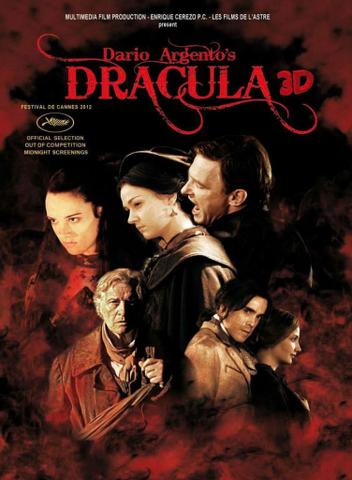
A young librarian, Jonathan Harker, is welcomed at Castle Dracula by the Count and a young woman named Tania, who seems intent on seducing Harker. The Count prevents Tania from biting the young man, but Dracula attacks Harker himself, leaving him weak. Harker attempts to escape the castle, but is killed by a wolf. Harker’s wife, Mina, arrives in the village and stays at the home of her friend, Lucy Kisslinger. Worried about her husband, she visits the castle, and falls under the spell of the Count. It transpires that Dracula has engineered their meeting, because Mina is the reincarnation of his long-lost love, Dolinger. Lucy also becomes undead before the mysterious happenings in the village attract the attention of vampire expert Van Helsing, who prepares for final combat with his deadliest foe.Read More »
Italy
-
Dario Argento – Dracula (2012)
2011-2020Dario ArgentoHorrorItaly -
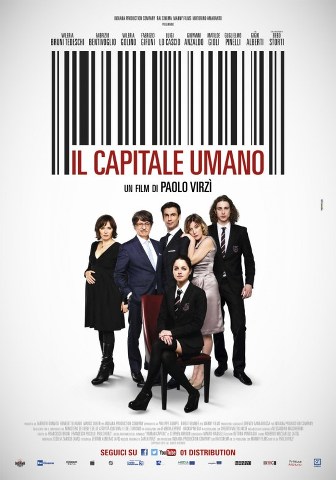
Paolo Virzì – Il capitale umano AKA Human Capital (2013)
2011-2020DramaItalyPaolo VirzìSynopsis
The destinies of two families are irrevocably tied together after a cyclist is hit off the road by a jeep in the night before Christmas Eve.
IMDb.comRead More » -
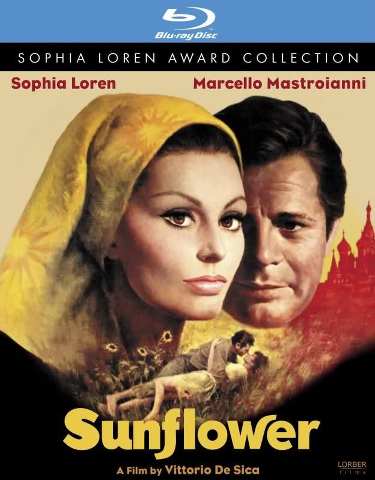
Vittorio De Sica – I girasoli AKA Sunflower (1970)
1961-1970DramaItalyRomanceVittorio De SicaSunflower, or as it is known in Italian I Girasoli, is a movie about how time continues to march on after war whether or not a person’s life does. Casualties on the battlefield is one way in which we discuss how brutal and total a war’s destruction was, but Sunflower offers another way to look at things: the collateral damage, which pertains not just to those civilians who are accidentally killed but to those whose lives are shattered by being in the general area. It makes the horrors of World War II in Italy accessible to us by focusing on how time marches on and leaves behind the broken emotional pieces of a man and a woman.
Vittorio de Sica, the maestro behind such classics as Marriage Italian Style and Yesterday Today and Tomorrow, directs this Italian film with his two favorite stars, Sophia Loren and Marcello Mastroianni, in a story that blends harsh neo-realist imagery with sentiment, touches of comedy and melodrama. Admittedly, the film could easily come across as overtly melodramatic, even sophomoric. And I could see where others might view the film as such. But de Sica was a wonderful director, and combing these kinds of tones and dealing with these storylines was his bread and butter. For me, the melodrama and sentiment is part of the specific Italian flavor in his films. It is also of historical note to point out that Sunflower was the first Western film to be shot in the Soviet Union.Read More »
-
Sergio Martino – Il tuo vizio è una stanza chiusa e solo io ne ho la chiave aka Your Vice Is a Locked Room and Only I Have the Key (1972)
1971-1980GialloItalySergio MartinoSynopsis:
There are three key ingredients that make an excellent giallo production. First, you need a drop-dead-gorgeous starlet that will readily take at least two showers in front of the camera, naked of course, and during the course of the film will not shy away from further revealing her “acting skills”. Second, you need a good amount of red paint, preferably not the Ferrari-red type. And third, you need a relatively good mystery story complimented with a few catchy tunes to bring that extra bit of chill. Now imagine that you throw in the mix one of the sexiest European stars to ever grace the exploitation genre canvas-Edwige Fenech, a legendary Italian director-Sergio Martino, and a script based on a short story by celebrated writer Edgar Alan Poe…and there you have it…Il Tuo vizio e una stanza chiusa e solo ion e ho la chiave a.k.a Your Vice is a Locked Room and Only I have the Key (1972), a spectacular giallo production that mixes all the right ingredients with just about the right amount of style we pointed out above.
Read More » -
Mario Monicelli & Steno – Guardie e Ladri aka Cops and Robbers (1951)
Drama1951-1960ComedyItalyMario MonicelliMario Monicelli and StenoStenoIMDb:
Toto most successfully attempts to go one better than Chaplin in this entry in which he cleverly uses his expressive face not only to telegraph laughs but to induce audience sympathy. Set against a war-scarred Rome in the middle of winter, Toto plays a petty thief, living on his wits to provide for his family, who are uncomplainingly making the best of a small, cold-water flat with no heating. The screenplay divertingly contrasts the gaunt, if talkative Toto with excitable, roly-poly but equally loquacious Aldo Fabrizi, playing a fathead police sergeant whose family is housed in comparative luxury.The catalyst for the plot’s ingenious action is provided by that under-rated born-in-Wisconsin actor, William Tubbs, who is wonderfully perfect here in a major role which gently pokes fun at Americans. Not only are all his scenes an absolute howl, but they are most cleverly contrived to increase in intensity as the plot progresses. You will chuckle as Toto leads him on a merry path through the Forum in his introductory scene, gasp with delight when he confronts Toto at the grocery hand-out, split your sides when he gives chase to Toto all over the countryside, and absolutely roll on the floor when he complains bitterly to Fabrizi and Carloni at the police station. This riotous scene, cleverly compounded, when Tubbs finally exits, by a gloriously satiric look at various police regulations, marks the end of the First Act.
Read More » -
Enzo Doria & Luigi Russo – Adamo ed Eva, la prima storia d’amore aka Adam and Eve (1983)
1981-1990AdventureEnzo Doria and Luigi RussoItalyRomanceQuote:
God casts Adam and Eve out of the Garden of Eden because Eve decided to have a fling with a visiting Cro-Magnon named Bearkiller. The disgraced couple find themselves on the outside up against an assortment of various dinosaurs, flying monsters and cannibals.Read More » -
Salvatore Mereu – Bellas mariposas (2012)
2011-2020DramaItalySalvatore Mereu
Review:
Italian writer-director Salvatore Mereu’s drama of Sardinian childhood adapts a short story by local author Sergio Atzeni.There are films that gently invite the viewer into their world, and there are others which yank us in throat first. Salvatore Mereu’s Bellas Mariposas, a twelve-year-old’s precocious journal of one long summer day in her run-down Sardinian neighborhood, is a fine example of the latter. Writer-director Mereu, ably following up 2008’s well-received Sonetaula with another snapshot of life on his native island, accumulates detail and atmosphere to a claustrophobic degree, audaciously deploying direct-to-camera address to make the viewer more confidant than spectator.
Immersively evocative and grittily atmospheric, this is distinctive auteur fare whose hard-knock verisimilitude recalls more violent recent predecessors like Matteo Garrone’s widely-admired Gomorrah (2008) and Matteo Botrugno & Daniele Coluccini’s lesser-known Et In Terra Pax (2010). Somewhat overlooked when premiering in a Venice sidebar, Mereu’s “free” adaptation of an unfinished tale by influential Sardinian author Sergio Atzeni unfortunately faces an uphill battle to find room even at mainland Italian arthouses. Edgy festivals and those with a particular interest in young people’s issues should nevertheless definitely give it a try.Read More »
-
John W. Shadow – Microscopic Liquid Subway to Oblivion (1970)
1961-1970ExperimentalItalyJohn W. ShadowQuote:
Undeniably one of the strangest drug-related movies ever made (not to mention the title itself!). Dr Fink is a quite ruthless and cynic college professor. One of his students, is addicted to heroin. The professor invites him to his villa along with his wife to spend the weekend. The psychedelic, surreal and sleazy situations that take place have to be seen! One of the rarest, weirdest and most obscure Italian exploitation films of all time.Read More » -
Roberto Rossellini – Germania, anno zero aka Germany Year Zero (1948)
1941-1950DramaItalyRoberto RosselliniWarIn the third and final film of Rossellini’s WWII trilogy, the director shifts his focus from his native Italy to the bombed-out ruins of Berlin, where 12-year-old Edmund Koehler struggles for survival. Among the nine people he lives with are: a father, who is suffering from malnutrition and a fatal illness; a brother, who is a former Nazi soldier hiding to avoid arrest; and a sister, who has turned to prostitution. Scouring the rubble-strewn city for food, money, and cigarettes, he comes upon a former teacher, Herr Enning (Erich Guhne), who evinces a barely restrained sexual attraction to the boy while providing him with records of Hitler’s speeches that can be bartered on the black market. He also drums into the boy a classic piece of Nazi propaganda about the importance of having the courage to let the weak be destroyed. Under his influence, the confused young protagonist heads down a tragic path.
~ Michael Costello, AMGRead More »