Italy

  • Alfredo De Antoni – Il processo Clémenceau (1917)

    1911-1920Alfredo De AntoniCrimeDramaItaly

    29f7c043f76a2bde437fd0d52a185152

    Quote:
    It is ironic that the very few references to this excellent film that I was able to find online all referred simply to the fact that this was Vittorio De Sica’s first film!? And, it is true of course that the young De Sica appears in the film briefly as the son of the Clemenceaus, but the film has so much more to offer… Based on Alexandre Dumas fils’ novel, the film stars Francesca Bertinini as Iza in this tragedy of a woman trapped in a loveless marriage. At 107 minutes, this was a lengthy film for 1917. It is divided into two parts, chronicling the life of Iza as a girl or young woman, and her life as an adult. The story is told through the pen of her husband, and this is in several ways important in appreciating the subtle weight of what could on the surface look like a “typical” Diva film of the era, but which does in fact carry more psychological weight, and was inspired by the more complex dramas that Asta Nielsen starred in during the early teens.Read More »
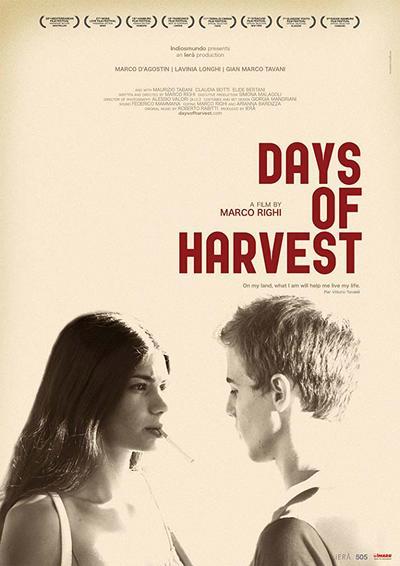
  • Marco Righi – I giorni della vendemmia AKA Days of Harvest (2010)

    2001-2010DramaItalyMarco Righi

    29f7c043f76a2bde437fd0d52a185152

    Quote:
    1984. In the sultry, still sunny September of that Emilian rural district most soaked with catholicism and home-grown socialism, Elia, a teenager grown out of these horizons, lives with his parents: William, his father, who has got a strong ideological tendency to marxism, Maddalena, his mother, very prayerful, and his grandmother; with the ghost of his older brother Samuele, whos not coming back home since a whole year. It is harvest time in the small vineyard next to home, so the days of harvest begin and in order to give some help in the field arrives also Emilia, the nearly grown-up granddaugther of an old couple living in Elias same small town. The young woman decides to go back to her grandparents country town for a short time, to write her degree thesis and, in the meanwhile, to earn some money for a wee trip shes been planning for a while. Conceited and nonchalant, Emilia is a true revolution in the ordinary every day life of the provincial teenager but, in spite of everything…Read More »

  • Franco Piavoli – Il Pianeta Azzurro AKA The Blue Planet [+Extras] (1982)

    1981-1990ArthouseDocumentaryFranco PiavoliItaly

    29f7c043f76a2bde437fd0d52a185152

    Synopsis
    The film follows the cycle of the seasons upon a rural landscape, from the reawakening of life following the Winter thaw to the blossoming of Spring, the heat of Summer working in the fields and the twilight of Autumn. Man is confronted by nature through the succession of seasons and in the essential moments of his existence: youth, love, food, work, pain.Read More »

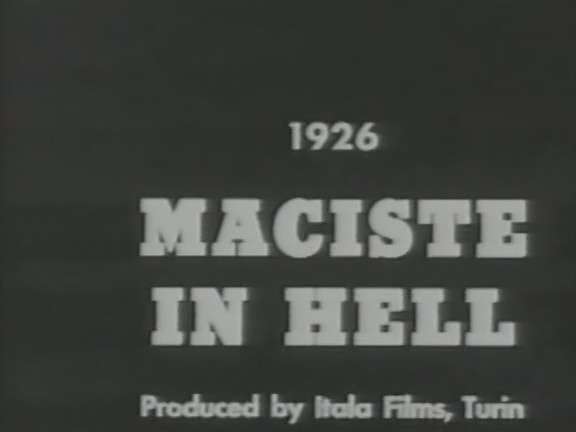
  • Guido Brignone – Maciste all’inferno AKA Maciste in Hell (1925)

    1921-1930Guido BrignoneItalian Cinema under FascismItalySilent

    http://img534.imageshack.us/img534/5104/bscap000qf9.jpg

    29f7c043f76a2bde437fd0d52a185152

    Scifilm wrote:
    Maciste is tempted by the devil, and ends up trapped in hell when he elects to fight him.

    Bartolomeo Pagano played Maciste in the 1914 movie CABIRIA; he must have liked the character; he ended up playing him repeatedly in a variety of movies over the next twenty years. I do wonder about the character’s position in time; CABIRIA took place in ancient Rome, but even if I’m not sure when this movie takes place, it’s certainly a much later period of time; Maciste wears a suit and tie through most of this, and at one point he is tempted with some shots of very modern cities indeed. Nonetheless, the fantasy element is very strong; the scenes in hell are great, with a huge cast of demons and fiends, including a couple of giant demons, a flying dragon, and some great special effects. It’s based at least partially on Dante’s “Inferno”, and it includes both Lucifer, Pluto and Proserpine as characters. I would love to have seen some of the other early Maciste movies just to see what the character’s story was, but this one and CABIRIA are the only ones I know exist for sure. It’s definitely worth a look for people interested in creative visions of hell; the movie apparently served as an inspiration both for Mario Bava and Federico Fellini.Read More »

  • Liliana Cavani – Al di là del bene e del male aka Beyond Good and Evil (1977)

    Drama1971-1980CultItalyLiliana Cavani

    29f7c043f76a2bde437fd0d52a185152

    About the movie
    Beyond Good and Evil (Italian: Al di là del bene e del male, UK title: Beyond Evil) is a 1977 drama film directed by Liliana Cavani. It stars Dominique Sanda, Erland Josephson and Robert Powell. The film follows the intense relationship formed in the 1880s between Friedrich Nietzsche, Lou Salome and Paul Rée. This is the second part of “The German Trilogy” directed by Liliana Cavani. In The Night Porter she described connection between perversion and fascism. This time she describes life of Friedrich Nietzsche, a German philosopher who wrote Thus Spoke Zarathustra and Beyond Good and Evil. Virna Lisi won Nastro d’Argento Best supporting Actress award Nastro d’Argento (Silver Ribbon) from the ‘Italian National Syndicate of Film Journalists’.Read More »

  • Maria Helene Bertino & Dario Castelli & Alessandro Gagliardo – Un mito antropologico televisivo AKA An Anthropological Television Myth (2012)

    2011-2020Alessandro GagliardoArthouseDario CastelliDocumentaryItalyMaria Helene Bertino

    29f7c043f76a2bde437fd0d52a185152

    An Anthropological Television Myth is an excuse to introduce television anthropology into the culture debate, reading the history of a country and its people through the archives of hundreds of private TV stations scattered throughout Italy.

    MUBI’s take wrote:
    A great example of how seemingly mundane footage can be reused to create a work of social importance, this exercise in visual history-telling uses a medium representative of popular culture as a tool for the reading of social movements and citizen engagement in a Sicilian city.Read More »

  • Luigi Zampa – Bello, onesto, emigrato Australia sposerebbe compaesana illibata AKA A Girl in Australia (1971)

    1971-1980ComedyCommedia all'ItalianaItalyLuigi Zampa

    29f7c043f76a2bde437fd0d52a185152

    Early 1970s. Amedeo is a poor Italian immigrant living in Australia for twenty years. Seeking to marry an Italian wife, he corresponds with Carmela, a pretty girl from Rome. They do not reveal their true identities and do not mention their hardships in their letters. Carmela is actually a prostitute seeking an opportunity to change her life style. Amedeo, embarrassed about his looks, sends a photograph to Carmela of his handsome friend Giuseppe. Finally, Carmela lands in Melbourne. Amedeo meets Carmela at the airport and he is struck by her beauty. Thinking he will be rejected because of his looks, he decides to tell Carmela that he is Giuseppe, and he reserves to tell her the truth at a later moment. This starts a three day eventful journey across Eastern Australia. Carmela will soon become better acquainted with Amedeo and she learns of his hardships as an immigrant. She eventually meets the real Giuseppe, however, she believes that he is her betrothed groom, Amedeo. She quickly learns Giuseppe’s true shady intentions. In fact, she finds herself living in a red light district and then escapes. Amedeo and Carmela finally find true happiness together.Read More »

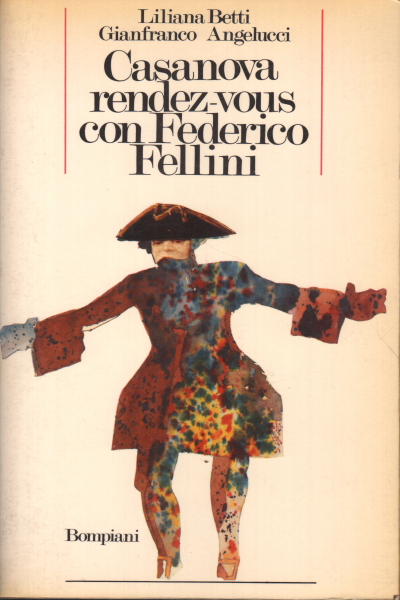
  • Gianfranco Angelucci & Liliane Betti – E il Casanova di Fellini? aka And Fellini’s Casanova? (1975)

    Documentary1971-1980Federico FelliniGianfranco AngelucciItalyLiliane Betti

    29f7c043f76a2bde437fd0d52a185152

    Quote:
    …the “crypto-documentary” by Gianfranco Angelucci amd Liliana Betti E il Casanova di Fellini? (And Fellini’s Casanova?) made for the RAI, in which Federico submits some friends to a screen test for the part of Casanova: Mastroianni, Tognazzi, Gassman, Alain Cuny and an exhilarating Alberto Sordi deeply involved in the part.Read More »

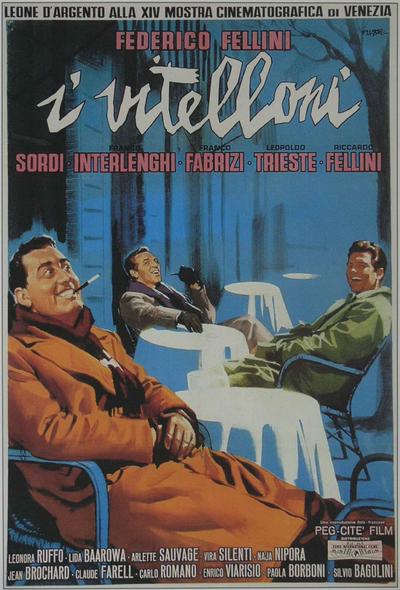
  • Federico Fellini – I vitelloni (1953)

    1951-1960ComedyDramaFederico FelliniItalian Neo-RealismItaly

    29f7c043f76a2bde437fd0d52a185152

    Quote:
    Five men walk arm-in-arm through a sleepy Adriatic town, their lockstep a gentle echo of Italy’s Fascistic past. Such posses are quite common in Italy, where close male friendships, equal parts sensuality and ritual, are second only to the family in importance. I Vitelloni (the best sense of it is “the idlers”), Fellini’s third film, includes some of his most subtle filmmaking and most personal material. Loosely structured and oddly narrated, I Vitelloni is like a sketch for both La Dolce Vita and Amarcord. Paradoxically, I Vitelloni is also an insightful and accurate representation of Italy in the immediate postwar period, full of references to the massive social changes underway. Fifty years after its release, I Vitelloni can finally be seen as a seminal film in Italian cinema, one of the first to detail the effects of technology, celebrity, and mobility on Italian life.Read More »

Back to top button