

During the Iran-Iraq war, Reza’s wife gives birth, and dies soon afterward. Reza is taken as POW. Shokooh finds Reza’s baby and raises her as her own. Many years later, Reza find’s his daughter again….Read More »
During the Iran-Iraq war, Reza’s wife gives birth, and dies soon afterward. Reza is taken as POW. Shokooh finds Reza’s baby and raises her as her own. Many years later, Reza find’s his daughter again….Read More »

Experimental war film about two friends who travel back in time to the front lines of the Iran-Iraq War.Read More »

Sina, a sixteen years old teenager from today’s Tehranian middle class, experiences a new life on the verge of his parents’ divorce. Added to his very real sense of having been abandoned is the threat of a local thug who believes that Sina owes him a considerable sum of money. Things become even more complicated when Sina, taking advantage of his parents’ constant absence, allows an older girl, Nahid, to temporarily move in with him. Sina finds himself with the prospect of making choices that threaten his body and soul.Read More »

Quote:
Jaleh and Hamid are two youngsters from the third generation of Iranian immigrants in Turkey. Their families came here to have a peaceful life. We see two parallel narrations from two different periods of the young characters’ lives. One narration is about their first days of meeting and happiness. The other is about the eight crucial hours when they commit a robbery so they can use the money to start a happy life somewhere else. However, as often happens in such cases, they are led in a different direction.Read More »

At the time of the Egyptian crisis, Ahmad Mustafa, an economic and political analyst from Egypt, finds an opportunity to travel to Iran to meet and talk Sunni people; an 11000 kilometer journey; a memorable visit, from the country’s most important decision-making centers to its most outlying border areas, from the green strands of the Caspian Sea forests to the Khorasan and Baluchistan desert areas and the high mountains of Kurdistan. On this journey he hopes he will know the real Iran, a country frequently misrepresented by Western and Arab media. How Sunni Muslims live in a Shiite country? That’s the question that’s brought Ahmad Mustafa to Iran.Read More »

SYNOPSIS:
Pizza man Hussein is a daily witnesses to the unjust distribution of wealth in his native Iran. One day, he finds a purse filled with shockingly expensive receipts from an upscale jewelry store. He attempts to bring the purse back to the store, but because of his working-class attire, he’s not allowed inside. Then, during a delivery, a rich man invites Hussein into his extravagant mansion – an event that spurs Hussein to make a desperate bid for wealth.Read More »

Plot Synopsis from allmovie:
As a newlywed couple boards a train bound for India and are forced to reconcile atheism and faith in director Mohsen Makhmalbaf’s spiritual-themed drama. He is a non-believer that is consumed by doubt, and she has faith that life’s answers will come to her through prayer. Though there is little that this newlywed couple can agree upon — including the prospect of having children — they do love each other and are intent upon sharing a spiritual honeymoon. In the midst of a philosophical debate, a holy man on the tracks forces the train to grind to a halt. While the local beggars revere the man for his power over the imposing locomotives, the truth is much less mystical. Years ago the man failed in committing suicide on the tracks when the oncoming train saw him and slowed down. These days he is compelled by the beggars to reenact the “miracle” daily so that the train will stop and they can collect alms from the passengers.Read More »
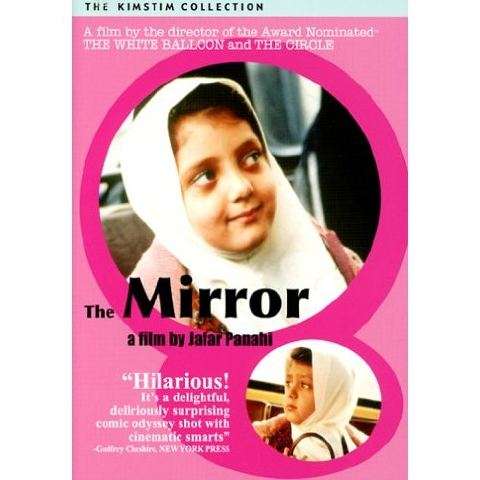
A girl in traditional female clothing, and her arm in plaster, comes out of school one day and doesn’t find her mother meeting her…Read More »

Review by Jonathan Rosenbaum
A 1989 film by Mohsen Makhmalbaf about the upsetting discoveries made by a shell-shocked veteran of the Iran-Iraq war after he returns to his job as a photojournalist in Tehran and to his fiancee, the daughter of a wealthy merchant. As in The Peddler, Makhmalbaf shows considerable talent and passion for dealing with the contradictions of contemporary Iranian life, and the restless and eclectic style of his direction makes this one of his most penetrating and disturbing works. In Farsi with subtitles. 75 min.
This one is also on Rosenbaum’s top 1000 list.Read More »