Germany

  • Willi Forst – Frauen sind keine Engel (1943)

    Comedy1941-1950CrimeGermanyThird Reich CinemaWilli Forst

    29f7c043f76a2bde437fd0d52a185152

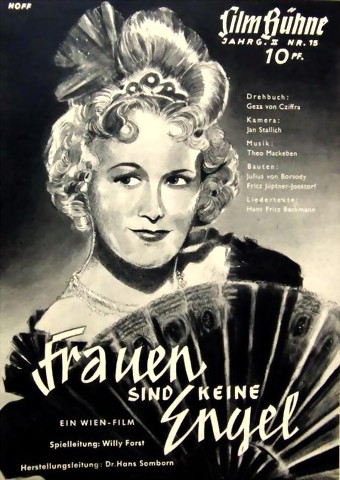
    “Frauen sind keine Engel” was made on a moderate budget and has generally found not as much attention as that which has been rightfully accorded to his ‘Viennese trilogy’ made at about the same time. Please don’t expect the outward splendour of some other Forst films, even though script, acting and direction leave nothing to be desired. However, like many of Forst’s more important films this one not only provides great entertainment, but is also a thorough examination of the relation of fiction/art and reality.Read More »

  • Franz Hofer – Hurra! Einquartierung! (1913)

    1911-1920ComedyFranz HoferGermanySilentThe Birth of Cinema

    Free Image Hosting at www.ImageShack.us

    29f7c043f76a2bde437fd0d52a185152

    This film comes from the Schloss Archive of His Highness, Herr Graf Ferdinand von Galitzien:

    Free Image Hosting at www.ImageShack.us

    Quote:
    Born Franz Wygand Wüstenhöfer in Malstatt (Saarland), Hofer began his career as a stage actor and playwright in 1909. A year later he began working as a screenwriter for Messter’s Henny Porten series and for directors such as Viggo Larsen—Die schwarze Katze [The Black Cat] (1910)—and Walter Schmidthässler—Das Weib ohne Herz [The Woman Without a Heart] and Der Zug des Herzens [The Pull of the Heart] (both 1912).Read More »

  • Klaus Lemke – Finale (2007)

    2001-2010CrimeEroticaGermanyKlaus Lemke

    http://img21.imageshack.us/img21/1425/finale02.png

    29f7c043f76a2bde437fd0d52a185152

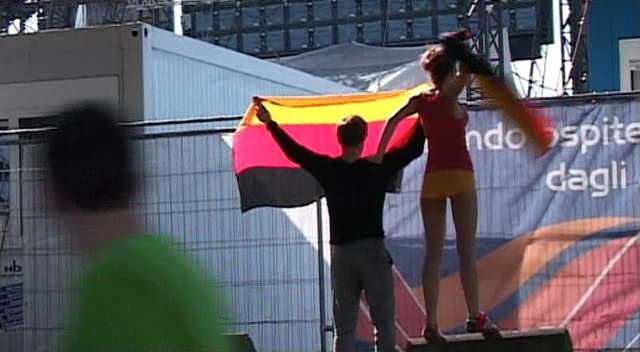
    Improvised sex and small crime fiction, shot during and involving the real soccer world cup 2006 in Hamburg, GermanyRead More »

  • Bruce LaBruce – The Revolution is My Boyfriend (2004)

    2001-2010Bruce LaBruceCampEroticaGermanyQueer Cinema(s)

    http://i477.photobucket.com/albums/rr135/pcscarpa/bscap0075.jpg

    29f7c043f76a2bde437fd0d52a185152

    Plot

    The core plot begins with the kidnapping of Patrick, the son of a wealthy industrialist. Sexual and romantic engtanglements push the drama forward. At the film’s climax, Gudrun delivers a soliloquy on the importance of personal life in revolution. She puts particular emphasis on the breaking of heterosexual and possessive sexual norms, urging her comrades to join “The Homosexual Intifada”.

    The pressure of Gudrun’s controlling personality causes the group to break up. Most of the urban guerrillas escape into the night. In the dénouement, the characters are visited some time later. Several have found happiness in the homosexual relationships established during their revolutionary activities. Che has become a terrorist trainer in the Middle East. Patrick escapes with Clyde, where they embark on a spree of bank robberies. This action is reminiscent of Patty Hearst’s actions with the SLA. Gudrun and Andreas settle down and have a child named Ulrike (after Ulrike Meinhof), whom Gudrun believes could embody the next generation of the Red Army Faction.Read More »

  • Bruce LaBruce – The Raspberry Reich (2004)

    2001-2010Bruce LaBruceCampEroticaGermany

    29f7c043f76a2bde437fd0d52a185152

    A comment from an Imdb user:
    It’s been a while since I saw this film, so I’ll talk about as much as I can remember. I happened to catch this film at the Sundance Film Festival. I knew nothing about the directors status or his past work. I heard from others at the festival that this film was straight up gay porn, which caught my interest. Being gay I’m always interested in seeing films with gay themes. I assumed the people were wrong. To my sexual arousal they were right! Almost…The film was hilarious, glamourizing the idea of “terrorist chic.” In the film a group young of virile young men under the leadership of a woman (Gunfrun) kidnap the son of a wealthy man. Read More »

  • Margarethe von Trotta – Das Zweite Erwachen der Christa Klages AKA The Second Awakening of Christa Klages (1978)

    1981-1990ArthouseDramaGermanyMargarethe von Trotta

    29f7c043f76a2bde437fd0d52a185152

    From timeout.com:
    Few film-makers wear their hearts as openly on their sleeves as Margarethe von Trotta, and her fascination with women (their relationships with each other and their definition – often redefinition – of themselves) is as apparent in this, her first solo feature, as it was in the later The German Sisters or Friends and Husbands. Christa Klages (Engel) is a young mother who turns terrorist and bank robber to prevent the closure of a crêche which she helps to run and her daughter attends. On the run with her friend and sometime lover, Christa is pursued by the police, and more mysteriously by a young woman (Thalbach) who was her hostage in the bank raid. What von Trotta has to say about her women is compelling, and she remains one of the few film-makers to portray terrorists convincingly. But the enigma of the hostage runs through the film as elusively as a character in a dream – vitally important at any given moment, but irritatingly meaningless when taken as a whole – and undermines the conviction of this feminist thriller which is otherwise so gloriously rooted in West Germany’s present.Read More »

  • Margarethe von Trotta – Heller Wahn AKA Sheer Madness (1983)

    1981-1990ArthouseClassicsGermanyMargarethe von Trotta

    29f7c043f76a2bde437fd0d52a185152

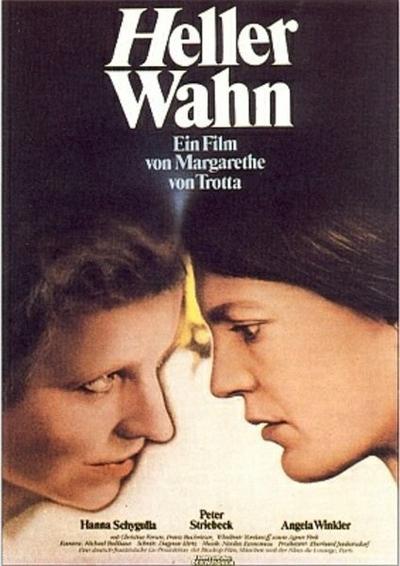
    Olga and Ruth become friends. Olga is independent, separated from her husband, living with an immigrant pianist… Read More »

  • Margarethe von Trotta – Schwestern oder Die Balance des Glücks AKA Sisters,or the Balance of Happiness (1979)

    1971-1980ArthouseDramaGermanyMargarethe von Trotta

    29f7c043f76a2bde437fd0d52a185152

    Sisters Maria and Anna live together. Maria is a most proficient executive secretary, encouraging Anna to finish her studies and start a career…Read More »

  • Philip Gröning – L’Amour, l’argent, l’amour AKA Love, Money, Love [+Extras] (2000)

    1991-2000ArthouseDramaGermanyPhilip Gröning

    Free Image Hosting at www.ImageShack.us

    29f7c043f76a2bde437fd0d52a185152

    L’Amour, L’Argent, L’Amour (2000) was a hit in Germany this year, with the press praising everything from the actors to the director and plot. The titles were initially alluring, red and intercut with time-lapse firework flashes of a city on New Year’s Eve. Helped by a restless camera, the viewer soon realises that it isn’t going to be a “sit down and relax” type of experience.

    David, an unemployed scrap metal wimp with his arm in plaster (Florian Stetter) and Marie, an impish, cutsie prostitute, (Sabine Timoteo) meet and spontaneously decide to leave town together. Normally couples elope romantically into the sunset or run adventurously away together, but Philip Groening’s L’Amour, L’Argent, L’Amour (2000) this couple drive off into the snowy, bleak landscape. Copious shots of roads at night ensue (for this is a “road movie”).Read More »

Back to top button