Gerd Kroske

  • Gerd Kroske – Wollis Paradies aka Wolli in Paradise (2008)

    1981-1990DocumentaryGerd KroskeGermany

    Wolfgang “Wolli” Köhler is a Fassbinder-like character. A refugee from East Germany—yesterday, porn cinema owner and brothel manager, quoting readily from Marx and Lenin, he defines himself as “a Bolshevik pimp”, and today, a poet and painter—he is one of the atypical fi gures of the German economic miracle much appreciated by the author of Lola. His life course even includes the famous episode of the civil servant in love with a prostitute who is determinedly to set her on the right path. When talking of his fi lm, Gerd Kroske refers to Portrait of Jason.Read More »

  • Gerd Kroske – Striche ziehen. AKA Drawing a Line. (2015)

    2011-2020DocumentaryGerd KroskeGermany

    A white line across the colourful side of the Wall in West Berlin. An art action that was to end with a serious arrest in 1986. The back story takes place in the Weimar punk scene of the 1980s, where small anarchic free spaces were defended against state normalism: Turn the state into cucumber salad! More than thirty years later, it becomes clear that there was a leak. A betrayal is suddenly in the air. The consequences continue to draw their perfidious line to this day. Friendships break up in retrospect. The film tells of the tension between subculture and dictatorship. There is no line to be drawn under the GDR.Read More »

  • Gerd Kroske – Der Boxprinz AKA The Boxing Prince (2002)

    Gerd Kroske2001-2010DocumentaryGermany

    The documentary tells the life story of the boxer Norbert Grupe, who was known by his fighting name Prince of Homburg.Read More »

  • Gerd Kroske – Galera (1998)

    1991-2000DocumentaryGerd KroskeGermany

    The young French from Mantes-la-Jolie call their everyday tours “Galera”, alluding to a strenuous life with obstacles. Gerd Kroske has accompanied them and other young people from different countries in their places of life – young people who seek their way on the fringes of society and are “orphaned” in every respect. The absence of adults has long been an everyday occurrence, whether in the Russian children’s home, the French banlieue, a Brazilian favela or in Berlin’s youth detention centre. The film questions the current media images of “Generation X”. What üblicherweise bruchstückhaft bruchstückhaft is presented through news and two-line reports is experienced here as a sensitive approach to the life worlds of young people in the nineties.Read More »

  • Gerd Kroske – Schranken (2009)

    2001-2010DocumentaryGerd KroskeGermany

    In the 80s: new border barriers were needed in the GDR. Attempts to escape by car to the west increased. Metal workers of the IFA and state security work hand in hand for the defense against “terrorism” to prevent escapes. In conspiratorial work after work they worked on new barriers. Crash tests for counter-terrorism, collisions for emergencies. Cars rest there in the new barriers and leave total damage. The barriers were installed at all border crossing points from the mid-80s. “SCHRANKEN” tells of the motivation of those involved, of tragically ending escapes and gives insights into German engineering and military spirit. Archaeology GDR pure. A geneaology of the East.Read More »

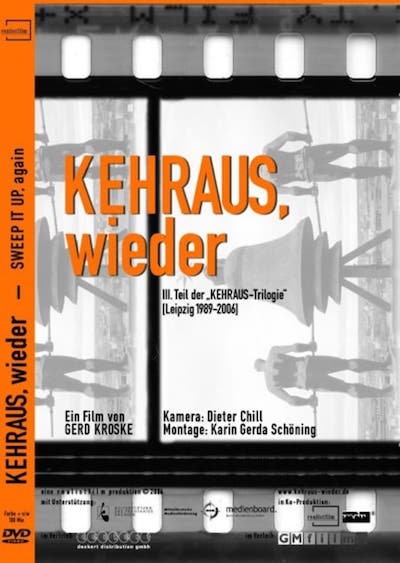
  • Gerd Kroske – Kehraus, wieder (2006)

    2001-2010DocumentaryGerd KroskeGermany

    Last of a trilogy

    “KEHRAUS, Again” was made in 2006, another ten years have passed since the last film and Stefan and Marlen are no longer alive. Gabi makes it through and her now grown-up children are faced with the realities of their own childhood. Henry and Marion have settled in. The grandchild generation has already been placed in foster families. “You live like this…”

    “The film has become an “unintentional” – never actually planned – long-term observation, because I wished for a happy ending with every film. Reality has produced this stuff in 16 years.” G.K.Read More »

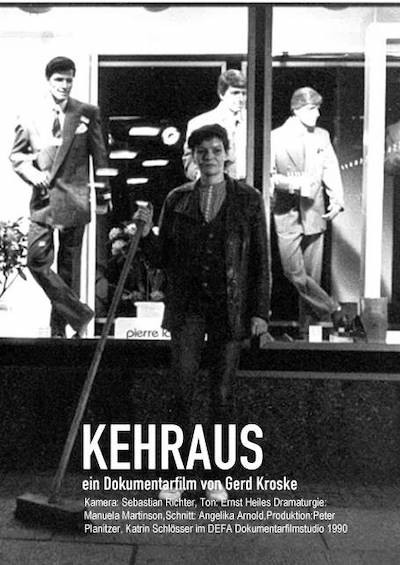
  • Gerd Kroske – Kehraus (1990)

    1981-1990DocumentaryGerd KroskeGermanyShort Film

    Synopsis
    The first in a three-part trilogy from director Gerd Kroske.

    1990, KEHRAUS on the streets of Leipzig at night: street sweepers clean away what nobody needs anymore. Among many other things Müll, also worn election posters. End time mood is spreading. What happened after the GDR, sounds promising, but cannot yet be grasped. The three street cleaners Gabi, Henry and Stefan has always wavered between the poles in her curriculum vitae: children’s home, prison, occasional work in city cleaning. Illusionless, but with a sharp look für their surroundings, the road sweepers only have one certainty: There’ll always be dirt.Read More »

  • Gerd Kroske – Heino Jaeger – Look Before You Kuck (2012)

    Gerd Kroske2011-2020DocumentaryGermany

    Quote:

    The German painter and cabaret artist Heino Jaeger was once a celebrated radio star. The radio recordings “Fragen Sie Dr. Jaeger/ Ask Dr. Jaeger” achieved cult status in the 70s. Nevertheless, this popularity seemed to “hurt” Jaeger as a painter. After ten years, he abruptly discontinued his broadcasting work and began to drink.
    Weight down by a trauma from World War II and characterized by anarchic madness, but far being an eccentric, arrogant artist, Heino Jaeger died in a psychiatric ward in 1997 at the early age of 59. He spent his last twelve years there as an alcoholic schizophrenic. His paintings are very precise, ambiguous and contain a special irony. Read More »

  • Gerd Kroske & Andreas Voigt – Leipzig im Herbst AKA Leipzig in Autumn (1990)

    1981-1990Andreas VoigtDocumentaryGerd KroskeGermanyPolitics

    The most comprehensive documentation of events surrounding the 1989 Monday demonstrations in Leipzig, East Germany. The film team finally got the permission of the state-owned film studio to document these historic events on October 16, 1989 and filmed until the fall of the Berlin Wall. With their heavy 35mm camera equipment, they were the only professional team filming in Leipzig. The film includes interviews with demonstrators, members of the citizens’ rights movement, officials and bystanders in East Germany’s peaceful revolution.Read More »

Back to top button