Garin Nugroho

  • Garin Nugroho – Kucumbu Tubuh Indahku AKA Memories of My Body (2018)

    2011-2020DramaGarin NugrohoIndonesiaQueer Cinema(s)

    In Center Java Juno, a pre-teen abandoned by his father, joins a Lengger dance centre where men assume feminine appearances but the political and social upheaval in Indonesia forces him on the road, meeting remarkable people on his journey.Read More »

  • Garin Nugroho – Mata Tertutup AKA The Blindfold (2012)

    2011-2020DramaGarin NugrohoIndonesia

    Quote:
    In contemporary Indonesia, religious radicalisation is playing an increasingly important role. The banned Indonesian Islamic State (NII) successfully recruits among young people who don’t have any prospects of training or work. Nugroho tells three different stories: that of the girl Rima, who emerges as a valuable staff member of the NII; Jabir, who quits school for lack of money and returns to his parents, and Asimah, the mother of Ainsi, who has been kidnapped by the NII.Read More »

  • Garin Nugroho – Opera Jawa AKA Requiem from Java [+Extras] (2006)

    Arthouse2001-2010Garin NugrohoIndonesiaMusical

    29f7c043f76a2bde437fd0d52a185152

    Synopsis:
    Siti (Artika Sari Devi) and Setio (Martinus Miroto) are a married couple living in a small village. They were once dancers in plays depicting the Ramayana, but have since retired from the stage to sell earthenware pottery.

    Siti used to play the part of Sita, the wife of Prince Rama, whom Setio portrayed. In an episode from the Ramayana, Siti becomes the object of desire of evil King Ravana and is abducted by him.

    The events of the Ramayana are paralleled in the characters’ real lives when Ludiro (Eko Supriyanto), a butcher who rules over all the village’s business affairs, tries to seduce Siti. Read More »

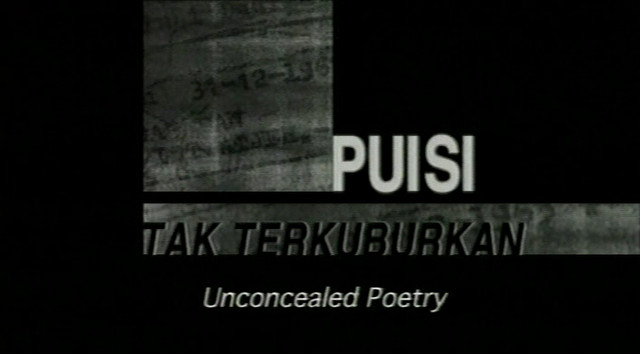
  • Garin Nugroho – Puisi tak terkuburkan AKA Unconcealed Poetry (2000)

    1991-2000DramaGarin NugrohoIndonesiaPolitics

    29f7c043f76a2bde437fd0d52a185152

    Timely in terms of current Indonesian politics but in other respects long overdue, Nugroho’s extraordinary film looks back to 1965, when the assassination of seven army officers was unconvincingly pinned on communists—giving the dictator Suharto all the excuse he needed for decades of authoritarian rule and arbitrary arrests. There were mass arrests and executions in Aceh, then as now considered Indonesia’s most fractious province. One lucky survivor was the poet Ibrahim Kadir. Nugroho invites Kadir (now 56) to perform some of the didong narrative poems he has written in the intervening years, amid a recreation of events in the Takengon Prison. The film focuses on cells 7 (for men) and 8 (for women); the inmates keep their spirits up with songs, stories of local courtships and tales of government stupidity. More elegiac than angry, the film is presented—very poetically—as a slow transition from monochrome to delicate colour.Read More »

Back to top button