Experimental

  • Gregory J. Markopoulos – Sorrows (1969)

    1961-1970ExperimentalGregory J. MarkopoulosShort FilmUSA

    Quote:
    Sorrows, US expatriate director Gregory J. Markopoulos’ 1969 film, shares his earlier films’—Bliss (1966) and Gammelion (1968)—fascination with significant structures and the lives of those who lived in or constructed them.

    In the case of Sorrows, the mansion, Villa Tribschen, filmed from the outside and inside, viewed from a cold, frigid landscape, and within with the warmth of furniture, sculpture, art, and windows which provided natural light from all four sides of the house on each level, was built by King Ludwig of Bavaria—most often described as the “mad” king—for the composer Richard Wagner.Read More »

  • Maria Klonaris – Selva. Un portrait de Parvaneh Navaï (1983)

    1981-1990ArthouseExperimentalFranceMaria Klonaris

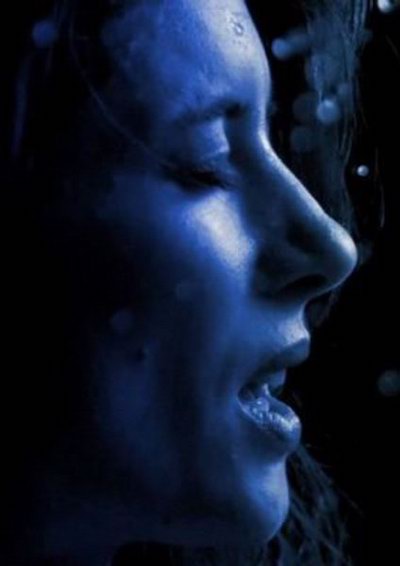
    Trance dances and out of body projection. In front of the camera, Parvaneh Navaï becomes a mediator who enters in contact with and immerses into the energies of Nature, while her own energy radiates and echos in the forest (“selva”). The camera amplifies and expands her presence, transforming the forest into an imaginary space. The camera becomes a painter’s brush.Read More »

  • Caetano Veloso – O Cinema Falado (1986)

    ArthouseBrazilCaetano VelosoExperimental

    Plot Outline: First film of Brazil’s leading pop composer. Fragmented style, kind of patchwork of interviews with his friends, mixed with conversations, thoughts, scenes of dance and literature excerpts.Read More »

  • Shu Lea Cheang – Fluidø (2017)

    2011-2020EroticaExperimentalGermanyQueer Cinema(s)Shu Lea Cheang

    EXPLICIT CONTENT
    It is the year 2060 and AIDS has been eradicated. However, in some, the HIV virus has now mutated into a gene from which a drug can be produced that has become the white powder of the twenty-first century. With a virtually supported scanning system, secret police are trying to identify anyone who carries this gene. Filmed in Berlin, Taiwan-born multimedia artist and filmmaker Shu Lea Cheang’s science fiction dystopia revolves around a struggle to gain control over the production and exploitation of bodily fluids. Her film is like an orgiastic opera; a breathless round of bodies, secretions, performances and sexual acts often performed in the service of an overriding economy. An unusual, largely experimental and deliberately parapornographic drama in which the borders between the sexes as well as homo-, hetero-, bi-, trans- or intersexual are constantly blurred.Read More »

  • Rüdiger Neumann – Rüdiger Neumann – Archiv der Blicke (1980-1993)

    1981-1990ExperimentalGermanyRüdiger Neumann

    Quote:
    Rüdiger Neumann is a filmmaker and professor at the Hochschule für bildende Künste in Hamburg whose teaching has influenced two generations of filmmakers, many of whom now play an active role in shaping German cinema today. In the 1980s and 1990s, the HfbK was the only experimental and political alternative to the film schools in Munich and Berlin. Rüdiger Neumann’s controversial Thursday seminars are legendary. These five keys films by Rüdiger Neumann are released for the first time on this DVD.Read More »

  • Frantisek Pilát & Otakar Vávra – Svetlo proniká tmou AKA The Light Penetrates the Dark (1931)

    1931-1940Czech RepublicExperimentalFrantisek PilátOtakar VávraShort Film

    Quote:
    Zdenek Pešánek created the first public kinetic sculpture, for the power station in Prague. This short experimental film focuses on a kinetic sculpture by Zdenek Pešánek. For a period of eight years it issued beams of light from the outside wall of a transformer station at Prague’s power utility before its destruction in 1939. Though genuine, these shots seem abstract to us. They are a rhythmically assembled ode to the light-creating devices and phenomena of electricity. Light arcs, coils, bulbs and various luminous elements support the alternation of positive and negative film images, creating an impressive universe of light and shade. In the 1920s, Pešánek had obtained financial support for his work with electric kinetic light art. In the 1930s, he was the first sculptor to use neon lights. He built several kinetic light pianos, and published a book titled “Kinetismus” in 1941.Read More »

  • Clément Courcier – 500 mg (2013)

    2011-2020Clément CourcierExperimentalFranceShort Film

    A story about pills …Read More »

  • Michael Snow – Back and Forth AKA <—> (1969)

    1961-1970CanadaExperimentalMichael Snow

    Quote:
    “This neat, finely tuned, hypersensitive film examines the outside and inside of a banal prefab classroom, stares at an asymmetrical space so undistinguished that it’s hard to believe the whole movie is confined to it, and has this neck-jerking camera gimmick that hits a wooden stop arm at each end of its swing. Basically it’s a perpetual motion film that ingeniously builds a sculptural effect by insisting on time-motion to the point where the camera’s swinging arcs and white wall field assume the hardness, the dimensions of a concrete beam. “In such a hard, drilling work, the wooden clap sounds are a terrific invention, and, as much as any single element, create the sculpture. Seeming to thrust the image outward off the screen, these clap effects are timed like a metronome, sometimes occurring with torrential frequency.” – Manny Farber, Artforum, 1970Read More »

  • Michael Snow – Presents (1981)

    1981-1990CanadaExperimentalMichael Snow

    The apparent vertical scratch in celluloid that opens Presents literally opens into a film within the film. When its figure awakens into a woman in a ‘real’ unreal set, the slapstick satire of structural film begins. It is not the camera that moves, but the whole set, in this first of three material ‘investigations’ of camera movement. In the second, the camera literally invades the set; a plexiglass sheet in front of the dolly crushes everything in its sight as it zooms through space. Finally, this monster of formalism pushes through the wall of the set and the film cuts to a series of rapidly edited shots as the camera zigzags over lines of force and moving fields of vision in an approximation of the eye in nature. Snow pushes us into acceptance of present moments of vision, but the single drum beat that coincides with each edit in this elegaic section announces each moment of life’s irreversible disappearance.Read More »

Back to top button