
Photo to Film. Horrors of the childhood.Read More »
Photo to Film. Horrors of the childhood.Read More »
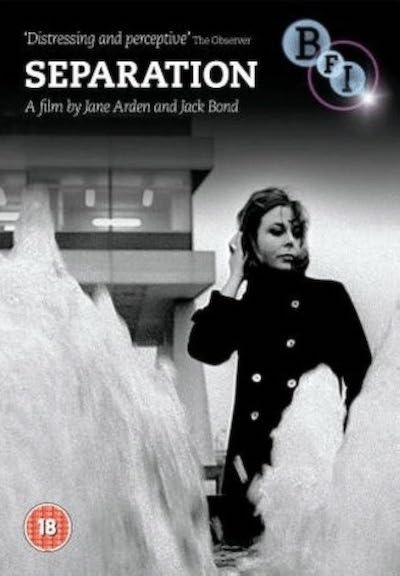

Scripted by and starring Jane Arden, Separation concerns the inner life of a woman during a period of breakdown – marital, and possibly mental. Her past and (possible?) future are revealed through a fragmented but brilliantly achieved and often humorous narrative, in which dreams and desires are as real as the ‘swinging’ London of the film’s setting, complete with Procol Harum music and Mark Boyle projections.Read More »

Made while director Kaori Oda was studying at Béla Tarr’s Film.Factory in Sarajevo, Aragane is, on the surface, a documentary about a Bosnian coalmine. As Oda takes us underground, the surroundings are illuminated solely by the available light of the miners’ headlamps, creating a state of sensual semi-blindness that both attunes us to the dangers of the mine and — with the beams cutting arcs of light through the blackness and casting shadows on the cavern walls — becomes an organic metaphor for the roots of cinema itself. It is not surprising that commentators have drawn similarities between Oda’s work and that of Harvard’s renowned Sensory Ethnography Lab: as in such films as Leviathan and Manakamana, in Aragane Oda attempts to understand her subjects through an embodied presence that moves beyond distanced knowledge and towards intimate entanglement.Read More »
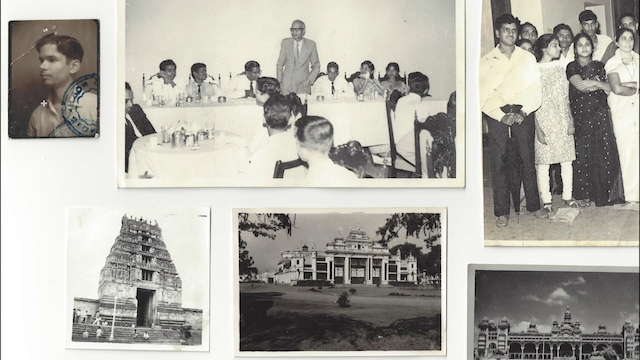
Sanzgiri’s father was 18 when India ousted the last remaining Portuguese colonisers from Goa in 1961. Combining 16mm with drone footage, desktop screenshots, and Skype interviews with his father, Sanzgiri utilises various modes of seeing at a distance to question identity, the construction of memory and anti-colonial solidarity across continents.Read More »
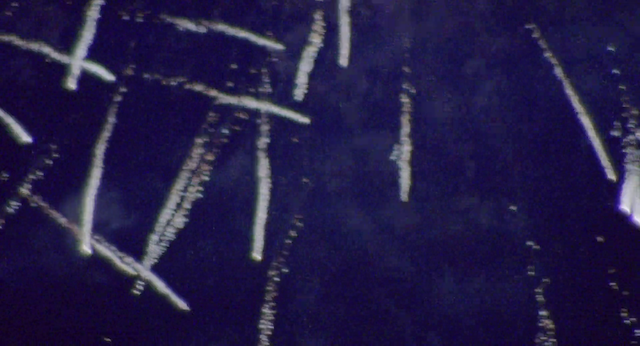
Ben Russell explores how we experience time in his latest striking and hallucinatory short film. Between Carpathian Mountains, Vilnius punk clubs, a Belarusian Independence Day celebration, and Marseille, hovers in a limbo of drone and fog, then descends into stroboscopic clusters of moments and movements.Read More »

From the cover:
In this small film, shot in Estepona in the south of Spain, Jørgen Leth and Ole John pursue the principle of asynchronisation and the juxtaposition of disparate elements. The images are footage from a barbershop, a talking man’s face and black film. The sound likewise embraces three elements: a story of how cement is made, which has neither head nor tail; a recording of a shave; and Louis Hjulmand’s score. The tight framing lends the mundane act of a shave a beauty of its own. Meanwhile, in the juxtaposition of near-rambling monologue and music, something else emerges, something more. As a viewer, you try to connect the two, but because no such connection exists, you have to surrender to the pure “experience” of images and sound. The title, a Danish Social-Democratic election slogan, is meaningless in this context. However, if you play around with the juxtaposition of the world “security” and the shots of the man’s soft skin and exposed neck under the barber’s sharply honed razor, the mock meaning rubs up against an altogether different one.Read More »

Quote:
This is a quite a rare example of a political sci-fi filmed without means. An excessive and schizophrenic creature, DINNI E LA NORMALINA allows Grifi’s more playful soul to see the light, while not dispersing the dark reflection on the exploitation by media institutions. Although the film is completely finished, in 2004 Grifi filmed new material to be integrated into the editing process: a homeless man who wanders among carcasses of burned scooters, queues of employees who show their feces to the health inspectors. Unfortunately this material remains unpublished.Read More »

Synopsis:
If the entire world is bad, why shouldn’t we be? Adopting this insolent attitude as their guiding philosophy, a pair of hedonistic young women (Ivana Karbanová and Jitka Cerhová), both named Marie, embark on a gleefully debauched odyssey of gluttony, giddy destruction, and antipatriarchal resistance, in which nothing is safe from their nihilistic pursuit of pleasure. But what happens when the fun is over? Matching her anarchic message with an equally radical aesthetic, director Věra Chytilová, with the close collaboration of cinematographer Jaroslav Kučera, unleashes an optical storm of fluctuating film stocks, kaleidoscopic montages, cartoonish stop-motion cutouts, and surreal costumes designed by Ester Krumbachová, who also cowrote the script. The result is Daisies, the most defiant provocation of the Czechoslovak New Wave, an exuberant call to rebellion aimed squarely at those who uphold authoritarian oppression in any form.Read More »

Quote:
Yvonne Rainer’s landmark film is a meditation on ambivalence that plays with cliché and the conventions of soap opera while telling the story of a woman whose sexual dissatisfaction masks an enormous anger. (Zeitgeist FIlms)Read More »