Experimental

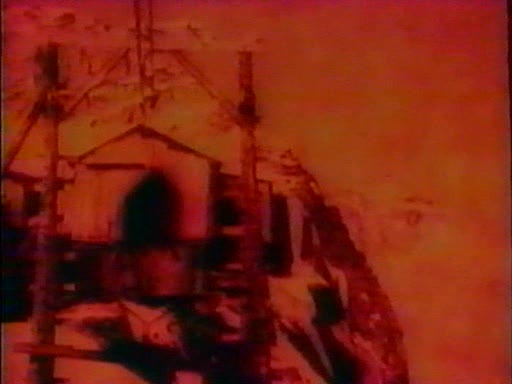
  • Yervant Gianikian & Angela Ricci Lucchi – Su tutte le vette è pace (1998)

    1991-2000Angela Ricci LucchiExperimentalItalyWorld War OneYervant Gianikian

    Quote:
    Their Trilogia della guerra (War Trilogy) consists of Prigionieri della guerra (War prisoners), Su tutte le vette è pace (All’s Quiet on the Mountain Peaks), and Oh! Uomo (Oh! Man). The trilogy explores armed conflict from a variety of perspectives: from the relationship oppressor/oppressed and psychological warfare to the meticulous preparations undertaken by soldiers before battle, the plight of the wounded, and the realities of the battlefield. In their unusual and deeply individual method, Gianikian and Lucchi take old archival footage as the basis for their creations. They then set about reworking and transforming in ways that recontextualize and call our attention to the old film—marked, quite literally, by the passage of time—as a visual, historical document. Their work has been presented in many of the world’s most prestigious international festivals including Cannes, Berlin, Rotterdam, Paris and New York.Read More »
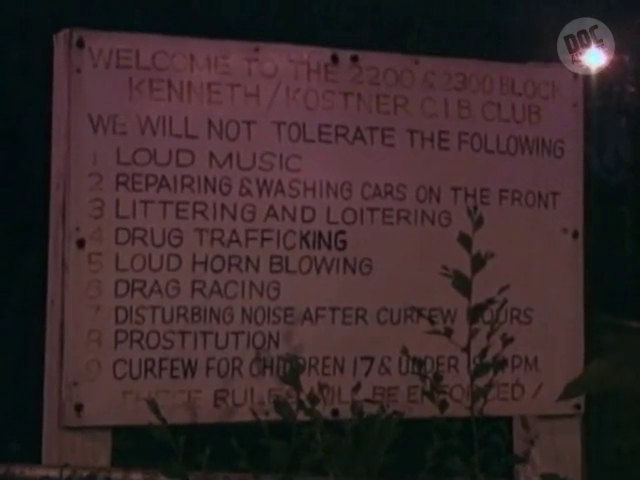
  • Deborah Stratman – The BLVD (1999)

    Deborah Stratman1991-2000DocumentaryExperimentalUSA

    Synopsis: An experimental documentary about the street drag racing scene on Chicago’s near West Side.

    This is a rambling, textured film about obsession. It is about the mythos of speed for its own sake, and it is about waiting. While waiting, The BLVD exposes community, inner-city landscapes and nomadic experiences of place. The film treats storytelling as a living medium for determining history. And it commands respect for those who transform cars, or anything else, through passion.Read More »

  • John Whitney & James Whitney – Film Exercise #1 (1943)

    1941-1950ExperimentalJames WhitneyJohn WhitneyShort FilmUSA

    Quote
    Begins with a three beat announcement drawn out in time which thereafter serves as a figure to divide the four sections. Each return of this figure is more condensed, and finally used in reverse to conclude the film.

    The brothers John & James Whitney created their remarkable series of Film Exercises between 1943 and 1944. These films are visually based on modernist composition theory, the carefully varied permutations of form are manipulated with cut-out masks so that the image photographed is pure direct light shaped, rather than the light reflected from drawings as in traditional animation. Read More »

  • Robert Nelson & William T. Wiley – The Off-Handed Jape… & How to Pull It Off (1967)

    1961-1970ExperimentalRobert NelsonShort FilmUSAWilliam T. Wiley

    A humorous lesson in gestural acting from Dr. Otis Bird and Butch Babad, demonstrating such useful phrases as ‘the verge of remembering’ and ‘letting your friend know he’s forgotten to zip up his pants.’ (MW) ‘This film can be of immeasurable aid to would-be actors who are weak in the jape.’ (William T. Wiley)

    One of Nelson’s collaborations with painter and good friend of about 50 years, William T. Wiley. Dr. Otis Bird and Butch Babad are challenged to act out amusing and creative pantomimes while two voices are evaluating their success.Read More »

  • Jean-Claude Rousseau – De son Appartement (2007)

    Jean-Claude Rousseau2001-2010ExperimentalFrance

    PROPOSITIONS
    Selected examples of a New Cinema

    The continuing demand for high standards is what sets Rouseau’s work apart. What makes this film distinctive is the way Rousseau explicitly returns to the source of his creative inspiration. So here he is at home reciting «Bérénice» to himself, whilst going about his household chores. It verges on the comical: There are repeated shots of him obstinately trying to turn off a dripping tap, or the jubilant close up of bare feet carried away in performing a dance step or two. Combining art with life in such a way, that nothing is compartmentalised, nothing lost – that is the goal. (Jean-Pierre Rehm)Read More »

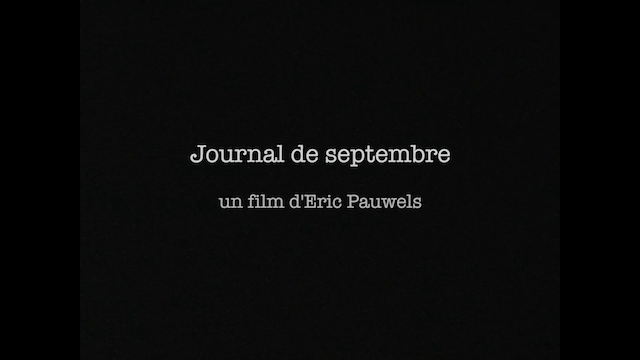
  • Eric Pauwels – Journal de septembre (2019)

    Eric Pauwels2011-2020BelgiumDocumentaryExperimental

    “Est-ce une chose douce et tendre, une chose énigmatique, une chose humaine, une chose à nulle autre pareille, une chose fragile ? C’est une chose tissée de mille choses, douces, fragiles, énigmatiques et humaines. Le Journal de septembre est un voyage intérieur qui se déploie jour après jour d’une forme à une autre, glissant peu à peu d’images du quotidien du cinéaste à des séquences plus intimes et plus surréelles.” — Centre de l’Audiovisuel à BruxellesRead More »

  • Yvonne Rainer – The Man Who Envied Women (1985)

    Yvonne Rainer1981-1990DramaExperimentalUSA

    In an avant-garde attempt to explore widely disparate, unconnected subjects dealing with topics as diverse as sex, a broken marriage, artists’ housing in New York, and Central American politics, director Yvonne Rainer meanders through a lot of philosophical and rhetorical territory. In the end, the voyage may be too much for most viewers, although certain segments of the film stand out as quite successful.Read More »

  • Bruce LaBruce – Pierrot Lunaire (2014)

    Bruce La Bruce2011-2020ExperimentalGermanyMusicalQueer Cinema(s)

    A young girl that regularly dresses as a boy falls in love and seduces a young girl that has no clue that her lover has the same sex. When the girl introduces ‘her boyfriend’ to her father he becomes skeptical and unmasks the fraud. Even though, strangely, the feelings of the girl persist without shifting, the father does not allow them to ever see the other again. Furious and delusional the ‘boy’ develops an adventurous plan to prove his true ‘masculinity’ to the father of his lover.Read More »

  • James Benning – Landscape Suicide (1986) (HD)

    James Benning1981-1990DocumentaryExperimentalUSA

    In “Landscape Suicide” Benning continues his examination of Americana through the stories of two murderers. Ed Gein was a Wisconsin farmer and multiple murderer who taxidermied his victims in the 1950s. Bernadette Prott was a California teenager who stabbed a friend to death over an insult in 1984. Benning’s distanced approach to such grisly material is as far removed as possible from sensationalism, however. Although the acts of murder are both bizarre and violent, Benning dwells on them only minimally, emphasizing instead the details of psychological motivation, which in both cases seem frighteningly mundane. Benning has created a script which is a masterpiece of understated colloquial writing, and the actors he employs to re-enact confessional testimony and incidents recounted in trial transcripts perform with a flatly convincing lack of affect reminiscent of Gary Gilmore. Read More »

Back to top button