Epic

  • Veljko Bulajic – Bitka na Neretvi AKA The Battle of Neretva (1969)

    1961-1970EpicVeljko BulajicWarYugoslaviaYugoslavian Cinema under Tito

    29f7c043f76a2bde437fd0d52a185152

    Quote:
    In 1943, Hitler orders the final destruction of the Yugoslav Partisans. The Partisans begin a trek northward to the relative safety of the Bosnian Mountains – their goal is to cross the treacherous Neretva gorge over one remaining bridge. Along the way, they battle German tanks, Italian infantry, Chetnik Cavalry, strafing airplanes, disease and natural elements.

    Yugoslav director Bulajic is telling his story from all points of view, but his sympathies lie with the Partisans. The film has pro-Communist leanings, and tells several interwoven stories stressing the importance of comradeship in wartime. There are many important characters: Yul Brynner (“Morituri”) as crack demolition expert Vlado; Sergei Bondarchuk (director of “Waterloo”) as short-tempered artillery officer Martin; Franco Nero (“The Mercenary”) as an Italian Captain with no faith in Fascism; Hardy Kruger (“A Bridge too Far”) as Colonel Kranzer, who fights with dedication which begins to dwindle as he realizes the bitter reality that the partisans are a formidable enemy; Ljubisa Samardzic (“Battle of the Eagles”) and Sylva Koscina (“Hornets’ Nest”) are brother-and-sister, and Koscina is to marry Ivan (Lojze Rozman) after the war; the list goes on and on, and although every character is significant, it’s impossible to list them all. There’s an interesting twist, too: the legendary Orson Welles plays a Chetnik Senator who battles for concessions with General Lohring (the great Curd Jurgens), a commited Nazi officer who is determined the wipe out the Partisans once and for all.Read More »

  • Enrico Guazzoni – Agrippina (1911)

    1911-1920Enrico GuazzoniEpicItalySilent


    29f7c043f76a2bde437fd0d52a185152

    Summary:
    After the death of Claudius, Agrippina announced Nero the heir to the throne, which leads to despair of the true heir – Brittanicus.
    Not daring to oppose Agrippina, Senators declare Nero the emperor.
    Agrippina is against of an affair of Nero and Poppaea.
    Agrippina threaten Nero that if he neglect his wife Octavius, she will give the throne to Brittanicus.
    The threats of Agrippina had their effect. Brittanicus is poisoned.
    Perversity of Nero is insatiable and he gives his trusted man, Anicetus a terrible order.
    Agrippina is looking for salvation, but the indomitable hatred of Emperor Nero decides the fate of Agrippina…Read More »

  • Theodoros Angelopoulos – O megalexandros AKA Alexander the Great (1980)

    Drama1971-1980EpicGreeceTheodoros Angelopoulos

    Synopsis
    Lead by Alexandros (Omero Antonuti), a group of thieves escape from prison. They take several aristocrats hostage, and, together with a few anarchists, they go to Alexandros’ village, where an administrative system of common ownership and equality among all the inhabitants has been instituted. They ask the aristocrats to return the land to the villagers, but their demands are not met because soldiers have surrounded the village. The anarchists try to leave but are killed on the way. Alexandros executes the hostages; the soldiers kill his comrades, and the villagers murder him. The only survivor is a little boy named Alexandros (Ilias Zafeiropoulos), who escapes and goes to Athens.Read More »

  • Joe D’Amato – The Emporer Caligula: The Untold Story AKA Caligula 2 (1982)

    1981-1990EpicEroticaItalyJoe D'Amato

    from IMDB:
    The deranged Roman emperor Gainus ‘Caligula’ (Little Boots) Caesar (12-41 A.D.) rules Rome with an iron fist and has anyone tortured and exectued for even the slightest insubordination. Mostly set during his last year of his reign, as Caligula loses support due to his brutal and crazed excess, a young Moor woman, named Miriam, becomes his lover while ploting to kill him to avenge the murder of a friend which Caligula was responsible for. But Miriam is torn between her personal vandeda against Caligula and her own personal feelings towards him despite his madness and debauched lifestyle of orgies and bloody torture murders. Written by Matthew PatayRead More »

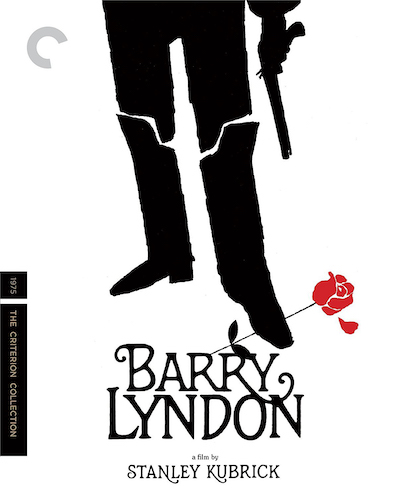
  • Stanley Kubrick – Barry Lyndon (1975)

    1971-1980DramaEpicStanley KubrickUnited Kingdom

    Quote:
    Stanley Kubrick bent the conventions of the historical drama to his own will in this dazzling vision of a pitiless aristocracy, adapted from a novel by William Makepeace Thackeray. In picaresque detail, Barry Lyndon chronicles the adventures of an incorrigible trickster (Ryan O’Neal) whose opportunism takes him from an Irish farm to the battlefields of the Seven Years’ War and the parlors of high society. For the most sumptuously crafted film of his career, Kubrick recreated the decadent surfaces and intricate social codes of the period, evoking the light and texture of eighteenth-century painting with the help of pioneering cinematographic techniques and lavish costume and production design, all of which earned Academy Awards. The result is a masterpiece—a sardonic, devastating portrait of a vanishing world whose opulence conceals the moral vacancy at its heart.Read More »

  • Louis Feuillade – L’orgie romaine AKA Heliogabale [hand coloured version] (1911)

    1911-1920EpicFranceLouis FeuilladeSilent

    29f7c043f76a2bde437fd0d52a185152

    Short silent epic from gaumont, hand coloured. The story of Elegabalus, one of Rome’s most vain, brutal, decadent and perverted emperors. Apart from his personality problems, things only really take a nasty turn for him when he sets lions on his guests at a palace party. After a couple of years, people (or at least the pretorian guards) are not going to stand for that… Read More »

  • Enrico Guazzoni – Quo Vadis? (1912)

    1911-1920Enrico GuazzoniEpicItalySilent

    Directed by Enrico Guazzoni
    Scenario by Enrico Guazzoni, from a novel by Henryk Sienkiewicz
    Amleto Novelli (Vinicius), Gustav Serena (Petronius), Amelia Cattaneo (Eunice), Carlo Cattaneo (Nero)

    The birth of the motion picture epic is generally dated to the 1913-1914 Italian films Quo vadis, The Last Days of Pompeii, Cabiria and Cajus Julius Cesar, many of them based on a standard set of 19th century religious novels that would be made and remade over the next half of the 20th century. One of several specialists in the genre, Enrico Guazzoni filmed this second version Quo Vadis?, the prime exemplar of a subsidiary genre to “Life of Christ” films, one that might be called the “Christ vs. Caesar” genre. The title of this film means “Where are you going?” and the question is posed by the Ascended Christ to Peter in a vision as the latter departs Rome on the eve of an Imperial persecution. The main story, however, focuses on a Roman commander, Vinicius, who falls for a Christian girl, Lygia, and is so drawn into the underground Christian community, experiencing a personal transformation along the way.Read More »

  • W.S. Van Dyke – Marie Antoinette (1938)

    1931-1940ClassicsEpicUSAW.S. Van Dyke

    With a seven-figure budget and veteran director W.S. Van Dyke at the helm, MARIE ANTOINETTE is one of the most opulent period dramas produced in the golden era of Hollywood. The film chronicles the life of the 18th-century queen, following her emotional transformation from childhood as a young Austrian princess to her last days in the court of Louis XVI before the French Revolution. Led by the talents of Norma Shearer as Marie, John Barrymore as Louis XVI, and Tyrone Power as Marie’s childhood friend and aspiring lover, Count Axel de Fersen, the film exposes the power plays and chicaneries of the French court, painting the Duke d’Orleans as the villainous source of Marie’s public relations tragedy. With the extravagance of the court matched vociferously by the extravagance of the production, a romantic score by Henry Stothart, and a strong performance from Shearer, MARIE ANTOINETTE is a quality period drama.Read More »

Back to top button