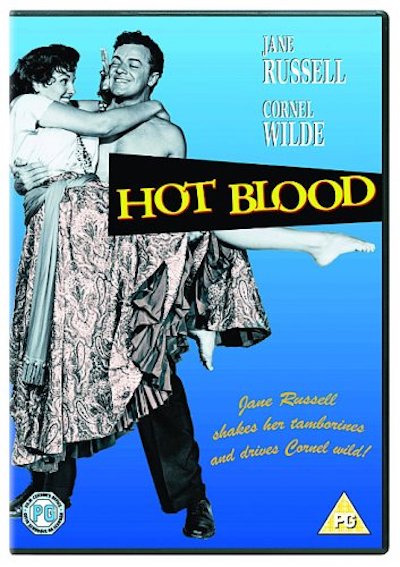

Stephen Torino (Wilde), who is tricked by his brother Marco (Adler) into an arranged marriage with tempestuous Annie Caldash (Russell). Annie is willing to give the union a go, but Torino wants none of it.Read More »
Stephen Torino (Wilde), who is tricked by his brother Marco (Adler) into an arranged marriage with tempestuous Annie Caldash (Russell). Annie is willing to give the union a go, but Torino wants none of it.Read More »

THE SCREEN IN REVIEW; ‘ The Gay Sisters,’ Featuring Barbara Stanwyck, George Brent, Geraldine Fitzgerald and Donald Crisp, at Strand
T. S.
Published: August 15, 1942
The New York Times
What a long, gray and pretentious film “The Gay Sisters” is! Another pointlessly caustic inquiry into the lives of the eccentric off-spring of a once grand family, the new film at the Strand not once offers the slightest reason to warrant the telling of its involved and trivial story. Read More »
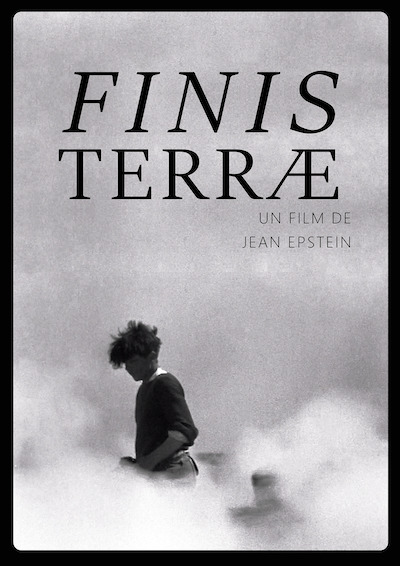
Synopsis:
The Ushant archipelago is a group of small islands situated off the coast of Brittany at the northwest extremity of France. Each year, four fishermen from the most populated island Ushant set up camp for three months on the uninhabited islet of Bannec to gather and process seaweed, producing a valuable soda-rich resource for factories along the coast. JeanMarie and Ambroise, the two youngest members of the four, fall out when the latter drops his friend’s last bottle of wine. Ambroise finds himself ostracised when Jean-Marie accuses him of stealing his pocket knife and then develops a fever when infection sets in on a hand wound. Read More »

Synopsis
The soundtrack to a radio soap opera set in a luxury hotel is acted out by characters who are riding a ramshackle bus from Bangkok to a small town in Thailand’s Northeast. When the bus stops, the drama in the characters’ real lives can be seen. In different cirumstances, it’s not hard to imagine the characters – a young small-town girl (glamorous model), an older woman (hi-so boutique owner), an illegal Burmese immigrant (hotel waitress), half-Thai backpacker (handsome hotel owner), soldier (ladyboy hostess) and dodgy businessman (dodgy businessman) – assuming the lives of their larger-than-life soap opera alter egosRead More »

An enchanting and humorous blend of music, fable, and melodrama, Tajouj has become a classic of African cinema, the first Sudanese feature film and also the debut film of Gadalla Gubara. The story of a forbidden love triangle among the nomadic Beja people of the Eastern Desert in 19th-century Sudan, Tajouj stars Salah Ibn Albadya, a nationally beloved performer best known for his mystical Sufi and romantic ballads.Read More »

At thirty-seven, Miri is a twice-widowed, El Al flight attendant. Her well-regulated existence is suddenly turned upside down by an abandoned Chinese boy whose migrant-worker mother has been summarily deported from Israel. The film is a touching comic-drama in which two human beings — as different from each other as Tel Aviv is from Beijing — accompany each other on a remarkable journey, one that takes them both back to a meaningful life.Read More »
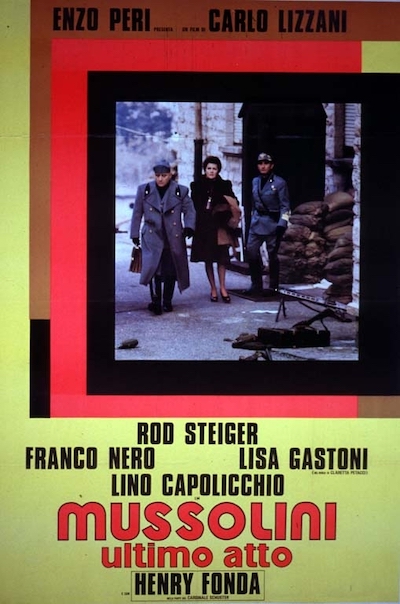
In 1945, Benito Mussolini goes to Milan to talk with Archbishop Alfredo Ildefonso Schuster to request his help in escaping from Italy. The Republic of Salò, the last bastion of fascism, is decaying, and the Americans, along with the partisans are about to win control of Milan. Mussolini flees, pursued by his lover Claretta Petacci, and manages to get to the northern village of Dongo. There he clashes with the Germans, who order him to disguise himself as an officer of Germany rather than be captured by the partisans. Mussolini accepts without objection, always hoping for a revolt of his loyal fascists, but they are in jeopardy. When Mussolini is recognised, Walter Audisio, the leader of the partisans, initially wants to hand him over to the Americans, so that Mussolini undergoes due process. But the war crimes of the Duce are too great, so Audisio makes the decision to shoot him in front of the Villa Belmonte in the village of Giulino, along with his female companion.Read More »
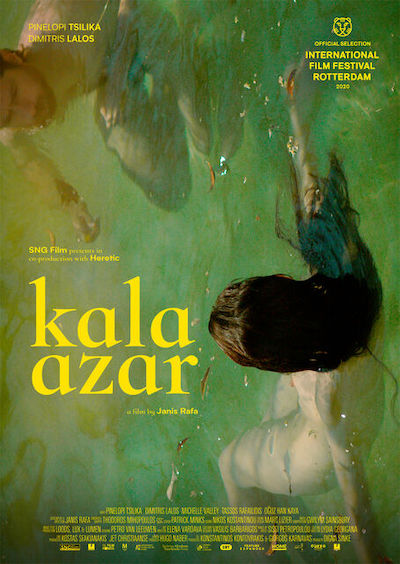
Synopsis
Kala azar describes of a place that cannot sustain animal life any longer. In a big city somewhere in the south of Europe, a couple takes care of dead animals and abandoned roadkill as an act to give meaning to their life. Kala azar is a meditation on the paradox of life-circles among beings of different species. A film about existence, on the boundaries between living and dead, human and non-human.Read More »
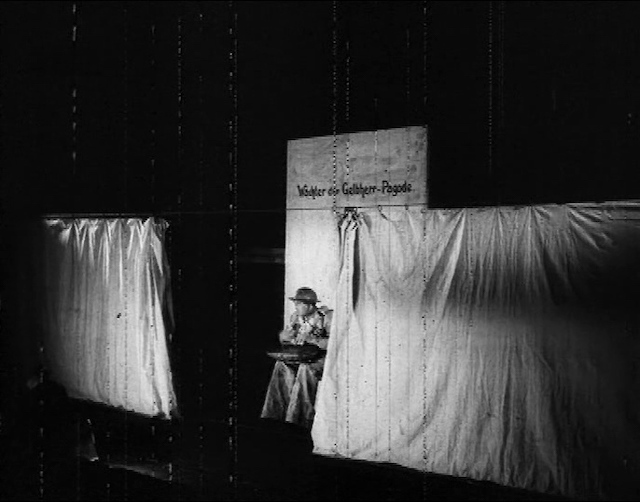
quote:
Stage play directed by Berthold Brecht, filmed by Carl Koch, about a civilian who is press-ganged into a machine-gunner’s squadron and transformed into the perfect soldier.
Man is Man, a tragi-comedy written in 1927, a work of Brecht’s youth that marks his entry into epic theatre. How can Man manage to adapt to all the different roles that the industrial society of the 20th Century demands, in an apparently intransigent call for change ? Galy Gay is this unorthodox hero who starts out as a messenger and becomes an active soldier under nauseating pressure from dubious soldiers. French critic Bernard Dort noted that the construction and dismantling of Widow Begbick’s refreshments carriage in this play take place at the same time as the transformation of Galy Gay into Jeramiah Jip. The mobility of the location, theatrically points to the instability of the characters in the epic form. Thomas Ostermeier seized upon the theme of deconstruction, and has his actors play furiously with the different states of reality.Read More »