Drama

  • Cristi Puiu – Moartea domnului Lazarescu AKA The Death of Mister Lazarescu (2005)

    2001-2010Cristi PuiuDramaRomania

    Quote:
    Something of a hybrid between the sardonic humor of a talkative Otar Iosseliani or Béla Tarr and the vérité-like, social realism of Jean-Pierre and Luc Dardenne, Cristi Puiu’s The Death of Mr. Lazarescu is a thoughtful and incisive slice-of-life comedy on the impersonalization (and desensitization) of institutional health care. Exploring similar issues of entrenched bureaucracy as Moussa Bathily’s Le Certificat d’indigence that serve to impede the proper dispensation of proper medical care (and, more importantly, lose sight of the face of humanity behind human suffering), the film unfolds as an absurd subversion of Leo Tolstoy’s The Death of Ivan Ilych in which the isolative process of dying becomes occluded in the pettiness, moralizing, helplessness, and coincidental distractions that invariably occupy everyday life as the lonely widower and retired engineer, Larazescu, is scuttled from one hospital to another throughout the evening after suffering from a bout of migraine and nausea. As in Tolstoy’s novella, the process of death does not alter the process of living, but rather, becomes only a momentary distraction in an eternal – and seemingly interminable – human comedy.Read More »

  • Michaela Pavlátová – My Sunny Maad (2021)

    2021-2030AnimationCzech RepublicDramaMichaela Pavlátová

    When Herra, a Czech woman, falls in love with Nazir, an Afghan man, she has no idea about the life that awaits her in post-Taliban Afghanistan, nor about the family she is about to join.Read More »

  • Gustaf Molander – Rid i natt! AKA Ride This Night (1942)

    1941-1950DramaGustaf MolanderSweden

    Quote:
    “Ride tonight!” – In the south of Sweden, some farmers get into trouble when the German Count is forcing them to perform day labor for him. But a man refuses to bow to the German Count.Read More »

  • Jean Dréville – La ferme du pendu (1945)

    1941-1950DramaFranceJean Dréville

    On a huge farm in the Vendee, the death of the patriarch leaves behind 3 brothers and a sister. The eldest brother refuses to consider dividing the property. In order to cement his hold on the family, he uses his authority to keep his siblings from marrying… La Ferme du pendu is a well-built, intense rural drama portraying the relentless determination of a man whose attachment to the land becomes a destructive obsession. It also serves as a near-documentary depiction of peasant life between the wars. Dréville keeps a certain distance from his characters and avoids all overblown drama. The cast is remarkable: Charles Vanel brings great intensity to the ensemble, but all the roles are perfectly portrayed. La Ferme du pendu was also the first credited film role for Bourvil, playing a small role as a shopkeeper which still allows him to sing his famous song, “Les Crayons” during the wedding scene.Read More »

  • John Ford – The Prisoner of Shark Island (1936)

    1931-1940ClassicsDramaJohn FordUSA

    A few short hours after President Lincoln has been assassinated, Dr. Samuel Mudd gives medical treatment to a wounded man who shows up at his door. Mudd has no idea that the president is dead and that he is treating his murderer, John Wilkes Booth. But that doesn’t save him when the army posse searching for Booth finds evidence that Booth has been to the doctor’s house. Dr. Mudd is arrested for complicity and sentenced to life imprisonment, to be served in the infamous pestilence-ridden Dry Tortugas.Read More »

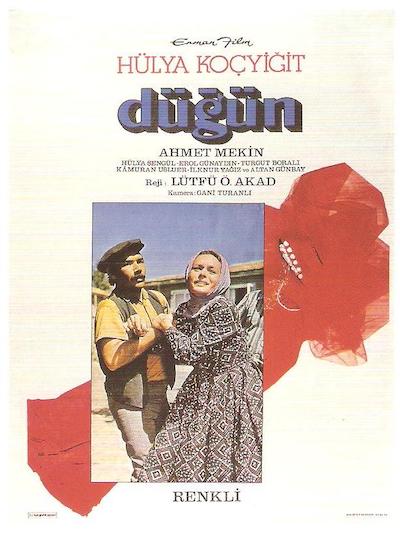
  • Lütfi Akad – Düğün AKA The Wedding (1973)

    1971-1980DramaLutfi AkadTurkey

    The Wedding, which is the second part of Akad’s trilogy, depicts the struggles of a migrant Anatolian family to adapt to and survive in the very different conditions of urban Istanbul, is one of the best presentations of internal migration in Turkish cinema. Akad uses the experiences of a provincial family as his medium for drawing attention to a period of disintegrating feudal relationships and burgeoning proletarianism. And this strikes the kind of political chord that is rarely encountered now in Turkish cinema; an approach that is borne out by the film’s ‘happy ending’. The Wedding is profoundly impressive as a film that explores and comments on the painful period of change sweeping Turkey at the time, but also for its standpoint, a combination of social realism and socialist reality.Read More »

  • Jean-Pierre Améris – L’homme qui rit AKA The Man Who Laughs (2012)

    2011-2020DramaFranceJean-Pierre Améris

    Synopsis:
    In the middle of a harsh winter, Ursus, a colorful carnival boss, rescues two orphans lost in a storm: Gwynplaine, a young boy whose face is deformed by a scar that makes him look as though he’s constantly laughing, and Déa, a blind girl. A few years later, they travel throughout the land, performing a show of which Gwynplaine is the star.
    People come everywhere to see The Man Who Laughs; he makes people laugh and enthralls the crowd. Success opens doors to the young man, he becomes famous and rich, thus distancing himself from the only two people in the world who love him for what he is.Read More »

  • Noboru Nakamura – Chieko-sho AKA Portrait of Chieko (1967)

    1961-1970DramaJapanNoboru Nakamura

    Tetsuro Tamba portrays Kotaro Takamura, one of Japan’s most celebrated artists. A poet and sculptor, Takamura is married to Chieko (Shima Iwashita), who has artistic aspirations of her own. She gradually comes to realize that her husband has all the talent in the family; as she sinks deeper into depression, Takamura tries to comfort her by writing several poems in her honor. She descends into insanity, while Takamura manifests his despair into some of his greatest artistic achievements. Originally titled Chieko-sho, this Japanese film earned a 1968 Oscar nomination for “Best Foreign Film.”Read More »

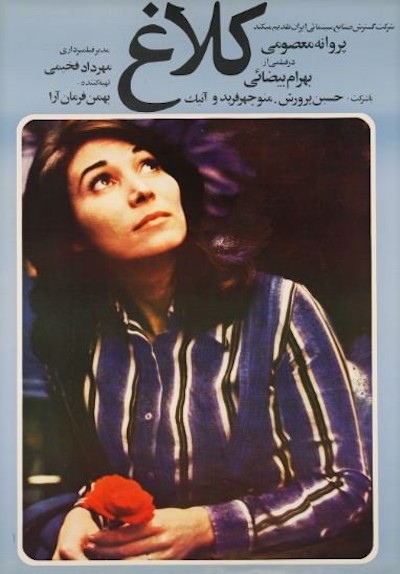
  • Bahram Beizai – Kalagh AKA The Raven (1977)

    1971-1980ArthouseBahram BeizaiDramaIran

    When Mr. Esalat is looking for a topic for his TV show, he notices an advertisement in the newspaper about a missing girl. The picture of the missing girl is very familiar to him and he tries to remember where he saw it before. His wife Asieh is a teacher and at home she writes his mother’s diary. When he searches for the address in that advertisement, he finds that it belongs to 30 years ago. Asieh is becoming interested in the missing girl too.Read More »

Back to top button