Drama

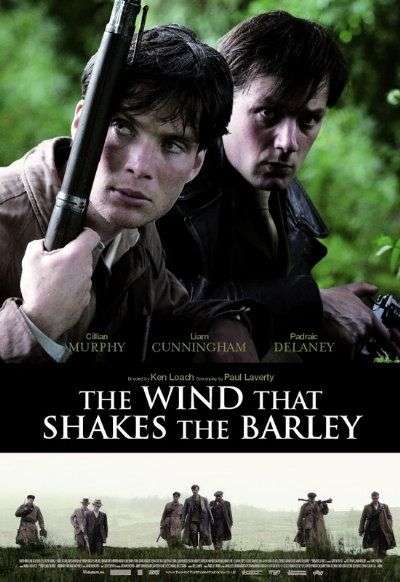
  • Ken Loach – The Wind That Shakes the Barley [+ Commentary] (2006)

    2001-2010DramaKen LoachPoliticsUnited Kingdom

    http://img43.imageshack.us/img43/562/posterkv.jpg

    29f7c043f76a2bde437fd0d52a185152

    The Wind That Shakes the Barley is a 2006 British-Irish war drama film directed by Ken Loach, set during the Irish War of Independence (1919-1922) and the Irish Civil War (1922-1923). Written by long-time Loach collaborator Paul Laverty, this drama tells the fictional story of two County Cork brothers, Damien O’Donovan (Cillian Murphy) and Teddy O’Donovan (Pádraic Delaney), who join the Irish Republican Army to fight for Irish independence from the United Kingdom. It takes its title from the Robert Dwyer Joyce song “The Wind That Shakes the Barley” a song set during the 1798 rebellion in Ireland and featured early in the film.

    Widely praised, the film won the Palme d’Or at the 2006 Cannes Film Festival. Loach’s biggest box office success to date,[4] the film did well around the world and set a record in Ireland as the highest-grossing Irish-made independent film ever.Read More »

  • Josef von Sternberg – Blonde Venus (1932)

    1931-1940ClassicsDramaJosef von SternbergUSA

    29f7c043f76a2bde437fd0d52a185152

    Quote:
    American chemist Ned Faraday marries a German entertainer and starts a family. However, he becomes poisoned with Radium and needs an expensive treatment in Germany to have any chance at being cured. Wife Helen returns to night club work to attempt to raise the money and becomes popular as the Blonde Venus. In an effort to get enough money sooner, she prostitutes herself to millionaire Nick Townsend. While Ned is away in Europe, she continues with Nick but when Ned returns cured, he discovers her infidelity. Now Ned despises Helen but she grabs son Johnny and lives on the run, just one step ahead of the Missing Persons Bureau. When they do finally catch her, she loses her son to Ned. Once again she returns to entertaining, this time in Paris, and her fame once again brings her and Townsend together. Helen and Nick return to America engaged, but she is irresistibly drawn back to her son and Ned. In which life does she truly belong?Read More »

  • David Lynch – The Elephant Man (1980)

    1971-1980David LynchDramaUSA

    29f7c043f76a2bde437fd0d52a185152

    Quote:
    John Hurt stars as John Merrick, the hideously deformed 19th century Londoner known as “The Elephant Man”. Treated as a sideshow freak, Merrick is assumed to be retarded as well as misshapen because of his inability to speak coherently. In fact, he is highly intelligent and sensitive, a fact made public when one Dr. Frederick Treves (Anthony Hopkins) rescues Merrick from a carnival and brings him to a hospital for analysis. Alas, even after being recognized as a man of advanced intellect, Merrick is still treated like a freak; no matter his station in life, he will forever be a prisoner of his own malformed body. Unable to secure rights for the famous stage play The Elephant Man, producer Mel Brooks based his film on the memoirs of Frederick Treves and a much later account of Merrick’s life by Ashley Montagu. The film is lensed in black and white by British master cinematographer Freddie Francis. Though nominated for a dozen Academy Awards, the film was ultimately shut out in every category.Read More »

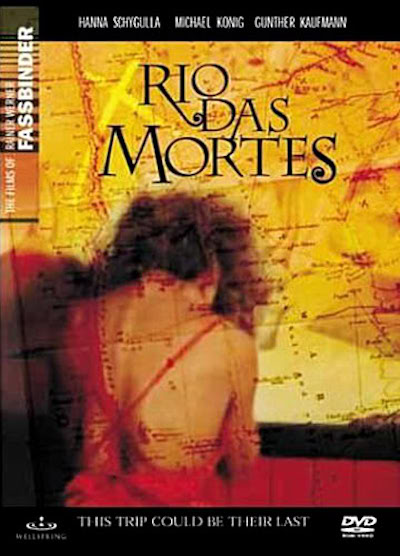
  • Rainer Werner Fassbinder – Rio das Mortes (1971)

    1971-1980DramaGermanyRainer Werner Fassbinder

    Quote:
    In the opening scene of Rainer Werner Fassbinder’s Rio Das Mortes, Hanna Schygulla repeats to herself a passage from a childcare book about achievement, indirectly teasing the two protagonists who are to be introduced later. Mike and Günther, feeling unfulfilled by infrequent employment and soured relationships, decide to unravel the mysteries of a treasure map, plotting a trip to Peru in the hopes of finding gold. Mike’s girlfriend Hanna doubts the men’s ability to organise such an excursion, but is crushed when they succeed, and tries to find whatever means she can to stop them.Read More »

  • José Luis Cuerda – La Lengua De Las Mariposas aka Butterfly (1999)

    Drama1991-2000José Luis CuerdaSpain

    29f7c043f76a2bde437fd0d52a185152

    Synopsis: Veteran director Jose Luis Cuerda delivered this sensitive portrait of a child coming of age during a tense political situation just before the Spanish Civil War. On his first day of school, frail eight-year-old Moncho (Manuel Lozano) is so terrified by the imposing figure of his teacher Don Gregorio (Fernando Fernan Gomez) that he flees into the nearby woods. In spite of his authoritarian appearance, the schoolmaster proves to be a kind, free-thinking Republican who teaches Moncho the virtues of being good. The boy is soon spending much of his time with the elderly Gregorio in the Galician countryside, admiring such wonders of nature as the tongue of a butterfly. Other people in young Moncho’s world include his down-to-earth mother (Uxia Blanco), his Republican father, and his older brother, who plays the saxophone with a group of local musicians. However, when the Fascists roll into town, the boy’s life changes forever. La Lengua de las Mariposas was screened at the 1999 San Sebastian Film Festival. -Jonathan Crow (AMG)Read More »

  • Kenneth Lonergan – Margaret [Extended] (2011)

    Drama2011-2020Kenneth LonerganUSA

    Free Image Hosting at www.ImageShack.us

    29f7c043f76a2bde437fd0d52a185152

    Plot:
    A young woman witnesses a bus accident, and is caught up in the aftermath, where
    the question of whether or not it was intentional affects many people’s lives. Read More »

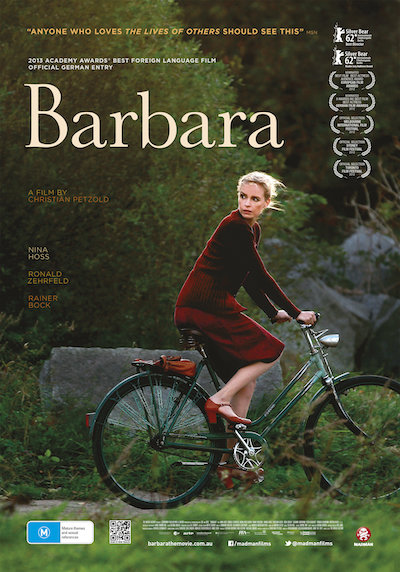
  • Christian Petzold – Barbara (2012)

    2011-2020Christian PetzoldDramaGermany

    Summer in the GDR in 1980. Barbara, a doctor, has submitted an application to emigrate to the West. She is punished by being posted away from the capital to a hospital in a small town. Jörg, her lover in the West, is busy planning her escape via the Baltic Sea. It’s a waiting game for Barbara. Her new flat, the neighbours, summer and the countryside no longer hold any charms for her. Although she is attentive to her young patients in the department for pediatric surgery under her new boss, André, she is deliberately cool to her colleagues. Her life, she thinks, will begin later.Read More »

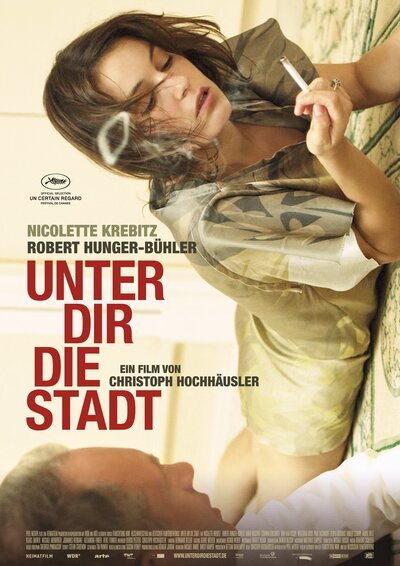
  • Christoph Hochhäusler – Unter dir die Stadt (2010)

    2001-2010Christoph HochhäuslerDramaGermany

    29f7c043f76a2bde437fd0d52a185152

    A man and a woman at an art exhibition share a fleeting moment of attraction, which neither can act upon. Days later, a chance second meeting leads to an innocent coffee and the two strangers – both married – toy with their unexplainable fascination for each other. Svenja is curious and finds herself in a hotel room with Roland, but she does not consummate an affair. A powerful executive at the large bank where Svenja’s husband works, Roland is used to getting what he wants. He manipulates the transfer of her husband to Indonesia to replace a recently murdered bank manager. Unaware of Roland’s actions, Svenja now ceases to resist…Read More »

  • Stefan Uher – Slnko v sieti Aka The Sun in a Net (1962)

    1961-1970ArthouseDramaSlovakiaStefan Uher

    29f7c043f76a2bde437fd0d52a185152

    A student, Oldrich “Fajolo” Fajtak, has a romantic attachment to two girls: his hometown love Bela, and Jana – a lover whom he meets during a summer job on a collective farm. One storyline of the film peels layers off Bela’s permanently tense home life marked by her blind mother’s helplessness, her father’s past break with his father who lives in the village where Fajolo is finding some consolation in the arms of his new lover Jana. As Fajolo begins to pry into Bela’s grandfather’s secrets, she, in turn, allows her new boyfriend Peťo to read and deride Fajolo’s remorseful letters from the farm. This lovers’ triangle provides the film with several oppositions: town and country, intelligentsia and worker, collective and personal truth in communist Czechoslovakia. The potential symbolism of the film appeared ominous to the Communist authorities bent on banning the film, but the nascent political thaw helped the filmmakers prevail and the release of “The Sun in a Net” became its harbinger in Czechoslovak film and culture.
    Stanislav Szomolányi’s location cinematography and Ilja Zeljenka’s musique concrète score remain striking.Read More »

Back to top button