Quote:
Civeyrac moved to making films in Digital Video in 1999, with Les Solitaires, a small, almost theatrical chamber piece that was well suited to the medium, making the use of one main location and a handful of actors. The film takes place in a small Parisian apartment that Pierre (Jean-Claude Montheil) hasn’t left since the death of his wife Madeleine (Mireille Roussel). Wallowing in his solitary misery, without even a phone in the apartment, Pierre is unable to get thoughts of his wife out of his head, seeing her in his restless dreams, where he contemplates suicide in order to rejoin her.Read More »
Drama
-
Jean-Paul Civeyrac – Les solitaires AKA The Lonely (2000)
Drama1991-2000FranceJean-Paul Civeyrac -
Jean-Paul Civeyrac – Ni d’Ève, ni d’Adam AKA Neither Eve Nor Adam (1996)
1991-2000DramaFranceJean-Paul CiveyracQuote:
Gabrielle is 14. She struggles to love Gilles but he ceaselessly wrecks his own life along with other people’s. He steals money from Gabrielle and humiliates her so much that she doesn’t want to see him again. At school, he hits his education supervisor. As a result, his father throws him out of the house. Gabrielle refuses to put him up. The families of his friends want nothing to do with him. So Gilles ends up in the street like a stray dog. By causing turmoil, he soon becomes the neighbourhood’s scapegoat…Read More » -
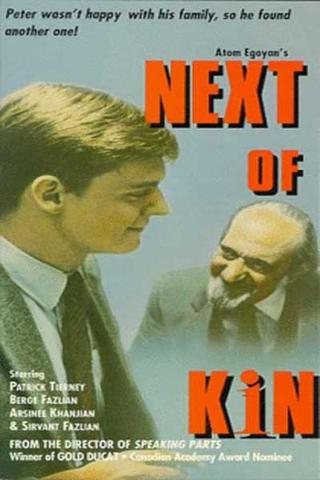
Atom Egoyan – Next of Kin (1984)
1981-1990ArthouseAtom EgoyanCanadaDramaQuote:
Marking Atom Egoyan’s first feature film, Next of Kin a visually assured, lucid, and thoughtful exposition on alienation, displacement, and the amorphous nature of home and family. Incorporating innovative narrative devices of circular structure and video imaging, Egoyan explores the dichotomous role of technology as both a convenient tool for communication and an impersonal barrier to true human connection (a modern-day existential angst that is similarly portrayed in Mike Nichols’ The Graduate, to which Egoyan pays homage in the film’s early sequence): Peter’s voice-over that is visually reinforced by the recurring shots of an airport baggage carousel, reflecting his sense of aimlessness and disorientation; the Foster’s videotaped counseling session that ironically serves, not to facilitate dialogue, but to further alienate the self-conscious Peter from his family; the tape recorder that becomes a literal surrogate to Peter’s articulated thoughts. Furthermore, in illustrating the residual trauma caused the Deryan’s ‘lost’ son Bedros, Egoyan introduces his recurring theme of the absent child – an unresolved emotional fracture that would propel the psychological (and emotional) trajectory of his seminal films, Exotica and The Sweet Hereafter. By exploring the dynamic – and often necessary – function of compassionate role-playing and deception in social and familial relationships, Egoyan creates a haunting and affectionate contemporary humanist fable on identity, impersonation, and connection.Read More » -
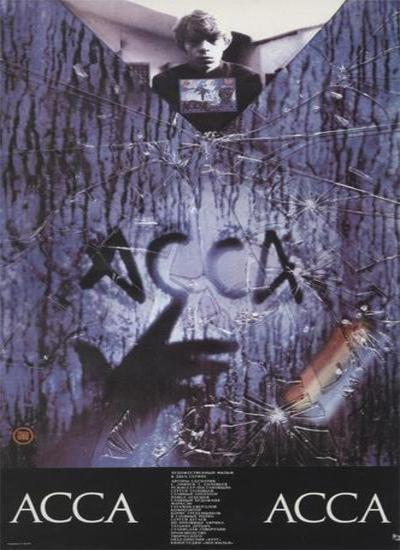
Sergei Solovyov – Assa (1988)
Drama1981-1990ArthouseSergei SolovyovUSSRQuote:
The film is set in Crimea during the winter in the mid eighties. A young musician falls for mobster’s young mistress. The parallel story line involves an 18th century assassination plot.“The face of Russia as it was in the 80’s. The image of the young generation through the face of gloomy regime. Love story of 2 young is stuck between the old norms of Soviet union and the new rising power of organized mafia, two ingredients which will affect the collapse of the 70 years socialist power. The young generation demand changes, and immediately but it’s being suffocated by both sides of the old order, and the movie ends with legendary Viktor Tsoi’s song “Changes” which became an anthem after Tsoi’s tragic death in a car accident.”Read More »
-
Alante Kavaite – Sangailes vasara AKA The Summer of Sangaile (2015) (HD)
2011-2020Alante KavaiteArthouseDramaLithuania

17 years old Sangaile is fascinated by stunt planes. She meets a girl her age at a summer aeronautical show. Sangaile allows Auste to discover her most intimate secret and in the process finds the only person that truly encourages her to fly.
One of the 10 best movies of 2015, according to Cahiers du Cinema.Read More »
-
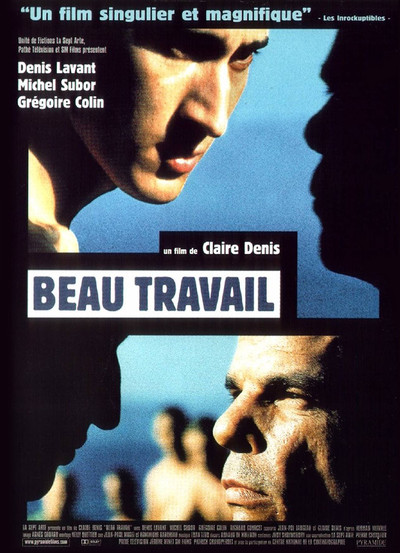
Claire Denis – Beau travail AKA Good Work (1999)
1991-2000Claire DenisDramaFranceQueer Cinema(s)Quote:
This film focuses on an ex-Foreign Legion officer as he recalls his once glorious life, leading troops in Africa.Read More » -
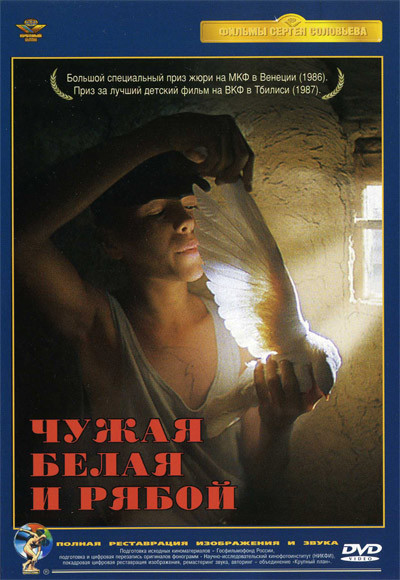
Sergei Solovyov – Chuzhaya belaya i ryaboy AKA The Stray White and the Speckled (1986)
1981-1990ArthouseDramaSergei SolovyovUSSRQuote:
In a poor provincial town, the ragamuffin boys are frenziedly drilled for combat, and at nights the local elite, gathered in a pool room, boasts of fictitious biographies, while bands of boys amuse themselves with bloody fights on trashy vacant plots… One of the most vivid staples of the postwar childhood were pigeons. They could be bought, sold or stolen. One day a beautiful white dove appeared over the town. Risking his life, Ivan caught the White. And immediately became the target of the “pigeon” mafia…Read More » -
Elchin Musaoglu – Nabat (2014)
2011-2020AzerbaijanDramaElchin MusaogluWarNabat and her husband Iskender, an old and sick ex-forestry worker, live in a small isolated house far from the village. The war in Nagorno-Karabakh has been raging for some time and their son has been killed at the front. Their sole means of survival is the sale of milk from their only cow that Nabat takes to the village every couple of days. As the shadow of war envelopes the region the village is slowly deserted by its inhabitants. Following Iskender’s death, Nabat has to survive in a now abandoned village under the regard of a she-wolf.Read More »
-
Louis Feuillade – Vendémiaire (1918)
1911-1920DramaFranceLouis FeuilladeSilentMovie serial “Vendemiaire” depicts a registering nationalist and regionalism concerns about the effects of the First World War.
« Réalisé dans les derniers mois de la guerre (sa sortie eut lieu en janvier 1919), en décors naturels, dans le Languedoc, ce film est une œuvre maîtresse de Louis Feuillade. Sous couvert d’un drame patriotique sur les civils en temps de guerre (les combats restent hors champ), structuré en un prologue et trois parties (« La vigne », « La cuve » et « Le vin nouveau »), il propose un film dont le réalisme quasi documentaire n’est cependant pas dépourvu de lyrisme et de poésie. Le récit, non chronologique, s’organise selon une narration présent/passé où alternent des séquences concernant les vendanges et le conflit au moment de l’invasion des régions du nord par les troupes allemandes.Read More »