Quote:
Ahmet, a prominent intellectual, lost his wife and daughter in a traffic accident which happened while he was spending the night with his lover. As a person who cares about nothing and bows to nothing, Ahmet is not much affected by this tragic event and goes on with his life. After a while, without any apparent reason, he experiences certain changes in himself and his life. Small mishaps, strange misfortunes happen one after another. He is not on good terms with the woman he loves very much anymore. He has difficulties facing life and reveals unexpected weaknesses.Read More »
Drama
-
Zeki Demirkubuz – Bulanti AKA Nausea (2015)
2011-2020DramaTurkeyZeki Demirkubuz -
René Coiffard & Louis Delluc – Le chemin d’Ernoa (1921)
DramaFranceLouis DellucRené Coiffard and Louis DellucSilentFrench informations :
Etchégor, un riche paysan basque est épris de la belle américaine Majesty Parnell. L’époux de celle-ci, sur le point d’être arrêté pour vol, cherche à se forger un alibi.
Mobilisé, Louis Delluc est contraint de renoncer à la mise en scène de son premier scénario, La Fête espagnole (1919), qu’il confie à Germaine Dulac. Impatient de réaliser ses propres films, il fonde sa société de production Parisia- Films au printemps 1920, et livre, en l’espace de quelques mois trois films : Fumée noire, Le Silence et L’Américain, qui deviendra Le Chemin d’Ernoa.Read More »
-
Jean-Paul Civeyrac – Fantômes AKA Spirits (2001)
2001-2010ArthouseDramaFranceJean-Paul CiveyracQuote:
On the surface, Jean-Paul Civeyrac’s Fantômes unfolds with a sense of haunted, supernatural disequilibrium that similarly infuses Kiyoshi Kurosawa’s atmospheric, tonal cinema. In the film’s opening sequence, a young acting student, Mouche (Dina Ferreira) stares out the window of an empty room and wistfully implores her absent lover, Bruno (Olivier Boreel) to return. Alone with her grief, she retreats into the silence of her intimate memories, briefly interrupted by what appears to be an anonymously placed, prank telephone call (in a premise that coincidentally evokes Kurosawa’s Pulse, made in the same year), before being brought back to the mundane reality of rehearsing text in Russian for an upcoming drama class during a subsequent telephone conversation with her professor, Andreï (Jean-Claude Montheil). However, Mouche’s desolation does not lie in the vestiges of a failed love affair, but rather, in the tragic loss of a new lover from a motorcycle accident. The image of the sad-eyed Mouche invoking the name of her dead lover is reflected in the dorsal shot of another distracted acting student, Antoine (Guillaume Verdier) as he stares out the window of a country house while rehearsing his lines, avoiding the gaze of his first love (Emilie Lelouch) before finally resolving to break up with her.Read More » -
Ulrich Seidl – Import/Export (2007)
2001-2010ArthouseAustriaDramaUlrich SeidlQuote:
The case of Josef Fritzl, an outwardly respectable man from Amstetten in Austria who imprisoned and raped his daughter for 24 years in a specially built cellar dungeon, resulted this summer in urgent new critical attention being paid to Austria’s cultural figures warning of a terrible malaise lying beneath their country’s prosperous surface, and that of western Europe generally. In the London Review of Books, Nicholas Spice wrote about Fritzl in relation to Gier, or Greed, the latest novel from Austrian Nobel laureate Elfriede Jelinek about the murder of a teenage girl by a police officer. Jelinek had written on her website: “Austria is a small world in which the big world holds its rehearsal. The performance takes place in the very much smaller cellar dungeon in Amstetten.”Read More » -
Claire Denis – L’intrus AKA The Intruder [+Extras] (2004)
2001-2010Claire DenisDramaFrancePhilosophyPhilosophy on ScreenQuote:
L’Intrus opens to a shot of the Franco-Swiss border as a border guard performs a customs check and inspection of a random vehicle with the aid of a contraband-sniffing dog. The seemingly mundane image of frontier, wilderness, and deception provides a curiously appropriate introduction into the Claire Denis’ impenetrably fractured, enigmatically allusive, otherworldy, and indelible metaphysical exposition into the mind of an emotionally severe, morally bankrupt, and profoundly isolated heart transplant patient named Louis (Michel Subor). Idiosyncratically unfolding in elliptical, often reverse chronology (with respect to the heart surgery) through the lugubriously fluid intertwining of Louis’ alienated existence and deeply tormented subconscious, the film is a fragmented and maddeningly opaque daydream (or perhaps more appropriately, a haunted nightmare) of the price exacted by his disreputable past, estranged relationships, hedonism, and instinctual quest for survival: his inability to reconcile with his only son and his family; his sexually motivated, yet emotionally distant relationship with a materialistic pharmacist; his dubious, transcontinental past (a suppressed history that may have included murder). Perpetually followed by a beautiful, enigmatic sentinel (Katia Golubeva) – or conscience – who seems to have been instrumental in obtaining his new heart, what emerges is an indelible, elegiac, and poetically abstract dreamscape through the wondrous, alien terrain of unreconciled (and irreconcilable) personal history, unrequited longing, and haunted memory.Read More » -
Jean-Paul Civeyrac – Le doux amour des hommes AKA Men’s Gentle Love (2002)
2001-2010ArthouseDramaFranceJean-Paul CiveyracQuote:
Raoul flits from woman to woman, searching for seemingly unattainable love, until he meets Jeanne, who is fated to live freely and tragically.Read More » -
Jean-Pierre Dikongue-Pipa – Muna Moto (1975)
1971-1980African CinemaCameroonDramaJean-Pierre Dikongue-PipaQuote:
Ngando and Ndomé share an extremely perfect love. Yet, tradition demands a dowry for Ndomé’s hand that Ngando, an orphan, cannot afford. Forced to ask his uncle for assistance, Ngando finds himself at the mercy of his uncle’s lust and greed.Muna Moto AKA The Child of Another (1975) is Cameroon’s first feature-length film. It is a classical story of doomed loved told in an African context. It is directed by Jean-Pierre Dikongue Pipa and features gorgeous black-and-white cinematography.
It won the 1975 FESPACO prize for best African film and was featured in Sight & Sound’s “75 Hidden Gems: The Great Films Time Forgot” in which 75 critics were asked to pick one film each that they considered “unduly obscure and worthy of greater eminence.
Mostra of Venice: official selection(1975).Read More » -
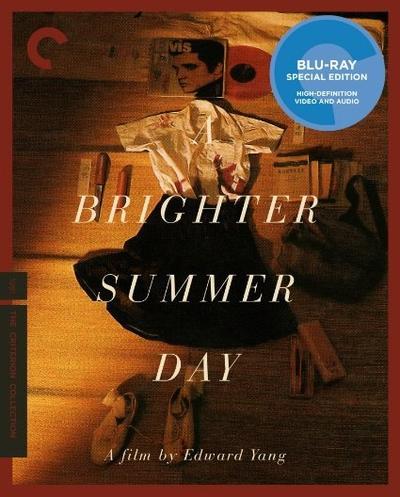
Edward Yang – Gu ling jie shao nian sha ren shi jian AKA A Brighter Summer Day (1991)
1991-2000ArthouseDramaEdward YangTaiwanQuote:
It’s only natural that Edward Yang’s A Brighter Summer Day begins with a shot of a barely-lit light bulb. On the set of a movie, a director reprimands an actress for harping on the color of her dress. “This is a black and white film,” he says, one of many references to the symbolic darkness that overshadows the milieu of the film. A Brighter Summer Day is itself in color, but it may as well be monochrome. Much of the film’s action takes place at night or inside dimly lit interiors, and it’s not unusual for the characters to be confronted by light and its almost political implications. Some of the best images in the film (young boys staring at a rehearsal from a theater’s rooftop; a basketball bouncing out of a darkened alleyway) pit light against dark—a fascinating dialectic meant to symbolize a distinctly Taiwanese struggle between past and present. From weapons to watches, objects similarly speak to the present. Like the light, these objects are constant reminders that the past can’t be ignored and must be used to negotiate the present.Read More » -
Larry Clark – The Smell of Us (2014)
2011-2020DramaEroticaFranceLarry ClarkQuote:
The dirty old man hanging out with all those oversexed Paris teenagers in “The Smell of Us” is none other than the voyeuristic pic’s director, Larry Clark. Usually, he’s the one behind the camera, but in what amounts to a French “Kids,” Clark can be seen passed out in the opening scene, spilled across the steps of the Palais de Tokyo as skaters swarm around him. Nearly 20 years have passed since Clark’s debut stunned the world — and 30 more since the first photos in his provocative “Tulsa” book were taken – yet his focus remains, as the song says, forever young.Somehow, the fact that these are French kids makes the film seem less likely to shock the world, even though the kinks are far more explicit here than anything but “Ken Park” — not that Clark is any stranger to the NC-17 rating, the relevance of which he handily undercuts, simply by reminding that in the Internet era, minors can see (and do) far worse online.Read More »