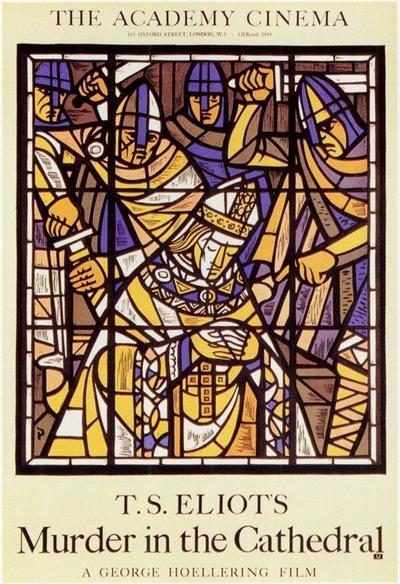

Do you like rare things?
Low-budget but striking film version of TS Eliot’s revolutionary work.Read More »
Do you like rare things?
Low-budget but striking film version of TS Eliot’s revolutionary work.Read More »
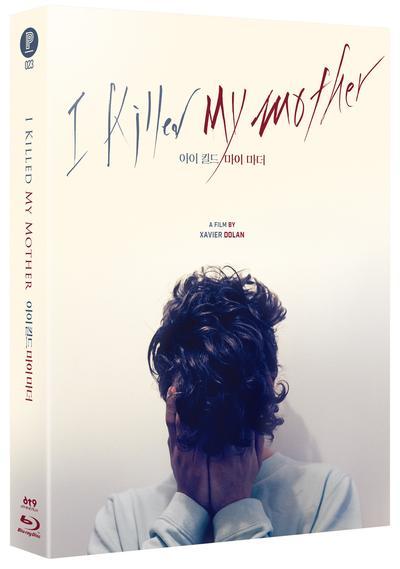
Quote:
With I Killed My Mother, writer-director Xavier Dolan makes a grandiose show of his pain and narcissism. The 20-year-old Canadian filmmaker appears in his own film as Hubert Minel, a 16-year-old cutie whose endless spats with his mother are like volleying razorblades; their volcanic fights are so richly and sensitively attuned to how insecurity informs his character’s rage that you don’t doubt the material was based on personal experience. Dolan has Jenny Lumet’s rare talent for cannily transplanting to paper how people use language as ammunition—how words ricochet during squabbles in unpredictable ways and reveal the best and worst in us all. But I Killed My Mother is a film best heard than seen, as the earnest, nimble scrubbiness of Dolan’s screenplay is ill-served by his conceited visuals, an aesthetic mode that feels insecurely borrowed from perfume commercials and the work of Jean-Luc Godard and Wong Kar-wai.Read More »
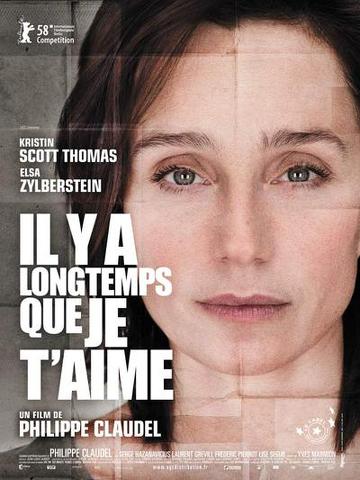
Quote:
Want a master class in film acting? Check out Kristin Scott Thomas as Juliette, a doctor just out of prison in this spellbinder from writer-director Philippe Claudel. Juliette has been invited by her sister, Léa (Elsa Zylberstein), to share her home in France, along with Léa’s husband, Luc (Serge Hazanavicius), their two adopted Vietnamese daughters and Luc’s sickly father.Read More »
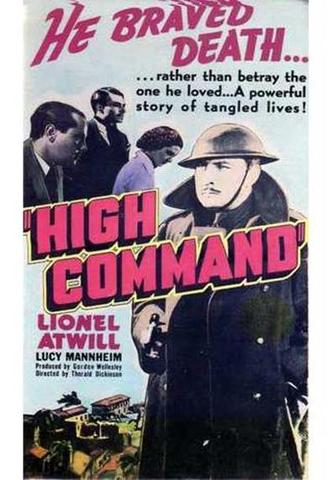
Synopsis:
‘A high-ranking general is stationed in West Africa, but when a new doctor arrives at his post he is forced to face his dark past. The doctor is an old acquaintance and holds a deadly secret about the general, a secret that could destroy him forever. That is until the doctor is found murdered and the sinister world of the general begins to unravel.’
– Optimum ReleasingRead More »

Quote:
A people’s court dictates that a laborer kept some tools for himself and thus deserves derision. “But, can’t we improve?” he asks, without blushing, at the moment they decide his expulsion. The story of the laborer that becomes more and more conservative runs along with another one about a conservative publicist who thinks he can foresee a solution by embracing the revolutionary cause; and what relates both reverse paths is Raúl Ruiz’s systemic pleasure for paradoxes. El realismo socialista is not a politic film but a film about politics, rough and uncomfortable in its will to demolish mythologies at the time they were being generated. These 70s Ruiz is showing are not only not glorious, but he’s also guessing they never will be, almost prophesizing the end of that (fake) utopia, all in this film that works as a parallel story to the great Palomita blanca. Oscillating between documentary record and fiction –the concept key reveals itself, or closes the film’s door, towards the end–, and with a notorious use of improvisation, Ruiz seems to confirm what he once said: “The problem with an iron script is that it gets rusty”.Read More »
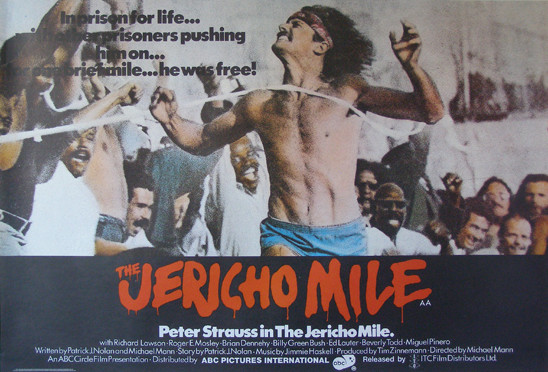
by Hal Erickson
Director Michael Mann co-wrote the teleplay for The Jericho Mile with Patrick J. Nolan. Peter Strauss stars as “Rain” Murphy, serving a life sentence in Folsom Prison for first-degree murder. To break up the boredom of prison life, Murphy begins running laps around the prison recreation track. Prison officials take notice when Murphy runs a mile in less than four minutes. They lobby to enter Murphy into the Olympics, an act of largesse that not only pulls Murphy out of his misanthropy but also helps to unify his racially divided fellow prisoners. Originally telecast March 18, 1979, The Jericho Mile was filmed on location at Folsom Prison, with several inmates playing small roles–and talking the talk of prisoners, never mind the TV censors.Read More »

Synopsis:
Louis Delluc was one of the most important silent pioneers in France and probably one of the first persons in that country who thought of the cinema as an Art. He was part of group called the “French Impressionist School” ( which also included Epstein, Abel Gance, Marcel L’Herbier and Germaine Dulac ) and was himself one of the first and most influential French film critics. Unfortunately Louis Delluc had a short career dying very young at the age of 33 from tuberculosis, denying the French and the rest of the whole world, his mastery of film and future accomplishments.Read More »

Ana lives with the idealistic way of life of a religious family and avoid most subjects related to sex and other tabú themes. But love and rape came to her life and make her sink in a promicuos world that is very well shown by Nilsson.Read More »

The last film made by legendary French director Abel Gance, Bonaparte et la révolution (1971) was also his final attempt to release the Napoleonic biopic he had begun in the 1920s. Napoléon, vu par Abel Gance (1927) was over nine hours long, but represented only the first of a planned six-film series. Having failed to get funding for the remaining episodes, Gance revamped his silent film as Napoléon Bonaparte (1935) – adding newly-shot scenes and dubbing his decade-old footage. After other abortive attempts to resurrect part or all of his biopic in the 1950s, Gance gained funding from Claude Lelouch to release Bonaparte et la revolution in 1971. This last version recycles footage from the films of 1927 and 1935, as well as material from his television work of the 1960s. The result is a bizarre mishmash of old and new images, performances, and voices – less a coherent film than a document embodying the whole of Gance’s 45-year involvement with his eternally incomplete project. Read More »