Documentary

  • Sergei M. Eisenstein – ¡Que Viva Mexico! AKA Da zdravstvuyet Meksika! (1979)

    Documentary1971-1980ClassicsSergei M. EisensteinUSSR
    ¡Que Viva Mexico! (1979)


    Da zdravstvuyet Meksika! AKA ¡Que viva Mexico!

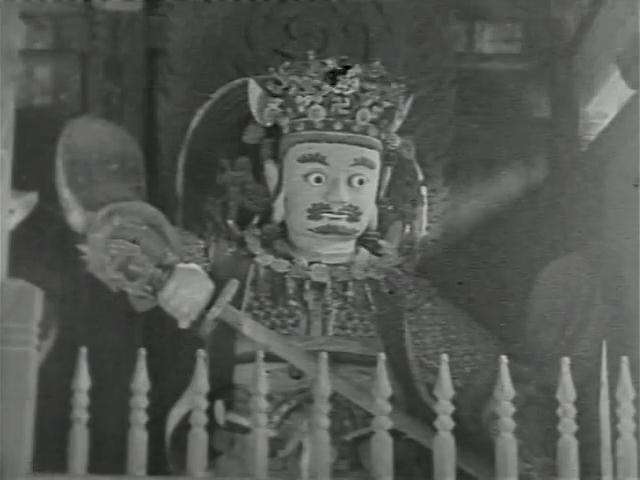
    Having revolutionized film editing through such masterworks of montage as Potemkin and Strike, Soviet director Sergei Eisenstein emigrated west in hopes of testing the capabilities of the American film industry. Quickly ostracized from Hollywood, Eisenstein, Grigory Alexandrov and photographer Eduard Tisse (at the urging of author Upton Sinclair) wandered south of the border where they began filming a highly stylized documentary on the people and volatile social climate of Mexico. Unfortunately, a lack of funds prohibited the film’s completion and the famed director was unable to edit the film. In 1979, by referring to Eisenstein’s extensive notes and sketches, Alexandrov assembled the most definitive version of the film; as close to Eisenstein’s vision as one is ever likely to see.Read More »

  • Yoav Shamir – 5 Days (2006)

    2001-2010DocumentaryIsraelYoav Shamir


    29f7c043f76a2bde437fd0d52a185152

    On the 15th of August 2005, Israel began the Disengagement of the Gaza Strip. In a unilateral move decided on by the Israeli government, the Jewish settlers were removed from their homes and villages.
    After years of confrontation with the Palestinians, the Israeli army has earned a reputation for firmness. For the first time, it is being forced to turn its iron fist against a Jewish population. This film tracks the key events of the Disengagement over the course of five days.

    This human mosaic will tell the story of the Disengagement from very different perspectives; they provide the narrative of an Israeli society in all its complexity, confronting a unique historical moment.Read More »

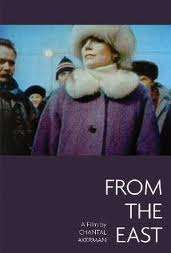
  • Chantal Akerman – D’Est aka From the East (1993)

    1991-2000Chantal AkermanDocumentaryExperimentalFrance

    http://img703.imageshack.us/img703/8391/19962207.jpg

    29f7c043f76a2bde437fd0d52a185152

    Chicago Reader wrote:
    Chantal Akerman’s haunting 1993 masterpiece documents without commentary or dialogue her several-months-long trip from east Germany to Moscow–a tough and formally rigorous inventory of what the former Soviet bloc looks and feels like today. Akerman’s painterly penchant for finding Edward Hopper wherever she goes has never been more obvious; this travelogue seemingly offers vistas any alert tourist could find yet delivers a series of images and sounds that are impossible to shake later: the countless tracking shots, the sense of people forever waiting, the rare occurrence of a plaintive offscreen violin over an otherwise densely ambient sound track, static glimpses of roadside sites and domestic interiors, the periphery of an outdoor rock concert, a heavy Moscow snowfall, a crowded terminal where weary people and baggage are huddled together like so many dropped handkerchiefs. The only other film I know that imparts such a vivid sense of being somewhere is the Egyptian section of Straub-Huillet’s Too Early, Too Late. Everyone goes to movies in search of events, but the extraordinary events in Akerman’s sorrowful, intractable film are the shots themselves–the everyday recorded by a powerful artist with an acute eye and ear.Read More »

  • Eric Pauwels – Lettre d’un cinéaste à sa fille (2000)

    1991-2000DocumentaryEric PauwelsFrance

    A girl asks her father: “Daddy, why don’t you make films for children?” The filmic answer is a playful, free and personal film in the form of a letter, a film interwoven with a thousand stories, knit together with different textures, a book of images allowing a filmmaker to elaborate his view on cinema and to show the images and the stories he wants to share.Read More »

  • Norbert Weber – Im Lande der Morgenstille AKA In the Land of Morning Calm (1925)

    1921-1930DocumentaryNorbert WeberSouth Korea

    Image Hosted by ImageShack.us

    29f7c043f76a2bde437fd0d52a185152

    Quote:
    This film was originally shot by Father Norbert Weber (1870-1956), head of the Missionary Benedictines, during his second visit to Korea in 1925 on some 15,000 meters of raw film. Fr. Weber was abbot of the archabbey of St. Ottilien in Germany and made the film in order to show the country, its culture, and the order’s activities to people back in Germany. It was first screened there in 1927..Read More »

  • Oleg Kovalov – Sergei Eisenstein. Avtobiografiya AKA Sergei Eisenstein: Autobiography (1996)

    1991-2000ArthouseDocumentaryOleg KovalovRussiaSergei M. Eisenstein

    29f7c043f76a2bde437fd0d52a185152

    Quote:
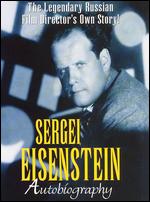
    The great Russian film director Sergei Eisenstein, whose Potemkin, Alexander Nevsky, and Ivan the Terrible stand as masterpieces of world cinema, is the subject of this eccentric and puzzling production. Though based on memoirs Eisenstein wrote before his death in 1948, most of this film is barely a documentary at all, but rather a composite of images, many of which are fascinating and arresting. Eisenstein himself was known for startling and memorable images (perhaps the most famous of which is the shot of the baby carriage rolling down the steps in Potemkin), so memorializing him with clips from his own films interspersed with readings from his memoirs seems somewhat appropriate. But the voice-over in Russian (with English subtitles) is quite sparse, and at times the images onscreen, which include clips from Buster Keaton films and Hollywood musicals from the 1930s, are utterly mystifying.. –Robert J. McNamaraRead More »

  • Paul Vecchiali – Albert Camus (1973)

    1971-1980DocumentaryFrancePaul VecchialiTV

    Image Hosted by ImageShack.us

    29f7c043f76a2bde437fd0d52a185152

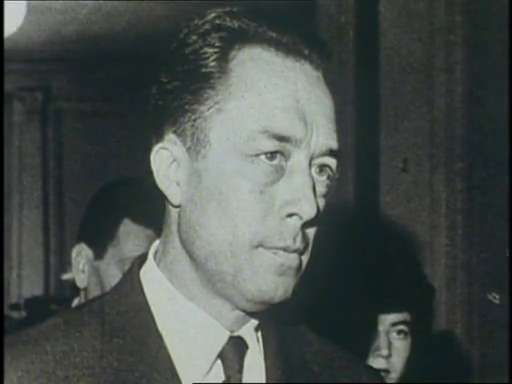
    Portrait de l’écrivain Albert CAMUS à travers des témoignages de ses confrères, de ses familiers et de ses compagnons de résistance : Louis Guilloux, Jean Pelegri, Mouloud Mammeri, Edmond Charlot, Jacqueline Bernard, Jules Roy, Jean Daniel, Francis Jeanson, Suzanne Agnelli . La vie de l’auteur est retracée et les principaux thèmes de son oeuvre sont évoqués : la Méditerranée et l’amour de la nature, le divorce entre l’homme et le monde, la révolte contre l’oppression et la revendication de liberté. Lecture de réflexions de Camus sur l’art du comédien par Catherine Sellers, extraits répétition des “Justes” par Ludmilla Mikaël, Yves Fabrice, Niels Arestrup.Read More »

  • Jiri Holna – The photographer František Drtikol (2002)

    2001-2010Czech RepublicDocumentaryJiri HolnaPhilosophy


    Photographer Frantisek Drtikol

    The documentary film “The Photographer Frantisek Drtikol” by the director Jiri Holna (28 min, 2002) drawn from Drktikol’s diaries and private correspondence, includes the recollections of Drtikol’s daughter Ervina Bokova, as well as part of a short film by Drtikol from 1920.

    “Man can never be lazy and indifferent to flashes of beauty:
    he must collect them, keep them and treat them well,
    because in a while they disappear as footprints in sand.”

    This documentary is about world-famous Czech photographer, painter and philosopher Frantisek Drtikol (1883-1961).Read More »

  • Olivier Smolders & Johan van den Driessche – Pensées et visions d’une tête coupée (1991)

    1991-2000DocumentaryFranceOlivier Smolders and Johan van den DriesscheShort Film

    Image Hosted by ImageShack.us

    29f7c043f76a2bde437fd0d52a185152

    SYNOPSIS: The theme of death is heavily interwoven in Smolder’s surreal salute to Belgian painter Antoine Wiertz, Pensees et visions d’une tete coupee / Thoughts and Visions of a Severed Head, a Hieronymus Bosch-type artist whose work centered on humans in various stages in torment, as depicted in expansive canvases with gore galore. Smolders has basically taken a standard documentary and chopped it up, using quotes from the long-dead artist, and periodic statements by a historian (Smolders) filling in a few bits of Wiertz’ life.
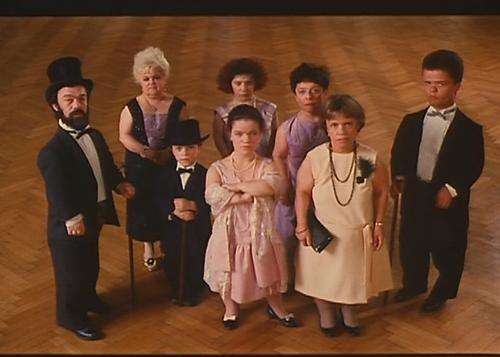
    The museum designed to house the painter’s work is like a great multi-roomed barn, displaying paintings as small as a counter, or as big as a three-storey building. Inside the museum, Smolders stages a tour for arriving guests: nattily dressed dwarves who accentuate the painter’s mad visions and ego that bleed from the more disturbing works dealing with suicide, infanticide, piles of baby bodies, and monsters opening up their innards while half-naked humans are torn apart by tentacled monsters…Read More »

Back to top button