Documentary

  • Steve James – Life Itself (2014)

    2011-2020DocumentarySteve JamesUSA

    29f7c043f76a2bde437fd0d52a185152

    Late in this documentary about film critic Roger Ebert, the subject himself e-mails director Steve James from the hospital to insist that a difficult conversation with his wife Chaz be captured for the movie. After all, he writes, “This is not only your film.”

    The correspondence underscores how this filmic profile is also a kind of a self-portrait by Ebert. It shares a title with the critic’s 2011 memoir, passages of which are lifted to narrate his rise from precocious tabloid reviewer to unlikely celebrity to national treasure. And while it’s too candid about Ebert’s ego, petulance, and late-career critical softening to be called hagiography, that very frankness does harmonize with the critic’s own eleventh-hour turn toward full and fearless disclosure. He came out as alcoholic in 2009, used his blog to inform readers of his health issues (which rendered him unable to speak in 2006), and here thrills to James’s documenting of his most painful medical ordeals.
    Read More »

  • Mario Ruspoli – Regards sur la folie (1962)

    1961-1970DocumentaryFranceMario RuspoliShort Film

    29f7c043f76a2bde437fd0d52a185152

    L’aliénation mentale filmée en Lozère, à l’hôpital psychiatrique de Saint-Alban : constat sur les malades eux-mêmes et sur la patiente rééducation de leur cerveau par les psychiatres.

    Quote:
    « C’est un film sur l’impossibilité de montrer la folie, explique Mario Ruspoli dans un entretien accordé au Monde en 1962. Cependant, il est possible de faire passer derrière le miroir, d’utiliser comme tremplin, comme moyen de communication, l’angoisse, qui est le dénominateur commun entre le malade, le médecin et le public. Seul, ce dénominateur commun d’angoisse nous fait pénétrer à l’intérieur du monde de la folie. » Claude Mauriac confirme ces propos : « Parmi les malades non délirants dont la pensée demeure cohérente, les raseurs restent les raseurs. D’où des longueurs. Les autres, les enterrés vifs, font à l’arrière-plan les mêmes gestes toujours recommencés et, toute fraternité oubliée, nous avons peur, parce que nous nous sentons en danger. » Le documentariste explique ses méthodes : « Nous avons mis peu à peu notre technique au point et nous avons utilisé une équipe de trois extrêmement mobile qui permet de filmer en courant, le cas échéant : un cameraman, un homme pour la mise au point, un preneur de son. Pour les interviews dans les fermes, j’ai pensé que si on prenait un interviewer de l’extérieur, les paysans ne diraient rien ; je suis donc arrivé avec des gens du milieu : un docteur, un curé, un instituteur agricole itinérant. L’important, c’est que les gens s’habituent à vous, qu’ils vous connaissent, qu’ils aient de l’estime, de l’amitié pour vous. Il faut les mettre en confiance, il faut qu’ils sachent que vous n’allez pas les trahir, les ridiculiser, les fausser pour leur faire servir une thèse dans le style Mondo Cane. Il faut que les réalisateurs aient une fantastique conscience professionnelle. »
    Read More »

  • Nicolas Rey – Schuss! (2005)

    2001-2010DocumentaryExperimentalFranceNicolas Rey

    Synopsis:
    A film that starts like an odd documentary on ski resorts suddenly declares its subject to be aluminum. And it’s all downhill from there, evoking in chapters the history of capitalism in the 20th century, the death of the God Progress in the valleys of the Alps and the question of the relationship between State and Industry. All’s fair in love and snow.
    Read More »

  • Chris Marker – Sans soleil (1983) (HD)

    Documentary1981-1990Chris MarkerCultFrance

    29f7c043f76a2bde437fd0d52a185152

    Chris Marker, filmmaker, poet, novelist, photographer, editor, and now videographer and digital multimedia artist, has been challenging moviegoers, philosophers, and himself for years with his complex queries about time, memory, and the rapid advancement of life on this planet. Sans Soleil is his mind-bending free-form travelogue that journeys from Africa to Japan.
    Read More »

  • Louis Malle – Vive le Tour (1962)

    1961-1970DocumentaryFranceLouis Malle

    29f7c043f76a2bde437fd0d52a185152

    Vive le tour is director Louis Malle’s affectionate homage to one of France’s most treasured institutions, the Tour de France cycle race. In this short documentary film, Malle and his camera team marvellously capture the ambience of the Tour: the unbridled enthusiasm of the crowds of spectators, the beauty of the French countryside setting, and the gruelling ordeal of the participants.
    We see how the cyclists refresh themselves during their marathon races, the sorry effects of dope-taking, the pain and disappointment of injured cyclists and, finally, the indescribable delight of the victors on the podium. With its eloquent and evocative photography, accompanied by Georges Delerue’s enchanting music, this is less a documentary and more a visual poem which says almost all there needs to be said on the greatest cycle race in the world. James Travers (filmsdefrance)Read More »

  • History Channel – Sex in ’69: The Sexual Revolution in America (2009)

    2001-2010DocumentaryHistory ChannelTVUSA

    29f7c043f76a2bde437fd0d52a185152

    Travel back to 1969 and uncover fascinating trends, people and events that forever changed the way Americans think about and have sex. Viewers will travel from the Playboy Penthouse in Los Angeles to San Francisco’s Hippie crash pads, the boardwalk in Atlantic City, a court room in Miami, and other spots across America to meet some of the women and men who found themselves caught between old values and new desires in 1969, and decided to do something about it. Some of them, like Playboy publisher Hugh Hefner, actor Jim Brown, and Ray Manzarek of The Doors, will be famous. Others will be average Americans whose lives were transformed by the sexual tides coursing through the nation as the Sixties came to a close. But they will all have one thing in common—they will all have fascinating stories to tell.Read More »

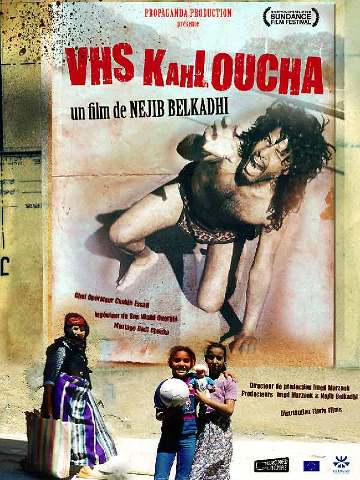
  • Néjib Belkadhi – VHS – Kahloucha (2006)

    2001-2010African CinemaComedyDocumentaryNéjib BelkadhiTunisia

    29f7c043f76a2bde437fd0d52a185152

    Moncef Kahloucha is a fan of ’70s genre movies, especially those with Bruce Lee, Jim Kelly and Clint Eastwood. Apart from working as a house painter in Kazmet, a poor Tunician locality, Kahloucha is a tenacious director, actor, screenwriter and prop master in his own zero-budget productions. At the limits of communal, visceral cinema captured on a VHS camera, it literally costs Kahloucha blood, sweat and tears to shoot his next film: Tarzan of the Arabs, opening at a bar TV set. With an amplified eye, Néjib Belkhadi not only records a ferocious making-of, but also manages to come out with a crystal-clear map of Kazmet’s social ills, including the Arabs who must survive in their Italian exile to the tune of the anthological “Tunisino” by Neshez. The savage primitiveness of the shooting, the struggle for a place in the ads of the neighbors-actors and Kahloucha’s displays of tinsel used in previous films are some gripping, all but likely moments of an incendiary passion for cinema.
    Read More »

  • Dziga Vertov – Kazakhstan – Frontu! (Тебе Фронт! ) AKA Tebe Front! (1942)

    1941-1950DocumentaryDziga VertovUSSR

    http://img229.imageshack.us/img229/9109/66794077vt8.jpg

    29f7c043f76a2bde437fd0d52a185152

    The film was shot in 1942 in Kazakhstan. Unfortunately the image and sound quality is not so good.
    Read More »

  • José Padilha & Felipe Lacerda – Ônibus 174 AKA Bus 174 [+Extras] (2002)

    2001-2010BrazilDocumentaryDramaJosé Padilha and Felipe Lacerda

    29f7c043f76a2bde437fd0d52a185152

    Review (by Jamie Russell,) :

    Life is cheap in this searing Brazilian documentary about the real-life hijacking of a bus in Rio de Janeiro in June 2000 by a homeless, drug-addicted street kid named Sandro do Nascimento. Broadcast live on Brazilian television, the four-hour stand-off let the nation watch as its incompetent, poorly trained police force struggled to contain the explosive situation. A stunning indictment of Brazil’s social meltdown, this startling documentary plays like City Of God – except this time the bullets are real.

    The hijacking itself is a catalogue of errors: the police failed to seal off the bus, letting camera crews and Joe Public wander within inches of its windows while Sandro stalked around inside with a .38 revolver. As a result, SWAT team snipers were told not to shoot because the event was being broadcast live on national television.
    Read More »

Back to top button