SYNOPSIS
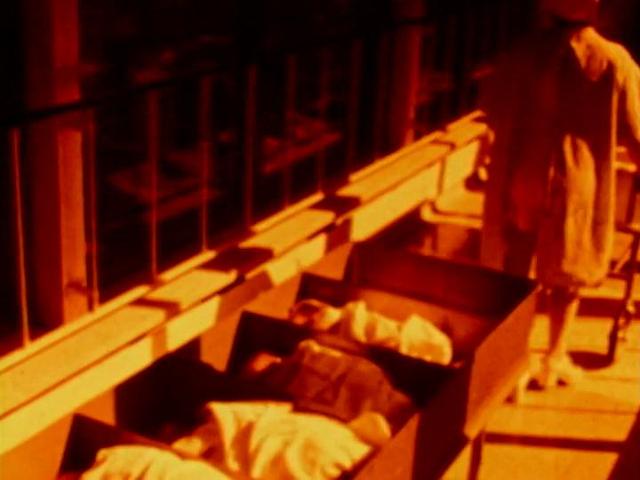
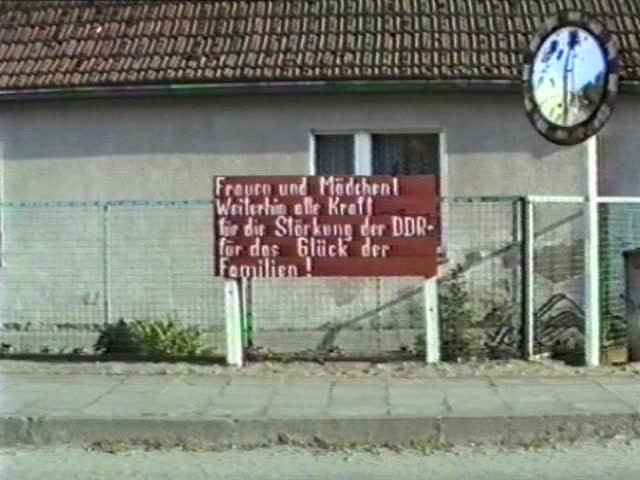
This highly experimental twist on the ethnographic documentary visits the town of Yumen, in China’s northwest Gansu province, a once-thriving, oil-rich community in the 1980s that has been left depleted and derelict. Strikingly shot on film, Yumen tells the story of this ghost town through a series of wandering characters and inventive vignettes in which even the spirit of Bruce Springsteen is summoned to comment on a world in ruins. A collaboration between Chinese and American filmmakers, Yumen pushes the boundaries of the documentary aesthetic in depicting China’s past and present. Read More »
Documentary
-
Xu Ruotao, J.P. Sniadecki & Huang Xiang – Yumen (2013)
2011-2020ChinaDocumentaryExperimentalHuang XiangXu Ruotao -
R. Maslyn Williams – Mike and Stefani (1952)
1951-1960AustraliaDocumentaryPoliticsR. Maslyn WilliamsFascinating artifact from the period of peak European migration into Australia, which can be instructively set alongside the films of Giorgio Mangiamele (one of whose films seems a direct response to Mike & Stefani) and films like Popov’s fascinating “Australia, Australia”.Read More »
-
Ebrahim Golestan – Ganjine-haye gohar AKA The crown jewels of Iran (1965)
1961-1970DocumentaryEbrahim GolestanIranQuote:
Made for the Central Bank of Iran to celebrate the collection of precious jewels kept in the treasury, this film remains filmmaker Ebrahim Golestan’s most visually dazzling work, embellished with terrific camera movements.Some of the most iconic landscape photography in the history of Iranian cinema can be found within a minute after the opening credits, in which peasants of various ethnicities and tribes are quickly reviewed, all posed in a graceful manner, like kings without being kings. Like a work of musical composition, a simple act of ploughing is spread across shots of various size and angle, creating an intimate visual symphony. And then appears one of Golestan’s allegorical match-cuts: a farmer seen on the horizon before a cut to a diamond on a dark background – the farmer is the jewel.Read More »
-
Mania Akbari – 10 + 4 (Dah be alaveh chahar) (2007)
2001-2010ArthouseDocumentaryIranMania AkbariAfter casting painter and video artist Mania Akbari as the central figure of his groundbreaking Ten (2002), and then witnessing her outstanding debut as a feature film director in 20 Fingers (2004), Abbas Kiarostami urged her to direct a sequel to the film. In Dah be alaveh Chahar (10 + 4), though, circumstances are different: Mania is fighting cancer. She has undergone surgery; she has lost her hair following chemotherapy and no longer wears the compulsory headscarf; and sometimes she is too weak to drive. So the camera follows her to record conversations with friends and family in different spaces, from the gondola she had famously used in her first feature to a hospital bed. Yet, while he body shows the effects of the disease, Akbari is as tough, charismatic, and argumentative as in her previous screen appearances her luminous presence all the more alluring and precious as it becomes a sign of how fragile life itself is. Her cinematic language has been expanded and refined from the rigorous explorations of 20 Fingers, to take into account the unexpected aspects of facing simultaneously death and survival, social stigma and sympathy. Treading an elegant line between documentary and fiction, Akbari takes a daring look at complex social situations that arise in the face of mortality and emerges with a new zest for life.Read More »
-
Giovanni Guareschi & Pier Paolo Pasolini – La rabbia AKA Anger (1963)
1961-1970DocumentaryGiovanni GuareschiItalyPier Paolo PasoliniPolitics

“La Rabbia” employs documentary footage (from the 1950s) and accompanying commentary to attempt to answer the existential question, Why are our lives characterized by discontent, anguish, and fear? The film is in two completely separate parts, and the directors of these respective sections, left-wing Pier Paolo Pasolini and conservative Giovanni Guareschi, offer the viewer contrasting analyses of and prescriptions for modern society. Part I, by Pasolini, is a denunciation of the offenses of Western culture, particularly those against colonized Africa. It is at the same time a chronicle of the liberation and independence of the former African colonies, portraying these peoples as the new protagonists of the world stage, holding up Marxism as their “salvation,” and suggesting that their “innocent ferocity” will be the new religion of the era. Guareschi’s part, by contrast, constitutes a defense of Western civilization and a word of hope, couched in traditional Christian terms, for man’s…Read More »
-
Jean-Claude Rousseau – Chansons d’amour (2016)
2011-2020DocumentaryFranceVideo ArtMy beloved
Will you sleep foreverRead More » -
John Cassavetes – Cassavetes Gazzara Rowlands 1978 Interview (1978)
USA1971-1980ArthouseDocumentaryJohn Cassavetes
This is a raw-footage version of a group interview for some unspecified TV station at a restaurant from 1978 with Cassavetes, Gena Rowlands, Ben Gazzara, Seymour Cassell and Paul Stewart on the occasion of Opening Night being released. It starts out with some general career-spanning questions to Cassavetes and then eventually gets into Opening Night with Cassavetes exhorting people to go see it in his own inimitable way. Mostly we hear from Cassavetes, Rowlands, Gazzara and Paul Stewart, with just a few reactions from Seymour Cassell who is sitting by listening and smoking.Read More »
-
Clément Cogitore – Braguino (2017)
2011-2020ArthouseClément CogitoreDocumentaryFrancePlot : In the Siberian forest, away from any civilization, a feud is opposing two families whose houses are separated by a river. In the middle of the river stands an island where the kids of the two families are meeting on their own.Read More »
-
Don Amis – Festival of Mask (1982)
1981-1990DocumentaryDon AmisShort FilmUSAJacqueline Stewart wrote:
Filmmaker Don Amis was one of the very few Black student filmmakers at UCLA (including Carroll Parrott Blue and Denise Bean) working in a documentary mode. In this film, preparations, parade and performances from the Craft and Folk Art Museum’s annual Festival of Mask illustrate L.A.’s diverse racial and ethnic communities (African, Asian, Latin American) expressing themselves through a shared traditional form.Read More »