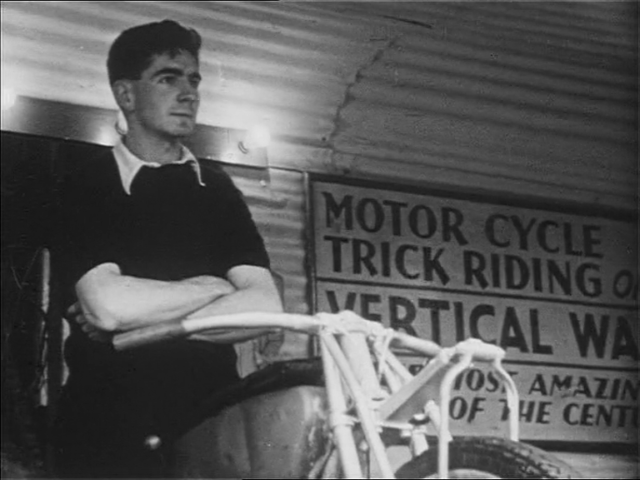
Unsparing candid-camera work and astute juxtaposition of natural sound provide a scathing, angry and wordless comment on modern popular culture as seen at a British amusement park. No attempt is made to poke fun at the people shown; they are portrayed as victims — Orwell’s 1984 “proles”. A visual and aural barrage of cheap pleasures and angry social comment by the later famous director of If and O Lucky Man. – Amos VogelRead More »
This is a snapshot of the global state of the movie industry with a special feature on fims about pandemics and a look at what’s available to stream online “beyond the mainstream”.Read More »
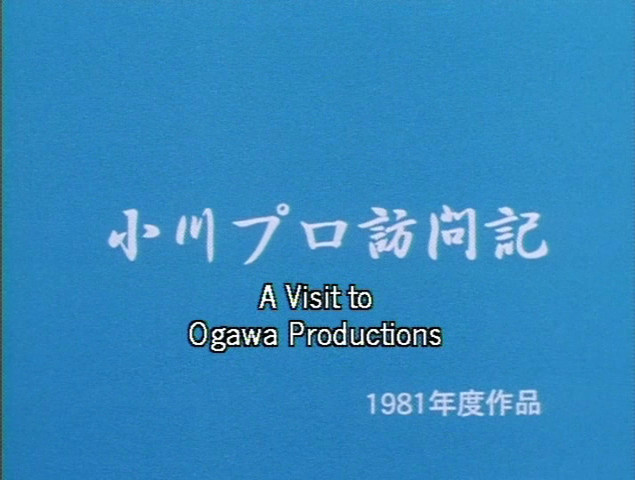
Nagisa Oshima visits Ogawa Productions and shares a series of wide-ranging, in-depth conversations with director Shinsuke Ogawa in 1981.
Quote: In 1981 film director Nagisa Oshima – the ‘New Wave’ Japanese director best known in this country for films such as Cruel Story of Youth (1960), In the Realm of the Senses (1976), and Merry Christmas, Mr. Lawrence (1983) – traveled to the Yamagata countryside to visit the documentary filmmaking collective led by Shinsuke Ogawa (1935-1992), who was then in the midst of filming A Japanese Village – Furuyashikimura, a feature-length documentary chronicling the seasonal cycle of rice growing.Read More »
Quote: Stations of the Elevated (1981) is a 45-minute city symphony directed, produced and edited by Manfred Kirchheimer. Shot on lush 16mm color reversal stock, the film weaves together vivid images of graffiti- covered elevated subway trains crisscrossing the gritty urban landscape of 1970s New York, to a commentary-free soundtrack that combines ambient city noise with jazz and gospel by Charles Mingus and Aretha Franklin. Gliding through the South Bronx, Brooklyn, Queens and Manhattan – making a rural detour past a correctional facility upstate – Stations of the Elevated is an impressionistic portrait of and tribute to a New York that has long since disappeared.Read More »
Quote:
« Transparences : voir à travers, pouvoir entrevoir le “cinéma” sur pied, ou porté. Œil et main deviennent mouvement, griffes et projection. Sur la décomposition du matériau nitrate, ses transformations (d’un fragment de guerre ayant appartenu à Luca Comerio, tourné par lui en 1916 sur le mont Adamello). Aspect physique en continuelle mutation. Restent les supports déchirés de la pellicule : perforations, collages, fluorescences, couleurs éteintes, jusqu’au total effacement de l’image originale contenue sur le photogramme. Effacement de l’image de la guerre ; parenté entre le nitrate et la poudre à canon. Métamorphoses du cinéma “qui défile” en cinéma de la matière collante, gommeuse, explosive. Dernier état du cinéma : devenir bombe explosive incendiaire de la mémoire. »Read More »
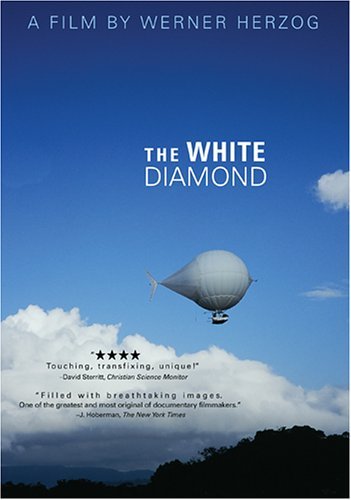
Quote: Aeronautic engineer Graham Dorrington tries his hand at a journey towards the massive waterfalls of Kaieteur, in the heart of Guyana, hoping that his helium airship will make it successfully over the treetops. His undertaking is not without risks: twelve years earlier, a similar expedition that attempted to fly over a rainforest habitat in Sumatra had culminated in the tragic death of Dieter Plage, a friend of Dorrington. Werner Herzog is among the protagonists of the expedition, embarking in a new dirigible prototype to observe the lost world of this uncontaminated rainforest, one of the least explored territories on the planet.Read More »
This film is the follow-up to First Contact. It traces the fortunes of Joe Leahy, the mixed-race son of Australian explorer Michael Leahy, in his uneasy relationship with his tribal neighbours. Joe built his coffee plantation on land bought from the Ganiga in the mid 1970s. European educated, raised in the highlands of Papua, freed by his mixed race from the entanglements of tribal obligation, Joe leads a Western lifestyle governed by individualism and the pursuit of affluence.Read More »
Amos Vogel, Film as a Subversive Art: Posing as a West German TV production crew, the two East German directors of this film persuaded a former leading German mercenary of the Congo civil war (one of many!) to discuss his activities and heroic achievements in what is surely one of the most sensational exposés of its kind. Continually smiling or laughing, this man, a self-acknowledged Nazi, proudly reveals that he went to the Congo to save Western civilization from Bolshevism – to complete the work of the Nazis. Dressed in his military jungle uniform (with his Second World War decorations) he waxes eloquent about the ‘colours’ of South Africa, ‘explains’ apartheid, and freely discusses his ‘adventures’. Shots of corpses, tortures, and executions of Blacks are intercut. It is not often that one can see and hear a real, ‘live’ Nazi in action, talking (more or less) freely because he presumed himself to be among friends instead of with two of the most clever political propagandists of our time, working for the other side.Read More »
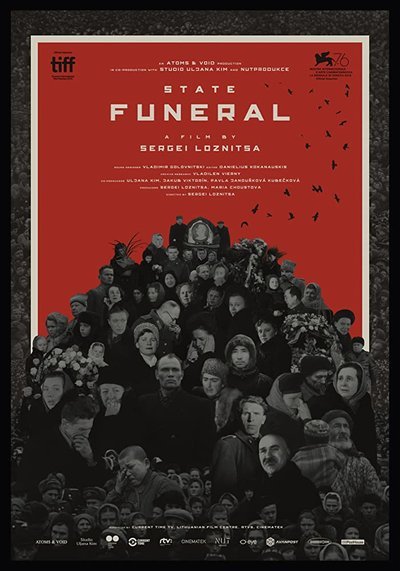
Quote: Unique, mostly unseen before, archive footage from March 1953, presents the funeral of Joseph Stalin as the culmination of the dictator’s personality cult. The film addresses the issue of Stalin’s personality cult as a form of terror-induced delusion. It gives an insight into the nature of the regime and its legacy, still haunting the contemporary world.Read More »