Documentary

  • Steve James – Hoop Dreams (1994)

    1991-2000DocumentaryDramaSteve JamesUSA

    Quote:
    Two ordinary inner-city kids dare to dream the impossible – professional basketball glory – in this epic chronicle of hope and faith. Filmed over a five-year period, Hoop Dreams follows young Arthur Agee and William Gates as they navigate the complex, competitive world of scholastic athletics while striving to overcome the intense pressures of family life and the realities of their Chicago streets. The Criterion Collection is proud to present this landmark documentary chronicling two remarkable families who challenge the American dream.Read More »

  • Christoph Hübner – Thomas Harlan – Wandersplitter aka Thomas Harlan – Moving Shrapnel (2007)

    2001-2010Christoph HübnerDocumentaryGermany

    Quote:
    Thomas Harlan, filmmaker, author and revolutionary was born in 1929 in Germany. His father was the infamous propaganda filmmaker Veit Harlan, director of Jew Suess. During his childhood, as a result of his father’s closeness to the Nazi Party, the little Thomas came face to face with Hitler and Goebbels. Now an old frail man, Harlan lives in a respiratory clinic in Berchtesgaden. It is in this clinic in South Germany that he, along with documentary filmmaker Christoph Hübner, examines fragments of his past.Read More »

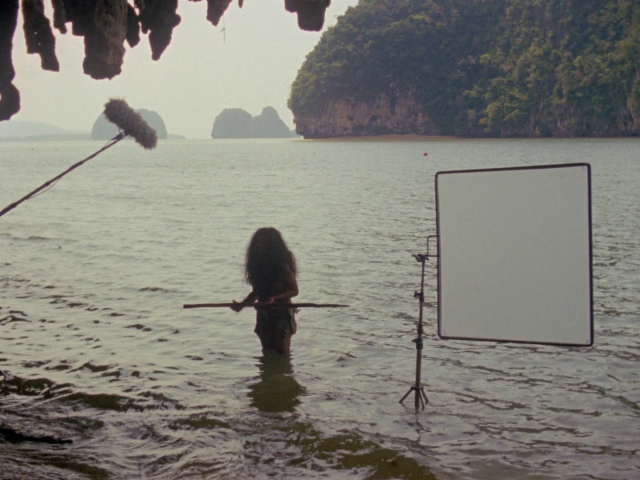
  • Ben Rivers – Ghost Strata (2019)

    2011-2020Ben RiversDocumentaryExperimentalUnited Kingdom

    Ben Rivers’ films tend to look outward at the larger world. GHOST STRATA is no exception. But to a somewhat different extent, it also looks in. A film diary, it reflects his globetrotting ways, existing in the margins of his otherwise outward-bound filmmaking style. So landscape plays a huge role, and in fact the film takes its title from a geological concept. As a scientist explains in the film, “ghost strata” are theoretical layers of time. When you see the strata of sedimentary rock, you are given to understand that the space around that rock, the very space you occupy, was once filled with earth as well. Rivers composes the film as a calendar, with 12 sections, one for each month of the year of its making. Read More »

  • Martin Scorsese – Il Mio viaggio in Italia AKA My Voyage to Italy (1999)

    1991-2000DocumentaryItalyMartin Scorsese

    A follow-up to his 1995 television documentary A Personal Journey With Martin Scorsese Through American Movies, Martin Scorsese’s My Voyage to Italy (Il Mio Viaggio in Italia) is a thrilling trip through six decades of seminal, great and near-great Italian films so dear to the celebrated Sicilian-American filmmaker. Easing us through a rich cornucopia of high-quality, largely black-and-white clips, Scorsese, who serves as an eloquent and lucid onscreen and offscreen commentator, makes highly personal and not always popular choices. Still, even when the clips are unfamiliar, the New York-based director, whose Gangs of New York is scheduled for release early next year, conveys with passion and clarity why these films are important to him and should be to us.Read More »

  • Robert Kramer – Notre nazi AKA Our Nazi (1984)

    Documentary1981-1990FrancePoliticsRobert Kramer

    Quote:
    In 1984, the West German film director Thomas Harlan (maker of Torre Bela [1976] and author of the novel Rosa [2000]), directed Wundkanal: Execution for Four Voices, a joint French-German production about Dr S, a soldier impeached after the war for taking part in the massacre of Jews in Lithuania, and his slide towards suicide. To express his resistance to the forgetting of Nazism as war criminals aged, Harlan cast Alfred Filbert – an actual member of the SS during the War who spoke only German – as Dr S for this experimental fiction film shot in a French studio. (7) Filbert was not aware of what was to happen on set, in front of the camera, mor that the script was merely a pretext or ruse for a psychodramatic ‘happening’: Harlan, in fact, intended to interrogate and expose, ‘live’, his complicity with Nazi atrocities.Read More »

  • Shengze Zhu – Another Year (2016)

    2011-2020ArthouseChinaDocumentaryShengze Zhu

    Synopsis:
    Thirteen dinners of a Chinese migrant worker’s family over the course of fourteen months. The film portrays a series of random occurrences. Joys, frustrations and the struggle for survival. The meals unfold in real-time through thirteen static, long takes. Each take captures with vivid detail the reality of the relationships between the different family members. As the seasons unfold, so does time and the echoes for better working conditions penetrate the frame. Issues such as the one-child policy and the possibilities for better wages weigh heavily on the minds of the three-generation family. Read More »

  • Agnès Varda – Black Panthers (1968)

    1961-1970Agnès VardaDocumentaryPoliticsUSA

    This classic 1968 documentary highlights the activities of the headquarters of the Black Panther Party in Oakland, California as its members fight for the freedom of its imprisoned co-founder Huey P. Newton.Read More »

  • Orson Welles – Vérités et mensonges aka F for Fake (1973)

    1971-1980ArthouseDocumentaryFranceOrson Welles

    Quote:
    Orson Welles’ free-form documentary about fakery focusses on the notorious art forger Elmyr de Hory and Elmyr’s biographer, Clifford Irving, who also wrote the celebrated fraudulent Howard Hughes autobiography, then touches on the reclusive Hughes and Welles’ own career (which started with a faked resume and a phony Martian invasion). On the way, Welles plays a few tricks of his own on the audience.Read More »

  • Rogério Sganzerla – Nem Tudo é Verdade (1986)

    Arthouse1981-1990BrazilDocumentaryRogério Sganzerla

    Orson Welles goes to Brazil to shoot his documentary It’s All True.
    Quote:
    A fictional account of Orson Welles’ real passage to Brazil where he was supposed to film a cultural film called “It’s All True”, to present a positive image of Brazilian people and the country’s grandiosity’s to the U.S. government, a project that was part of FDR’s Good Neighbor policy. But Welles got enchanted with everything around him and got distracted from the project, that never got fully made. This movie speculates what really happened to Welles that prevented him from fulfilling his work.Read More »

Back to top button