A student work by Jiří Menzel, filmed during his second year at the FAMU film school. Views of old Prague and its tenement buildings, symbolising the obsolete past, alternate with shots of construction sites for new prefabricated apartment buildings. In spite of certain unavoidable propagandistic overtones added by the director, it is notable as the beginning of his search for a “dramaturgy of colours.”Read More »
Quote: Bricks are manufacured in Africa, India and Europe and used to erect clinics, children’s homes, schools and residential buildings. Harun Farocki observed the different steps of the manufacturing process. Bricks are cast, fired or pressed by hands, machines or robots. Depending on the country of production, this involves a single worker or a large group. The film’s title communicates a decisive aspect: Farocki merely offers material to the viewer, who has to draw the actual comparisons between traditional, early industrial, and fully industrialized societies himself. Read More »
Quote: Elena, a young Brazilian woman, travels to New York with the same dream as her mother, to become a movie actress. She leaves behind her childhood spent in hiding during the years of the military dictatorship. She also leaves Petra, her seven year old sister.
Two decades later, Petra also becomes an actress and goes to New York in search of Elena. She only has a few clues about her: home movies, newspaper clippings, a diary and letters. At any moment Petra hopes to find Elena walking in the streets in a silk blouse.Read More »
Rem Koolhaas – winner of architecture’s Nobel, the Pritzker Architecture Prize – is a Professor of Architecture and Urban Design at Harvard. For the past four years Koolhaas and students from The Harvard Project on the City have come to Lagos regularly to research the type of urban environment that is produced by explosive population growth. The Project on the City is framed by two concepts: academia’s bewilderment with new forms of accelerated urbanization in developing regions and the maelstrom of redevelopment in existing urban areas; and, second, the failure of the design professions to adequately cope with these changes.Read More »
Synopsis: “My little son, it’s me, your father…” The narrator tries to communicate with his unborn son and takes off on a journey were you see faces of apparitions of those outcasts, who find their solace of living only in the shadows; outside, but beside, the political and economical system; system that kills the individual and creates masses instead. These outcasts are bums, cripples, madmen, lunatics. They, in the eyes of the narrator, are the only ones, that know what it means to be human. They are not corrupt by the masses or the system; they are so overwhelmed by their madness or dreams, that they have lost the relationship with the world. They live in a world of their own, thus enabling freedom from the system. What they do, is wait. They quietly wait for the day the kingdom of God will descend upon earth. — DrStrangelife (IMDb)Read More »
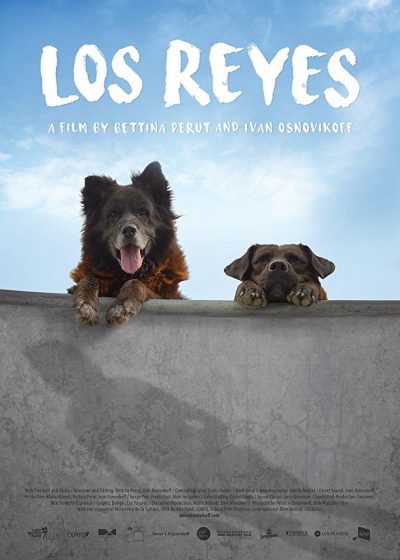
Quote: Los Reyes (“The Kings”) is the oldest skatepark in the Chilean capital of Santiago. This story is about the real kings here: Football and Chola, two stray dogs that have made their home in this open space full of hurtling skateboards and rowdy teenagers. The energetic Chola loves to play with the balls she finds lying around. She positions them at the edge of the bowls where the skaters show off their tricks and tries to catch them just before they fall down. The older dog, Football, looks on impatiently and barks at Chola until she finally drops the balls. The teenagers around them come from very different, sometimes troubled backgrounds. They each have their own story, which they recount to us in voiceover. In this almost fairy-tale-like film, the phenomenal, dreamlike camerawork centers almost entirely on the subtle interaction between the two dogs, as they play with a ball, a stick, a stone and each other.Read More »
Quote: When the United States, the world’s biggest military power, decided that China, the second largest economic power, was a threat to its imperial dominance, two-thirds of US naval forces were transferred to Asia and the Pacific. This was the ‘pivot to Asia’, announced by President Barack Obama in 2011. China, which in the space of a generation had risen from the chaos of Mao Zedong’s ‘Cultural Revolution’ to an economic prosperity that has seen more than 500 million people lifted out of poverty, was suddenly the United States’s new enemy.Read More »