A documentary shot by Moullet in 16mm, about two remote, underdeveloped villages, one in the Alps and one in the Pyrenees. It is Moullet’s version of Buñuel’s Las Hurdes (Land without Bread, 1932) which was not released until 1966.Read More »


A documentary shot by Moullet in 16mm, about two remote, underdeveloped villages, one in the Alps and one in the Pyrenees. It is Moullet’s version of Buñuel’s Las Hurdes (Land without Bread, 1932) which was not released until 1966.Read More »


Rabo de Peixe is a fishing village in the Azores. Between 1999 and 2001, Joaquim Pinto and Nuno Leonel shot a documentary there about the disappearing traditional fishing methods. The TV channel which commissioned the film didn’t appreciate its critical attitude and broadcasted it only once, in a shorter version. In the meantime, the two directors move to the island, and the industrial fishing methods, supported by Community directives, shake the small village. Fifteen years later, they decide to re-edit the movie following their original intentions, keeping in mind the time that has passed and how their lives have been changed by that place and its inhabitants.Read More »
Alice Rohrwacher, Pietro Marcello, and Francesco Munzi, three of the most interesting voices in contemporary Italian filmmaking, pool their talent in this captivating collective work, with a self-assured nod to the film Comizi d’amore (Love Meetings) by Pier Paolo Pasolini (1964). In their travels across Italy, the filmmakers hear from a diverse range of young people, resulting in a snapshot of a generation for whom hope is always marred with uncertainty. Disarmingly simple and strikingly effective, this documentary captures the spirit of a troubled time, in which the global pandemic throws doubt on the future.Read More »
Quote:
“Intended as a longer film, this proved sufficient to vignette the nuances of my sadness.”
— Anne Charlotte RobertsonRead More »
About the film
Quote:
In “The Soul of A Man,” director Wim Wenders looks at the dramatic tension in the blues between the sacred and the profane by exploring the music and lives of three of his favorite blues artists: Skip James, Blind Willie Johnson and J. B. Lenoir. Part history, part personal pilgrimage, the film tells the story of these lives in music through an extended fictional film sequence (recreations of ’20s and ’30s events – shot in silent-film, hand-crank style), rare archival footage, present-day documentary scenes and covers of their songs by contemporary musicians such as Shemekia Copeland, Alvin Youngblood Hart, Garland Jeffreys, Chris Thomas King, Cassandra Wilson, Nick Cave, Los Lobos, Eagle Eye Cherry, Vernon Reid, James “Blood” Ulmer, Lou Reed, Bonnie Raitt, Marc Ribot, The Jon Spencer Blues Explosion, Lucinda Williams and T-Bone Burnett.Read More »
Quote:
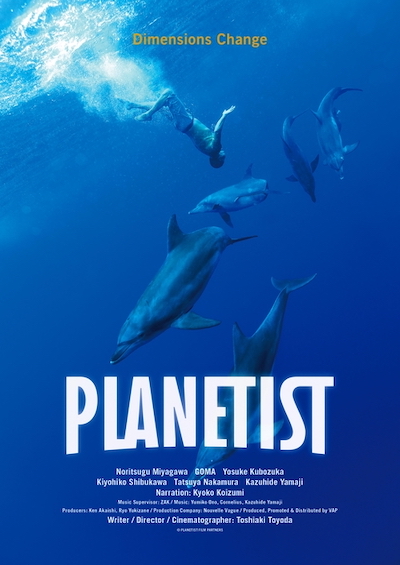
Essentially a series of vignettes that present an impressive combination of image and sound, “Shiver” seems to focus on concepts as tradition, through a distinct jidai-geki approach, nature and particularly water, as exhibited in the waves of the sea and the flow of the waterfalls, and the human body as connected to the playing of different percussion instruments. More intensely though, Toshiaki Toyoda focuses on the ways music is formed from a vibration that becomes a sound, that becomes a rhythm, that eventually becomes a piece of music.Read More »


There are the images of before, the images of after and the letters. The images of after come first, they stem from the same surveillance camera in Wuhan, empty streets that only throng with people again on April 4th, 2020.Read More »
The actress Isabelle Huppert has chosen twenty film extracts to compose this mosaic (self) portrait, interwoven with archives and commented by herself.Read More »


The 8th tells the story of Irish women and their fight to overturn one of the most restrictive laws on abortion in the world. After a 35-year struggle the pro-choice side have to radically shift tactics to try and bring this historically conservative electorate over the line.Read More »