Documentary

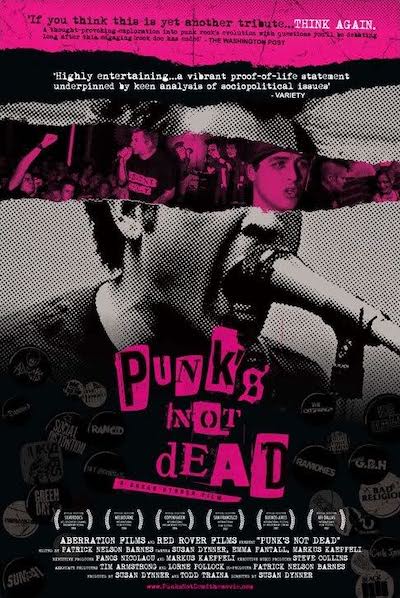
  • Susan Dynner – Punk’s Not Dead (2007)

    2001-2010DocumentarySusan DynnerUSA

    Quote:
    On the edge of the 30th anniversary of punk rock, Punk’s Not Dead takes you into the sweaty underground clubs, backyard parties, recording studios, and yes, shopping malls and stadium shows where punk rock music and culture continue to thrive. Thirty years after bands like the Ramones and the Sex Pistols infamously shocked the system with their hard, fast, status-quo-killing rock, the longest-running punk band in history is drawing bigger crowds than ever, “pop-punk” bands have found success on MTV, and kids too young to drive are forming bands that carry the torch for punk’s raw, immediate sound. Meanwhile, “punk” has become a marketing concept to sell everything from cars to vodka, and dyed hair and piercings mark a rite of passage for thousands of kids. Can the true, nonconformist punk spirit still exist in today’s corporatized culture? Featuring interviews, performances, and behind-the-scenes journeys with the bands, labels, fans, and press who keep punk alive, Punk’s Not Dead dares to juxtapose pop-punk’s music and lifestyle against the roots in the 70s and 80s, resulting in unexpected revelations. A DIY search for the soul of a subculture and a celebration of all things loud, fast, and spiked, Punk’s Not Dead shows punk is stronger and more relevant today than it’s ever been.Read More »
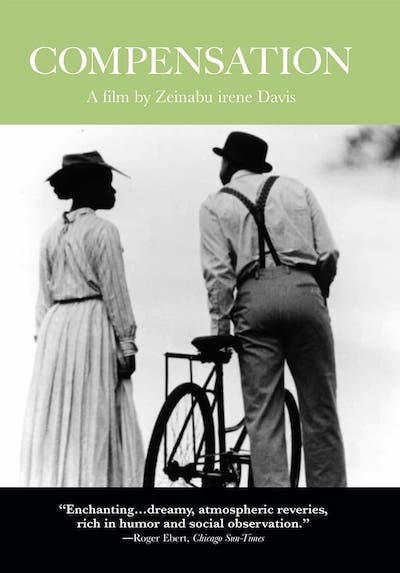
  • Zeinabu irene Davis – Compensation (1999)

    1991-2000DocumentaryDramaPoliticsUSAZeinabu irene Davis

    Synopsis
    The first feature by LA Rebellion trailblazer Zeinabu irene Davis presents two unique Black American love stories between a deaf woman and a hearing man. Inspired by a poem written by Paul Laurence Dunbar, this moving narrative shares the struggle of two couples—one in the early 1900s, the other in the 1990s—to overcome racism, disability, and discrimination. A groundbreaking look at African American deaf culture, COMPENSATION incorporates sign language and silent-film techniques (such as title cards) to make itself accessible to hearing and deaf viewers alike and to share the vast possibilities of language and communication.Read More »

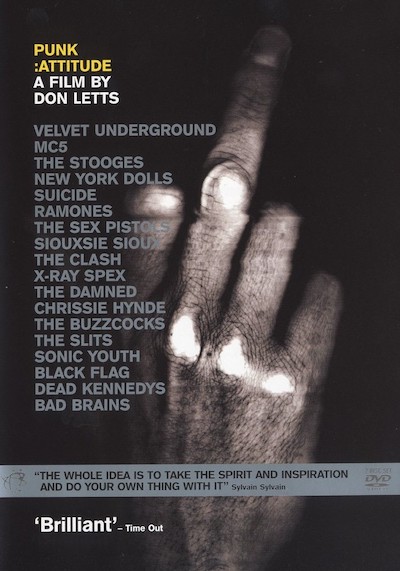
  • Don Letts – Punk: Attitude (2005)

    2001-2010DocumentaryDon LettsUnited Kingdom

    Quote:
    Punk: Attitude is a documentary on the history of punk rock in the USA and UK. The film traces the different styles of punk from their roots in 60s garage and psychedelic bands (Count Five, the Stooges) through glam-punk (New York Dolls) to the 70s New York and London scenes and into the hardcore present. Interviews with many of the musicians are edited with live clips and historical footage.Read More »

  • Harald Bergmann – Brinkmanns Zorn (2006)

    Documentary2001-2010GermanyHarald BergmannPhilosophy

    The Cologne author Rolf-Dieter Brinkmann introduced American beat literature to Germany

    “Brinkmanns Zorn” portraitiert einen Dichter, der alles auf einmal begehrt – Liebe, Tod, Pop, Hass, Kunst. Bedingungslos gleichzeitig und mit gnadenloser sprachlicher Wucht hat die Literaturikone Rolf Dieter Brinkmann auf jedes Alltagsdetail eingedroschen. Der Film begleitet ihn auf seinen medialen Streif- und sprachlichen Raubzügen durch die hassgeliebte Kölner Innenstadt. Den Original-Tonband- und Super8-Aufnahmen Brinkmanns hat Regisseur Harald Bergmann eine visuelle Welt hinzugefügt, die das sprachliche und soziale Universum Brinkmanns nachzeichnet.Read More »

  • Igor Kolovsky – Khatyn, 5km (1968)

    Documentary1961-1970Amos Vogel: Film as a Subversive ArtIgor KolovskyUSSR

    Quote:
    A documentary about the Khatyn massacre.

    Another example of Adamovich’s struggle against official war memory is a documentary film for which he co-authored the script: Khatyn’, 5km (dir. by 1. Ko-lovskii, Belarusfilm, 1968) was never publicly screened in the USSR because its treatment of the Khatyn theme was considered too negative by state censorship.Read More »

  • Jean Rouch – Moro Naba (1958)

    Documentary1951-1960FranceJean Rouch

    Funeral rituals for the traditional leader Moro Naba of the Mossi at Ougadougou, Upper Volta (now Burkina Faso). Election ceremonies for his successor. Preparing the feast for the end of mourning. Ceremony in the palace, the people of Ougadougou, the warriors in traditional dress. Presentation of the new leader.Read More »

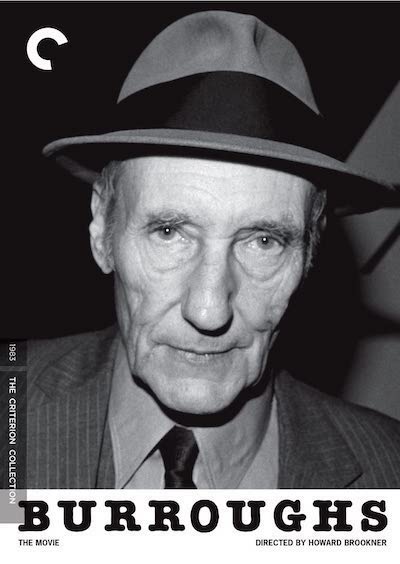
  • Howard Brookner – Burroughs: The Movie (1983)

    1981-1990DocumentaryHoward BrooknerUSA

    Quote:
    Burroughs: The Movie explores the life and times of controversial Naked Lunch author William S. Burroughs, with an intimacy never before seen and never repeated. The film charts the development of Burroughs’ unique literary style and his wildly unconventional life, including his travels from the American Midwest to North Africa and several personal tragedies. Burroughs: The Movie is the first and only feature length documentary to be made with and about Burroughs. The film was directed by the late Howard Brookner. It was begun in 1978 as Brookner’s senior thesis at NYU film school and then expanded into a feature which was completed 5 years later in 1983. Sound was recorded by Jim Jarmusch and the film was shot by Tom DiCillo, fellow NYU classmates and both very close friends of Brookner’s.Read More »

  • Christian Doermer – Granstein (1965)

    1961-1970Christian DoermerDocumentaryGermanyShort Film

    Between Dorothy Lange and Walker Evans, a realistic and sensitive snapshot of the 1965 rural world in the South of West Germany.Read More »

  • Hassen Ferhani – 143 rue du désert AKA 143 Sahara Street (2019)

    2011-2020AlgeriaDocumentaryHassen Ferhani

    Quote:
    143 RUE DU DESERT is a portrait of Malika, an elderly woman who runs a rest-stop café on the side of National 1, Algeria’s main highway. Through the various patrons who stop for eggs, coffee or tea, we become intimately acquainted with this eccentric woman, whose opinions on a variety of subject matters entertain, enlighten, and baffle in equal measure. Most of the customers know her so well that we suspect they perhaps stop not for the tea, but for her company. The film almost never leaves the inside of her small café, which serves also as her home. However, with every new shot, Ferhani manages to reveal a new fragment of this minuscule space, which keeps the film surprisingly dynamic. Ferhani does not hold sway over Malika’s representation, which is one of the most satisfying elements of the film. Malika seems aware of her character’s cinematic construction, and even dares to contradict statements about her life from one moment to the next, in a scene that is as performative as any fiction. Even though the film provides us with real-time access to this woman’s world, she retains a sense of privacy, which is the main source of the film’s mystery. (Nico Pereda)Read More »

Back to top button