

This movie shows us one day in Berlin, the rhythm of that time, starting at the earliest morning and ends in the deepest night.Read More »
This movie shows us one day in Berlin, the rhythm of that time, starting at the earliest morning and ends in the deepest night.Read More »

Quote:
Inmates at a prison in Rome rehearse for a performance of Shakespeare’s Julius Caesar.
Quote:
Set in an Italian prison, Caesar Must Die tells the story of the production of Shakespeare’s play Julius Caesar by a group of long-term or life prisoners. While the film is a documentary and the people in the film are actually all prisoners, it is filmed in such a cinematic way that you forget it’s a documentary that you’re watching. The film starts by the very end of the performance, and then skips back in time 6 months to when the staging of the production was announced. We see the most of the play from the audition period, through the many rehearsals around the prison, right to the actual performance in front of a crowd, of who we can assume are friends and family of the men.Read More »

PLOT:
Once a common medium to record home movies and holiday souvenirs, the memory of Super-8 film is now disappearing fast. Yaël André has recycled a wealth of random Super-8 footage into a fake biography, with cheeky off-screen voiceover.Read More »

Quote:
The life story of Charlotte von Mahlsdorf, born Lothar Berflede. Miss Charlotte survived the Nazi reign and the repression of the Communists as a transvestite and helped start the German gay liberation movement. Documentary with some dramatized scenes. Two actors play the young and middle aged Charlotte and she plays herself in the later years.Read More »

Quote:
Images of the World and Inscription in War is an essay whose central motif is the aerial photograph of the camp at Auschwitz taken on April 4, 1944 by an American reconnaissance plane. On this photo, analysts identified the surrounding factories but not the concentration and extermination camp. Dialectic montage and a distanced commentary compose this film which analyses the conditions under which an image becomes readable. The gap from “seeing” to “knowing”, interlacing the polysemy of words and photographs.Read More »

Quote:
The Wake depicts the events preceding manifestation funeral of Jan Palach who sat himself on fire on Venceslas Square in Prague to wake Czechoslovak nation from slow lapse to apathy after the 1968 invasion of Warsaw Pact armies. In the picture are interviewed many important figures of political, economy and cultural life including Vaclav Havel and actor Rudolf Hrusinsky. Its suggestive report on the shock and sadness which overcome the nations after Palachs selfimmolation. The movie was awarded with special price at 10th Karlovy Vary Film Festival in 1969.Read More »

IMDB:
Like the Kabakovs’ evocative art, ‘Ilya and Emilia KABAKOV: ENTER HERE’ has the sweep of a Russian novel and the immediacy of a family drama. It probes art’s ability to transcend oppression and exile. With extraordinary access, the film follows the Soviet-born international art luminaries, now U.S. citizens, to Putin’s Moscow, as they come face to face with their catastrophic past in the dizzying present. For the first time, Ilya Kabakov has returned to the hometown where his art was once forbidden, to install seven magical walk-in installations with his wife and partner-in-art, Emilia. The action ranges from the high plains of Texas to a blighted neighborhood in the Ukraine and climaxes as a sea of flashbulbs illuminate the artists at an opening pronounced ‘historic’.Read More »
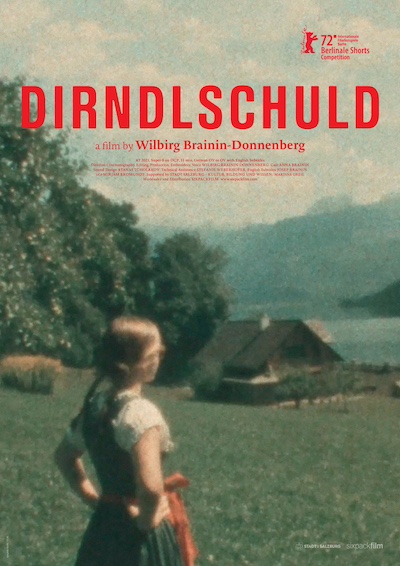
Synopsis
For some, a dirndl is just a pretty, colourful dress with an apron; for others, it is a symbolically charged provocation. Just like items of clothing, places can also be contaminated. The narratives constructed around them are constantly changed and adapted by private family histories and historical circumstances – and with each generation, a new reading is superimposed on these layers. This Super 8 film dives deep down into the idyll of Austria’s Lake Grundlsee to reveal the chasms that lie beneath.Read More »

Rencontre avec le peintre belge Paul Delvaux, valeur sûre à la bourse des tableaux et artiste international. Dans cet entretien, Paul Delvaux revient sur ses origines et son parcours. Parle de sa peinture où rien n’est jamais acquis et de l’érotisme qui se dégage de ses toiles. De sa peur de la toile blanche et de son goût pour l’antiquité que lui a transmis un de ses professeurs de latin et grec. Il évoque avec beaucoup de pudeur ses désignations à l’académie Picard et à la Grande Académie, sa célébrité. La caméra le suit également lors du vernissage de son exposition au Grand Palais à Paris auquel assiste la princesse Paola. Paul-Henri Spaak, ancien Premier ministre belge, et condisciple de Paul Delvaux à l’athénée de St Gilles évoque quelques souvenirs et l’impression que lui a laissée Paul Delvaux : “il était déjà un peu dans son rêve, pas sur le même plan que nous”.Read More »