At their 25th high-school anniversary some bourgeois citizens remember their time in school as a happy one. In reality it was quite the contrary. The school was a madhouse in which the teachers, especially Blomme, tormented the students. As a result one of them became a murderer. Written by Allan SimonsenRead More »
From The New york Times Grimly austere barely begins to describe the atmosphere of dread that seeps through “Fear X” like a toxic mist. The movie’s ominous mood is deepened by Brian Eno and J. Peter Schwalm’s ambient background score, which haunts the movie with faraway groans and rattles.
If “Fear X,” the American filmmaking debut of the Danish director Nicolas Winding Refn, promises far more drama than it finally delivers, its glumness never abates. Whether contemplating the shabby cottages in a snow-swept Wisconsin suburb or scanning the flatlands of Montana, the camera, which stealthily follows the protagonist’s suspicious eyes wherever he looks, imagines danger crouching in every shadow.Read More »
Just out of prison for violent behavior, Tony gets angry when he sees the new film by the world-famous director Claus Volter and wants his money back.Read More »
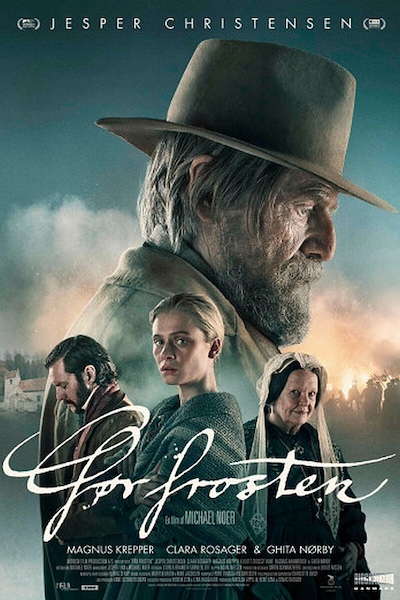
Set in the mid-17th century, the story of Ludvig Kahlen who pursued his lifelong dream: to make the heath bring him wealth and honor in unforgiving area populated by wolves and highwaymen.Read More »
Quote: Ophelia’s Suicide soliloquy is staged by a forest pond against the backdrop of a stretched piece of blue fabric gently quivering in the accidental breeze. A few years earlier, Jørgen Leth and Per Kirkeby had put on a highly stylized production of “Hamlet” at the Svalegangen theatre in Aarhus and from there comes the idea of Ophelia’s soliloquy literally “going to pieces” according to this principle: when Leth in the wings, strikes two wooden blocks together, the actress halts her reading and starts over. As the actress is halted again and again, the soliloquy breaks up according to the accidental principle, which is unpredictable and enervating. Read More »
Apolonia Sokol was born in 1988 to a French father and a Polish mother, the two of whom owned a Paris theater, Lavoir Moderne Parisien. This was a hub for all kinds of subversive plays, cabaret acts, and other performances, a space that was constantly running into rent troubles. Here Apolonia was surrounded by bohemian figures (artists, writers, performers) who were integral to her upbringing. Though she came and went from Paris after her parents split up (she left with her mother for Denmark), this theatre was her actual home when she caught the attention of young film student Lea Glob.Read More »
In 1800s Denmark, a farmer has a bad harvest and thus not enough food for his family. He makes a deal, that includes his farm and his daughter getting married, with a nearby rich farmer.Read More »
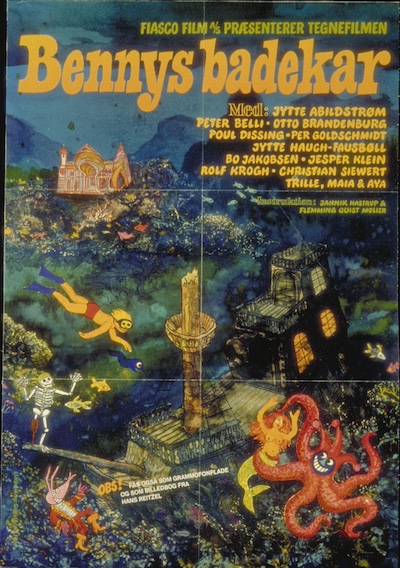
How can you not love a psychedelic animated kids’ film in which a young boy, bored with the dreary and gray Adult World, follows an enchanted tadpole through the drain in his bathtub – where he discovers a surreal and musical undersea world?? Populated by singing (and barely dressed) Mermaids, a funky hepcat Octopus and whiskey-drinking Skeleton Pirates, the underwater kingdom is the grooviest scene this side of YELLOW SUBMARINE, with helpings of Dr. Seuss, Sid & Marty Krofft and Harry Nilsson’s THE POINT thrown in. (Kids’ entertainment in the early 1970s was truly outtasite!) In addition to the candy-colored, kaleidoscopic visuals, the film is famed for its incredibly addictive soundtrack featuring Jazz heavyweights of Copenhagen circa 1970, with vocals sung by the cream of Danish 60s Pop and Rock including Peter Belli, Otto Brandenburg, Poul Dissing and Trille on tracks like “Octopussong/ Blækspruttesangen” and “seahorsesong/ Søhestesangen”. Read More »
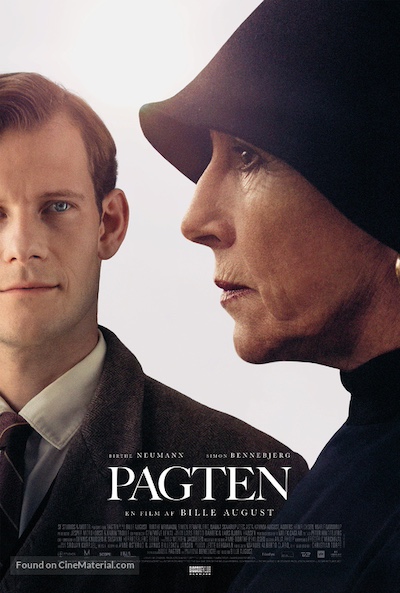
Aged 63, Karen Blixen, the Danish author best known for her autobiographical novel “Out of Africa,” is at the pinnacle of her fame and next in line to win the Nobel Prize for literature . It has been 17 years since she gave up her famous farm in Africa, only to return to Denmark with her life in ruins. Devastated by syphilis and having lost the love of her life, she has reinvented herself as a literary sensation. She is an isolated genius, however, until the day she meets a talented 30-year-old poet. She promises him literary stardom if he in return will obey her unconditionally – even at the cost of him losing everything else in his life…Read More »