D.W. Griffith

  • D.W. Griffith – The Painted Lady (1912)

    Drama1911-1920D.W. GriffithSilentThe Birth of CinemaUSA

    A lonely young woman lives with her strict father who forbids her to wear make-up. One day at an ice cream social, she meets a young man you seems interested in her. However, unknown to her, he is a burglar who is only interested in breaking into her father’s house. One night she is awakened by a noise. Grabbing a pistol, she enters her father’s downstairs office where she confronts a masked intruder . . . Read More »

  • D.W. Griffith – The Avenging Conscience: or ‘Thou Shalt Not Kill’ (1914)

    1911-1920D.W. GriffithDramaSilentThe Birth of CinemaUSA

    Thwarted by his despotic uncle from continuing his love affair, a young man turns to thoughts of murder. Experiencing a series of visions, he sees murder as a normal course of events in life and kills his uncle. Tortured by his conscience, his future sanity is uncertain as he is assailed by nightmarish visions of what he has done.Read More »

  • D.W. Griffith – Way Down East (1920)

    1911-1920D.W. GriffithDramaSilentUSA

    29f7c043f76a2bde437fd0d52a185152

    Way Down East (1920) is a silent film directed by D. W. Griffith and starring Lillian Gish. It is one of four film adaptations of the melodramatic 19th century play Way Down East by Lottie Blair Parker. There were two earlier silent versions, and one sound version in 1935, starring Henry Fonda.
    Griffith’s version is particularly remembered for its exciting climax in which Lillian Gish’s character is rescued from doom on an icy river. Some sources, quoting newspaper ads of the time, say a sequence was filmed in an early color process, possibly Technicolor or Prizmacolor.
    Read More »

  • D.W. Griffith – Intolerance: Love’s Struggle Throughout the Ages (2007 Restoration) (1916)

    1911-1920ClassicsD.W. GriffithSilentUSA

    Free Image Hosting at www.ImageShack.us

    29f7c043f76a2bde437fd0d52a185152

    Filmreference review
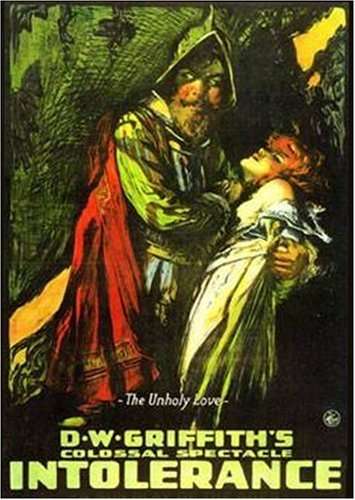
    “Critical judgment remains sharply divided on Intolerance, D. W. Griffith’s most expensive and flamboyant spectacle. Those critics who pronounce the film a failure generally point to the four stories, which, they claim, are thematically too diverse to be effectively collated. Taking their cue from Eisenstein’s famous indictment, they argue that the film suffers from purposeless fragmentation and thematic incoherence. Others, notably Vachel Lindsay, Georges Sadoul, Edward Wagenknecht, and more recently Pauline Kael, list Intolerance among the masterworks, stressing its formal complexity, experimental daring, and thematic richness. René Clair, taking a middle position, writes, “it combines extraordinary lyric passages, realism, and psychological detail, with nonsense, vulgarity, and painful sentimentality.”Read More »
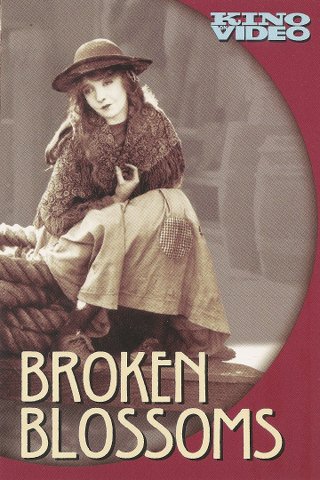
  • D.W. Griffith – Broken Blossoms or The Yellow Man and the Girl (1919)

    1911-1920D.W. GriffithDramaSilentUSA

    29f7c043f76a2bde437fd0d52a185152

    Don Druker, Chicago Reader wrote:
    One of D.W. Griffith’s most beautiful films, a 1919 tale of the chaste love of a Chinese man (Richard Barthelmess) for the frail daughter (Lillian Gish) of a loutish boxer. It perfectly fuses all the elements of Griffith’s style: tender drama played off against scenes of violence; a rich, operatic sense of character and emotion; and a dreamlike acting style, given particular force by the subtlety of Gish’s performance and the strength of Barthelmess’s.Read More »

  • D.W. Griffith – Lady of the Pavements (1929)

    Drama1921-1930D.W. GriffithUSA

    29f7c043f76a2bde437fd0d52a185152

    Art Cinema Corporation production; distributed by United Artists Corporation. / Produced by Joseph M. Schenck. Screenplay by Sam Taylor, with dialogue by George Scarborough, from the short story “La Paiva” by Karl Gustav Vollmoeller. Set design by William Cameron Menzies. Costume design by Alice O’Neill. Theme song “Where Is the Song of Songs for Me?” by Irving Berlin. Cinematography by Karl Struss. Assistant cameraman, G.W. Bitzer. Intertitles by Gerrit Lloyd. Edited by James Smith. Music arrangement by Hugo Riesenfeld. Presented by Joseph M. Schenck. / © 4 February 1929 [LP79]. Premiered 22 January 1929 at the United Artists Theatre in Los Angeles, California. General release, 16 February 1929. / Standard 35mm spherical 1.37:1 format. Movietone sound-on-film sound system. / A silent version of the film was also released in eight reels at 7495 feet. / Silent film, with talking sequences, synchronized music and sound effects.Read More »

Back to top button