Books

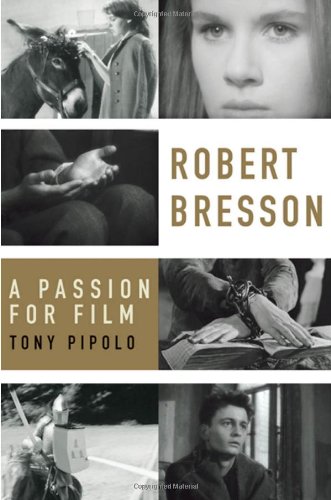
  • Tony Pipolo – Robert Bresson: A Passion for Film (2010)

    2001-2010BooksRobert BressonTony Pipolo

    http://ecx.images-amazon.com/images/I/518B1jRqmEL.jpg

    Description:

    Perhaps the most highly regarded French filmmaker after Jean Renoir, Robert Bresson created a new kind of cinema through meticulous refinement of the form’s grammatical and expressive possibilities. In thirteen features over a forty-year career, he held to an uncompromising moral vision and aesthetic rigor that remain unmatched. Robert Bresson: A Passion for Film is the first comprehensive study to give equal attention to the films, their literary sources, and psycho-biographical aspects of the work. Concentrating on the films’ cinematographic, imagistic, narrative, and thematic structures, Pipolo provides a nuanced analysis of each film-including nearly 100 illustrations-elucidating Bresson’s unique style as it evolved from the impassioned Les Anges du péche to such disconsolate meditations on the world as The Devil Probably and L’Argent. Special attention is also given to psychosexual aspects of the films that are usually neglected. Bresson has long needed a thoroughgoing treatment by a critic worthy to the task: he gets it here. From it emerges a provocative portrait of an extraordinary artist whose moral engagement and devotion to the craft of filmmaking are without equal.Read More »
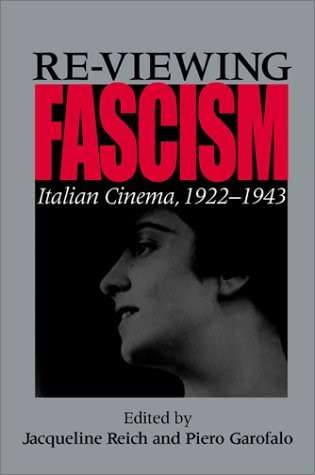
  • Jacqueline Reich & Piero Garofalo – Re-viewing Fascism: Italian Cinema, 1922-1943 (2002)

    2001-2010BooksItaly

    http://img705.imageshack.us/img705/5277/41d3xc1xjql.jpg

    * Publisher: Indiana University Press
    * Number Of Pages: 400
    * Publication Date: 2002-04-14
    * ISBN-10 / ASIN: 0253215188
    * ISBN-13 / EAN: 9780253215185
    * Binding: Paperback

    Review

    “Each essay makes a point of correcting misconceptions about the cinema during the ventennio [the period of fascist rule], which makes this book a significant contribution to the literature.” — S. Vander Closter, Rhode Island School of Design, Choice, December 2002Read More »

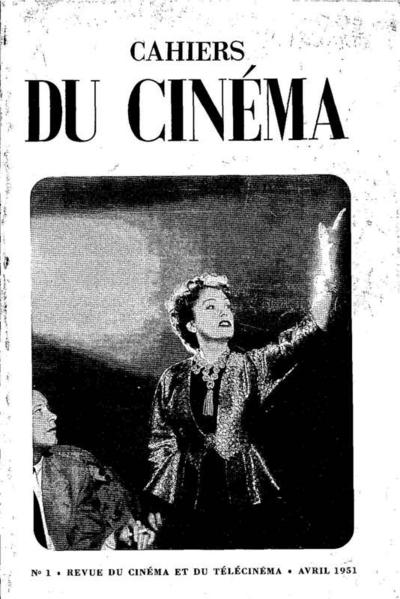
  • Cahiers du cinéma – Cahiers du Cinéma Vol. 1 [No.1-300] (1951 – 1979)

    BooksFrance

    +
    Cahiers du cinéma needs no introduction. No other french film magazine can claim more glory and renown, although Louis Delluc’s Cinéa published in the early 1920s comes close. Like other great magazines, Filmkritik in Germany springs to mind, its pages were sensitive to the constant shiftings, reversals, rediscoveries, ruptures and reconciliations, personal and political, of a now legendary band of contributors and fellow travellers. From Bazin to Rohmer to Godard to Comolli and Daney, from auteurism to Maoism,, from Eisenstein to Straub to Renoir to Mezoguchi, on the pages of Cahiers the drama of the birth of modern cinephilia played itself out, red in tooth and claw.Read More »

  • François Truffaut – Letters (1989)

    1981-1990BooksFranceFrançois Truffaut

    Image Hosted by ImageShack.us

    This collects nearly all of Truffaut’s extant correspondence, many were lost or simply never kept, a few have been withheld for personal reasons but what does remain still amounts to a very hefty and remarkable body of letters.

    Perhaps this is a more enjoyable book to leaf through and let something catch your eye than to read in a strict chronological fashion. That said the early sections that capture the eventful years of Truffaut’s late adolescence do possess quite a narrative thrust of their own: selling your friends most treasured possessions behind his back, a suicide attempt, desertion from the army, military incarceration…Read More »

  • Krzysztof Kieslowski – Kieslowski On Kieslowski (1993)

    1991-2000BooksKrzysztof KieslowskiUnited Kingdom

    Kieslowski on Kieslowski
    Edited by Danusia Stock
    Published by Faber and Faber, 1993 (268p.)
    Quote:
    From Danusia Stok on the genesis of the book:
    This book is largely based on interviews recorded with Kieslowski in Paris in December 1991 and May 1992 when he was working on the scripts of the triptych Three Colours. A third set of interviews, covering the triptych, was recorded in Paris in the summer of 1993 once Three Colours had been shot.
    Excerpts from Kieslowski’s reflections written for the monthly cultural magazine Du (Zurich, Switzerland) have been worked into the text. The passages are my own direct translation of Kieslowski’s original words.Read More »

  • Victor Erice & Abbas Kiarostami – Erice Kiarostami: Correspondences (2006)

    2001-2010Abbas KiarostamiBooksSpainVictor Erice

    The potent work of two filmmakers from diverse backgrounds are bought together in this book. Correspondence uniquely presents the work of two filmmakers who share a profound and deliberate vision, in spite of their vastly different backgrounds. The work of Spaniard Victor Erice and Iranian Abbas Kiarostami share a common preoccupation with investigating the tension that exists between the individual and society. As filmmakers, they are both intensely independent, determined to advance the expressive potential and capacity of cinema. Working in contemporary cinema, these two quintessential figures often purposely recapture the stark and primal character developed by early cinema pioneers.Read More »

  • Philip G. Epstein & P. J. Wolfson – The Bride Walks Out [Shooting Script] (1936)

    1931-1940BooksPhilip G. Epstein and P. J. WolfsonUSA

    http://img339.imageshack.us/img339/9596/0027395.jpg

    29f7c043f76a2bde437fd0d52a185152

    From the AFI Catalog:

    Quote:
    The working title of this film was Marry the Girl. MPH’s “In the Cutting Room” adds Sidney Jarvis to the cast, and HR production charts add Eric Blore, Rose Coghlan, Lloyd Ingraham and Jack Adair to the cast. Eric Blore’s participation in the final film is doubtful, while the participation of the others has not been confirmed. RKO borrowed Robert Young from M-G-M for the film. The Bride Walks Out was Edward Small’s first production for RKO. Small was formerly the production head of Reliance Pictures.Read More »

  • Raoul Ruiz – Poetics of Cinema 1 (1996)

    1991-2000BooksRaoul Ruiz

    From the article linked to above:

    Quote:
    Ruiz’s Poetics of Cinema must be one of the strangest and most interesting works on the cinema ever to be written. While addressing many contemporary issues around the politics of the entertainment industry, globalisation and the powers of audiovisual images, this work also draws on discourses as untimely as ancient treatises on Chinese painting and the 16th century occult theories of Ramon Lull. But perhaps what is most striking about Poetics of Cinema is its composition in which not only diverse theories and reflections are combined but that they are done so frequently in the form of theoretical fictions as delirious as Ruiz’s cinema itself, that completely blur the boundaries between the real and the imaginary, the true and the false. This has led several critics, notably, Christine Buci-Glucksman to make direct links between Ruiz’s aesthetics and the Baroque, rather than more contemporary aesthetic movements such as Surrealism (Buci-Glucksmann, 9-41). As Laleen Jayamanne has pointed out, Ruiz may use the “decorative and stereotypical aspects of Surrealism” but he rejects its underlying metaphysics in favour of a Baroque “allegorical system” (224). The crucial difference between the Baroque, as Ruiz understands and employs it and the ethos of cinematic Surrealism, is the replacement of the motto “everything is fundamentally simple” with its opposite “everything is fundamentally complex”. Jayamanne emphasises that cinema, for Ruiz, is an allegorical system inhabited by ghosts, zombies and the dead, which operates by a “perverse logic” (224) or a “baroque […] multiplication of points of view, of an object, of a space, [of] a body” (225). Already this affinity between the complexity of the Baroque and perversion is apparent: for Ruiz, Surrealism is inferior to the Baroque because it remains too French, or in other words, fails to be complex or perverse enough.Read More »

  • Akira Kurosawa – Something Like An Autobiography (1983)

    1981-1990Akira KurosawaBooksJapan

    Something Like an Autobiography
    by Akira Kurosawa

    Published by Vintage | 1983 | 205 pages

    Description:

    Quote:
    Among Japanese film makers, no one is perhaps as universally known as Akira Kurosawa.

    “Something like an Autobiography” is an account of the legendary director’s early life. It is only a partial account, encompassing his childhood, adolescenct years, the early years of his film career, up to the point of Rashomon. Nonetheless, the book benefits anyone keen for understanding the man behind such remarkable films as Seven Samurai, Ikiru, Rashomon, and Dersu Uzala among others. Kurosawa’s films were – Stuart Galbraith IV writes in the introduction to his book “The Emperor and the Wolf” – first and foremost, deeply humanist pictures, films which effortlessly transcend cultures and centuries. Something like an Autobiography helps one understand the evolution of the artist Kurosawa, the influences that shaped his vision.Read More »

Back to top button