Books

  • Ingmar Bergman – Sunday’s Child (1994)

    1991-2000BooksIngmar Bergman

    Free Image Hosting at www.ImageShack.us

    Quote:

    From the blurb

    Pu was born into a stormy household. The courtship and early years of his parents’ marriage are already described in Ingmar Bergman’s novel The Best Intentions. And in Sunday’s Child the eight-year-old boy is all too alert to the recurrent quarrels resounding through the thin walls of the parental bedroom: his daunting father (a priest) and his adored mother, he realises to his terror, no longer want to be together.Read More »

  • Andrei Tarkovsky – Sculpting in Time (1989)

    1981-1990Andrei TarkovskyBooksUSSR

    Quote:

    This extraordinary book is not just about filmmaking, it’s about all art…about life, faith, inner exploration and the Russian soul. It contains exquisite poetry, mostly written by his father, Arseniy Tarkovsky, and detailed descriptions of the making of several of his films as well as photos of them that are eerie, mystical, and incredibly beautiful. Tarkovsky is the master of making us see the wonder of creation in the most mundane subjects. He brings us one step closer in our journey towards the light. From page 43: “The allotted function of art is not, as is often assumed, to put across ideas, to propagate thoughts, to serve as an example. The aim of art is to prepare a person for death, to plough and harrow his soul, rendering it capable of turning to good”.Read More »

  • Robert Bird – Andrei Tarkovsky: Elements of Cinema (2008)

    2001-2010Andrei TarkovskyBooksRobert Bird

    A revered filmmaker, Andrei Tarkovsky is secure in the long and illustrious line of Russian masters in arts and letters. Linking cinematic technique to broader questions of meaning and intrepretation, Robert Bird offers a wholly original investigation into the aesthetic principles of Tarvkovsky’s filmmaking. While providing a comprehensive analysis of his work in all media, including radio, theatre and opera, Bird argues that Tarkovsky was most at home in the cinema. Accordingly, the author dwells chiefly on Tarkovsky’s major films: Ivan’s Childhood, Andrei Rublev, Solaris, Mirror, Stalker, Nostalghia and Sacrifice. With its wealth of film stills and photographs, this book is a key text for all admirers of Tarkovsky and European cinema.Read More »

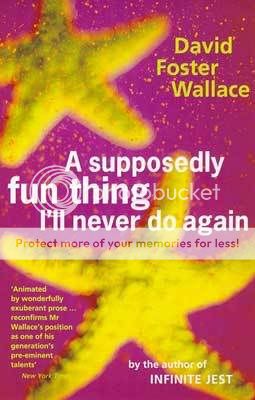
  • David Foster Wallace – David Lynch Keeps His Head (1996)

    1991-2000BooksDavid Foster WallaceDavid Lynch

    http://i228.photobucket.com/albums/ee279/brownstone71/0349110018.jpg

    quote:

    Ostensibly a set report on the filming of Lost Highway for Premiere magazine but of course a much more ambitious piece than that; as you can only expect from Foster Wallace. This is more a nuanced (and very funny) interrogation of the whole Lynchian aesthetic with Wallace trying to get straight in his own mind why he’s so fascinated by Lynch’s work.

    This is not the Premier piece but the greatly expanded version that appeared in A Supposedly Fun Thing I’ll Never Do Again. If you enjoy this, please do hunt down a copy of this wonderful collection of essays (this is far from the best piece there; still pretty good though).Read More »

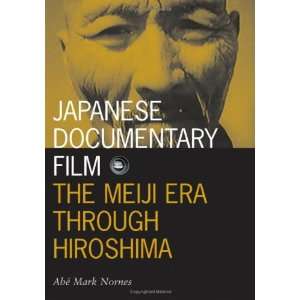
  • Abé Mark Nornes – Japanese Documentary Film: The Meiji Era through Hiroshima (2003)

    2001-2010Abé Mark NornesBooks

    Free Image Hosting at www.ImageShack.us

    Quote:
    Among Asian countries-where until recently documentary filmmaking was largely the domain of central governments-Japan was exceptional for the vigor of its nonfiction film industry. And yet, for all its aesthetic, historical, and political interest, the Japanese documentary remains little known and largely unstudied outside of Japan. This is the first English-language study of the subject, an enlightening close look at the first fifty years of documentary film theory and practice in Japan.

    Beginning with films made by foreigners in the nineteenth century and concluding with the first two films made after Japan’s surrender in 1945, Abé Mark Nornes moves from a “prehistory of the documentary,” through innovations of the proletarian film movement, to the hardening of style and conventions that started with the Manchurian Incident films and continued through the Pacific War. Nornes draws on a wide variety of archival sources-including Japanese studio records, secret police reports, government memos, letters, military tribunal testimonies, and more-to chart shifts in documentary style against developments in the history of modern Japan.

    Abé Mark Nornes is associate professor at the University of Michigan, where he teaches in the Department of Asian Languages and Cultures and the Program in Film and Video Studies.Read More »

  • ? – The Kinematograph Year Book (1914)

    ?1911-1920BooksUnited Kingdom

    “Perhaps the earliest single source which tried to bring together information on the film industry is The Kinematograph Year Book, Program Diary and Directory for 1914.

    The directory gives an overview of the previous year (1913) and contains a wide range of articles and information. Also present are many advertisements, not only for films and film companies but also suppliers and service providers. It also contains a directory of all cinemas in the UK at the time.”

    contents:

    A Retrospect Of The Year
    Kinematograph Finance in 1913
    Survey of the Year’s Technical Progress
    Important Film Subjects of the Year
    Picture Theatre Music during 1913
    The Law and the Kinematograph
    Interesting Social Functions
    New Theatres Opened in 1913
    New Companies Registered in 1913
    Review of Decisions made under the
    Cinematograph Act 1909
    Important Law Cases of the Year
    Personalities
    Pictorial Reminiscences extending
    over 40 years – 1873-1914
    Exhibitions during 1913
    Trade Associations
    Useful Tables and RecipesRead More »

  • Wim Wenders – The Logic of Images (1992)

    1991-2000BooksWim Wenders

    A collection of Wenders essays discussing all his film work up to Until the End of the World. Imaginative, very accessible, never dry, Wenders reveals a lot of interesting background to his films. Definitely a treat if you’re a Wenders fan.Read More »

  • Jim Powell – Postmodernism for Beginners (1998)

    1991-2000BooksJim PowellUnited Kingdom

    Book Description:

    Although no one knows exactly what postmodernism is, Postmodernism for Beginners gives a perfectly clear explanation of the subject. Author Jim Powell describes postmodernism as a series of “maps” that helps people find their way through a changing world. For reinforcement, he cites views from modern thinkers from Foucault to Guattari. Illustrated throughout.Read More »

  • Robert Bresson – Notes On Cinematography (1977)

    1971-1980BooksFranceRobert Bresson

    This is not a book about cinematography. Cinematography is what Bresson regards as valid film making, as opposed to cinema which is just photographing a play, or the theatre, which is just lies told on a stage (or something). This book contains all the little notes, ideas and bon mots that Bresson jotted down over the years. Some are insightful, most are quite arrogant and dismissive, and quite a few are a bit bonkers. Anyway it’s an interesting look into the mind of a master and fairly short (although that didn’t stop it from being a pain in the arse to scan).

    Originally written in French (Notes sur le cinématographe), this is the English translation by Jonathon Griffin.Read More »

Back to top button