The 50 Year Argument is Martin Scorsese’s latest film, co-directed with his longtime documentary collaborator David Tedeschi. It charts literary, political and cultural history as per the New York Review of Books, America’s leading journal of ideas since 1963. The film weaves rare archive material, interviews and writing by icons such as James Baldwin and Gore Vidal into original verite footage, filmed in the Review’s Greenwich Village offices with longtime editor Robert Silvers.Read More »
BBC wrote:
Made entirely of Scottish film archive, a journey into our collective past, the film explores universal themes of love, loss, resistance, migration, work and play. Ordinary people, some long since dead, their names and identities largely forgotten, appear shimmering from the depth of the vaults to take a starring role.
Brilliantly edited together, these silent individuals become composite characters, who emerge to tell us their stories, given voice by King Creosote’s poetic music and lyrics.Read More »
bbc’s website wrote:
Back in 1960 Ken Russell made a remarkable film about mining in Northumberland called The Bedlington Miners’ Picnic.
Forty five years on, Russell is back in the North East revisiting the people and places featured in the film.
It’s a poignant story of survival, loss and community spirit.
South East Northumberland was once one of Britain’s richest coalfields, producing tons of coal for industry and homes.
Today the coal mining industry is virtually extinct in the North East of England with no deep pits left in production.
Inside Out follows film director Ken Russell as he revisits the area where he shot one of his first documentary films in 1960. Read More »
Begins a week of LATE SHOW’s looking at the future. This programme argues that the 21st century is going to be just like the 14th. For example Alan Minc has argued that there will be no political order at all and areas of countries will be outside state control, run by crime syndicates the modern equivalents of medieval robber barons.
Quote:
Pure dystopic/apocalyptic 90s mentality. Chaos, drugs, AIDS, Ebola, unifying theories in physics, internet, computer graphics, PC games, early GUIs etc etc and parallels drawn between the world to come and middle ages.Read More »
Michael Mosley has set himself a truly ambitious goal: he wants to live longer, stay younger and lose weight in the bargain. And he wants to make as few changes to his life as possible along the way. He discovers the powerful new science behind the ancient idea of fasting, and he thinks he’s found a way of doing it that still allows him to enjoy his food. Michael tests out the science of fasting on himself – with life-changing results. Read More »
Making its debut with Romeo and Juliet on 3 December 1978, and concluding nearly seven years later with Titus Andronicus on 27 April 1985, the BBC Television Shakespeare project was the single most ambitious attempt at bringing the Bard of Avon to the small screen, both at the time and to date.
Producer Cedric Messina was already an experienced producer of one-off television Shakespeare presentations, and was thus ideally qualified to present the BBC with a daunting but nonetheless enticingly simple proposition: a series of adaptations, staged specifically for television, of all 36 First Folio plays, plus Pericles (The Two Noble Kinsmen was considered primarily John Fletcher’s work, and the legitimacy of Edward III was still being debated).
The scale of Messina’s proposal, far greater than that of previous multi-part Shakespeare series such as An Age of Kings (BBC, 1960) and Spread of the Eagle (BBC, 1963), required an American partner in order to guarantee access to the US market, deemed essential for the series to recoup its costs. Time-Life Television agreed to participate, but under certain controversial conditions – that the productions be traditional interpretations of the plays in appropriately Shakespearean period costumes and sets, designed to fit a two-and-a-half-hour time slot.
The running-time requirement was swiftly jettisoned when it became clear that the major tragedies in particular would have suffered severely, but other artistic restrictions remained largely in place throughout. Although later productions under Messina’s successors Jonathan Miller and Shaun Sutton would be more experimental, Miller was unable to persuade first-choice directors such as Peter Brook and Ingmar Bergman to take part, and Michael Bogdanov resigned from Timon of Athens (eventually tx, 4/16/1981, with Miller himself directing) after his modern-dress interpretation was considered too radical a departure.
This gave the BBC Television Shakespeare cycle the reputation of being overly staid and conventional, which was not always deserved. Though Messina’s own productions (1978-80) were largely conservative, Jonathan Miller (1980-82) revamped things both visually (thanks to a design policy of sourcing sets and costumes from great paintings of the era in which the play was set) and in terms of direction and casting, in some cases using popular actors with little or no Shakespeare experience (John Cleese as Petruchio, Bob Hoskins as Iago) to attract new and younger audiences.
Under Miller, directors such as Jack Gold, Jane Howell and Elijah Moshinsky were encouraged to be more adventurous, with Howell in particular adopting such a stylised approach for The Winter’s Tale (tx. 8/2/1981) and the Henry VI/Richard III cycle (tx. 2-23/1/1983) that they pushed the definition of “traditional” to the limit, but also garnered the series some of its best reviews. Miller’s aesthetic policies continued under Shaun Sutton (1982-85), who brought the project to a belated close.
Whatever its artistic reputation, there was no doubt that the BBC Television Shakespeare was a commercial triumph, breaking even financially by 1982 (ahead of expectations) and fully justifying Messina’s gamble. Its success was helped by the rapid growth of video recorders in schools, creating a secondary market that was much bigger than initially predicted – though the initial decision to sell the plays only as a complete set provoked complaints from people who baulked at paying the substantial asking price because they were after a smaller selection or individual titles. The BBC eventually released some of the more popular titles separately, but it was not until late in 2005 that the entire series was available individually on DVD at a competitive price.
Although the BBC Television Shakespeare project as a whole met with a mixed reception, it had several positive virtues. Chief among them was the fact that its completist remit meant that several of the more obscure plays received their first television adaptation, and in most cases the BBC version remains the only one. Happily, such productions as Henry VIII (tx. 25/2/1979), Cymbeline (tx. 10/7/1983), Pericles (tx. 11/6/1984) and Titus Andronicus were considered amongst the cycle’s most impressive achievements, with Henry VIII subsequently voted the best production of all by the Shakespeare Association of America.
A complete list of BBC Television Shakespeare productions is as follows:
Series One (producer: Cedric Messina): Romeo and Juliet (tx. 3/12/1978), Richard II (tx. 10/12/1978), As You Like It (tx. 17/12/1978), Julius Caesar (tx. 11/2/1979), Measure For Measure (tx. 18/2/1979), Henry VIII (tx. 25/2/1979)
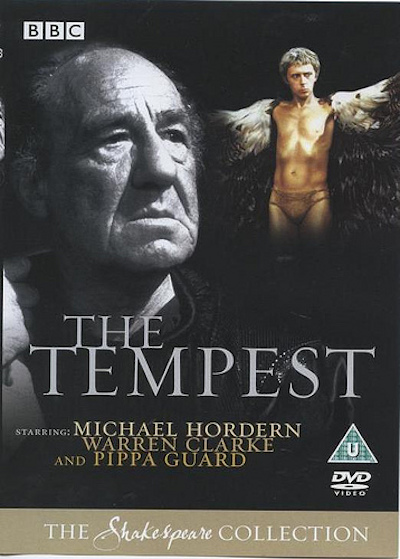
Series Two (p. Cedric Messina): Henry IV Part One (tx. 9/12/1979), Henry IV Part Two (tx. 16/12/1979), Henry V (tx.23/12/1979), Twelfth Night (tx. 6/1/1980), The Tempest (tx. 27/2/1980), Hamlet (tx. 25/5/1980).
Series Three (p. Jonathan Miller): The Taming of the Shrew (tx. 23/10/1980), The Merchant of Venice (tx. 17/12/1980), All’s Well That Ends Well (tx. 4/1/1981), The Winter’s Tale (tx. 8/2/1981), Timon of Athens (tx. 16/4/1981), Antony and Cleopatra (tx. 8/5/1981)
Series Four (p. Jonathan Miller): Othello (tx. 4/10/1981), Troilus and Cressida (tx. 7/10/1981), A Midsummer Night’s Dream (tx. 13/12/1981)
Series Five (p. Jonathan Miller, Shaun Sutton): King Lear (tx. 19/9/1982), The Merry Wives of Windsor (tx. 28/12/1982), Henry VI Part One (tx. 2/1/1983), Henry VI Part Two (tx. 9/1/1983), Henry VI Part Three (tx. 16/1/1983), Richard III (tx. 23/1/1983), Cymbeline (tx. 10/7/1983)
Series Six (p. Shaun Sutton): Macbeth (tx. 17/10/1983), The Comedy of Errors (tx. 24/12/1983), The Two Gentlemen of Verona (tx. 27/12/1983), Coriolanus (tx. 21/4/1984), Pericles (tx. 11/6/1984)
Series Seven (p. Shaun Sutton): King John (tx. 24/11/1984), Much Ado About Nothing (tx. 30/11/1984), Love’s Labour’s Lost (tx. 5/1/1985), Titus Andronicus (tx. 27/4/1985)
The BBC also produced Shakespeare in Perspective, an accompanying series of 25-minute personal introductions to individual plays by an eclectic range of presenters from the literary (Anthony Burgess, Dennis Potter, Jilly Cooper) to the scholarly (Germaine Greer, Frank Kermode, Michael Wood) to the celebrity (Roy Hudd, George Melly, Barry Took). These usually took the form of straight-to-camera addresses from assorted locations with some connection to the play, which were intercut with extracts from the accompanying BBC Shakespeare production, usually screened later that evening.
Michael Brooke
For the BBC Television Shakespeare, tx. 28/12/1982, colour, 167 mins
Director David Jones Production Companies BBC Television, Time-Life Television Producer Shaun Sutton Script Editor David Snodin Designer Don Homfray Music Dominic Muldowney Cast: Richard Griffiths (Sir John Falstaff), Prunella Scales (Mistress Page), Judy Davis (Mistress Ford), Ben Kingsley (Frank Ford), Alan Bennett (Justice Shallow), Elizabeth Spriggs (Mistress Quickly), Richard O’Callaghan (Slender)
The roguish Sir John Falstaff attempts to seduce both Mistress Ford and Mistress Page, but finds both women are more than a match for him.
Despite an unusually strong cast and a script that restores much of the bawdy comedy of the original 1602 Quarto that was censored from the 1623 Folio, this BBC Television Shakespeare adaptation of Shakespeare’s only English comedy is generally a disappointment, sluggish instead of sprightly, and with an oddly low-key Falstaff (Richard Griffiths) at its centre.
Director David Jones regarded the play as “a realistic documentary about what life was like in a small town in Elizabethan England”, and designer Don Homfray duly provided him with a meticulous studio recreation of Tudor Windsor. Jones takes care to delineate the various social strata that make up the town: the established Pages, the nouveau riche Fords, the well-connected foreigner Dr Caius, and Falstaff and his gang, supposedly sophisticated Londoners who regard Windsor as an easy target but find out, as Jones put it, that it’s “surrounded by asbestos”.
Although a promising approach on paper, it too often fails to cohere on screen. Judy Davis and Prunella Scales, as the Mistresses Ford and Page, impress the most, investing their numerous conspiratorial conversations with a keen sense of how their plans will impact on their surrounding menfolk. Ben Kingsley plays Ford in a near-hysterical key throughout, his jealousy tinged with full-blown paranoia. This is certainly not inappropriate to the role that Shakespeare wrote (especially when Ford’s marital insecurity is backed with equal concern about his fragile social status), but it’s too jarring for this production.
Of the supporting cast, Alan Bennett makes surprisingly little impression as Shallow (not helped by a face-obscuring beard and a costume that Bennett tartly noted made him resemble “an animated Tandoori restaurant”), though Elizabeth Spriggs’ bustling Mistress Quickly and Richard O’Callaghan’s foppish, gibbering Slender acquit themselves well. Gordon Gostelow returns as Bardolph (having previously played the part in both the 1979 BBC Henry IV and V and the much earlier 1960 An Age of Kings), this time partnered with Nigel Terry’s combustible Pistol.
Ironically, despite flying the flag for realism, the BBC Merry Wives is most successful in the fantastical final act, with a moonlit grove momentarily turned into an ancient pagan festival (enhanced by Dominic Muldowney’s evocative score), as fairies and masked woodland creatures conspire to bring Falstaff down both literally and metaphorically, and all the various threads of Shakespeare’s complex plot are tied up with a deftness and dexterity that generally eludes the rest of the production.
Michael Brooke
The.Merry.Wives.of.Windsor.1982.x264.mkv

General
Container:	Matroska
Runtime:	2h 47mn
Size:	3.49 GiB
DXVA:	Compatible
Minimum settings:	Met
Video
Codec:	x264
Resolution:	698x576 ~> 744x576
Aspect ratio:	1.292
Frame rate:	25.000 fps
Bit rate:	2 671 Kbps
Audio
English 2.0ch AC-3 @ 256 Kbps
Making its debut with Romeo and Juliet on 3 December 1978, and concluding nearly seven years later with Titus Andronicus on 27 April 1985, the BBC Television Shakespeare project was the single most ambitious attempt at bringing the Bard of Avon to the small screen, both at the time and to date.Read More »
An outstanding three-part BBC4 series that looks at how the Art Nouveau movement flourished in the burgeoning cities of Europe at the end of the 19th century. Aired March-April 2012.
Episode 1: Paris
BBC cultural correspondent Stephen Smith explores the delicious objects of Parisian Art Nouveau. He delves into the city’s Bohemian past to learn how some of the 19th century’s most glamorous and controversial figures inspired this extraordinary movement. Revealing the story behind Alphonse Mucha’s sensual posters of actress Sarah Bernhardt, looking at the exquisite jewellery designer Renee Lalique and visiting iconic art nouveau locations such the famous Maxim’s restaurant, the programme builds a picture of fin-de-siecle Paris.Read More »