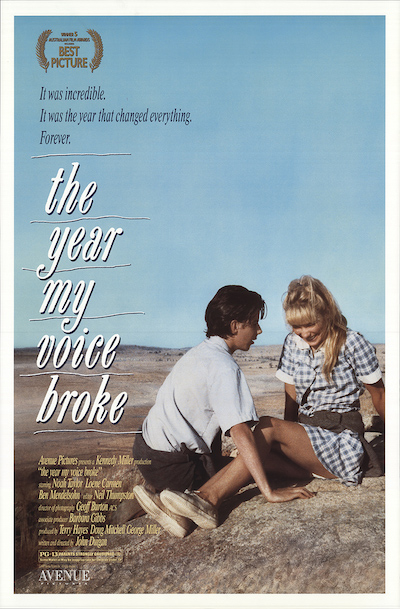
Quote: During the year 1962, a young prepubescent boy in rural Australia watches painfully as his best friend and first love, an older girl, blossoms into womanhood and falls for a thuggish rugby player, setting off a chain of events that irreversibly changes the lives of everyone involved.Read More »
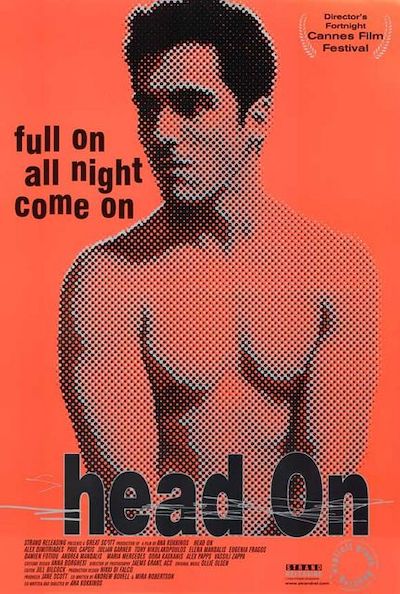
Quote: Nineteen-year-old Ari confronts both his sexuality and his Greek family. Ari despises his once-beloved parents, former radical activists, for having entombed themselves in insular tradition. Ari is obsessed with gay sex, although he does make an unenthusiastic attempt to satisfy the sister of one of his best friends. While all of this is going on, he’s facing problems with his traditional Greek parents, who have no clue about his sexual activities.Read More »
wikipedia wrote: Love and Other Catastrophes is a quirky 1996 Australian romantic comedy film featuring Frances O’Connor, Radha Mitchell, Alice Garner, Matthew Dyktynski, Matt Day and Kym Gyngell. The film was the first full length release by director Emma-Kate Croghan and is set and filmed at Melbourne University where she studied writing and film directing.
The film was nominated for five Australian Film Institute awards, including best film, best original screenplay, best actress, best supporting actress, and editing. Garner won a Film Critics Circle of Australia award for best supporting actress for her role in the movie.Read More »
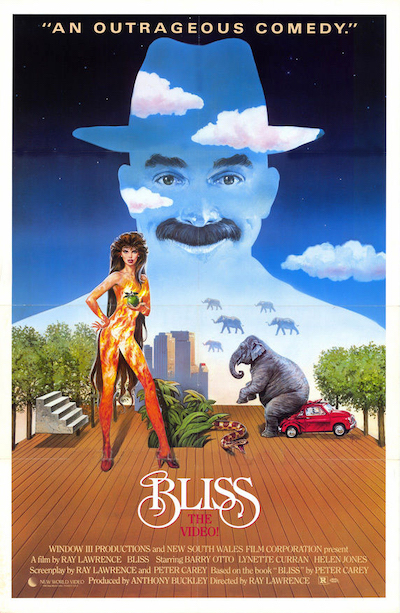
Quote: An advertising executive dies and goes to hell… except nothing changes. Well, his daughter is buying drugs with sexual favours from her brother, and the number of cancer-causing products is on the increase. But the notes he writes to himself to prove he hasn’t gone insane are getting more disjointed, and he runs off with an ex-prostitute called Honey Barbera.Read More »
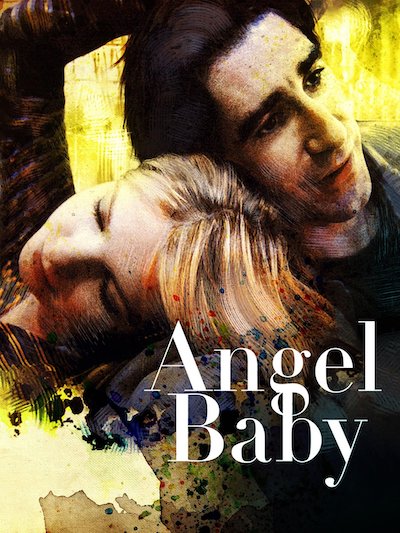
Two schizophrenics meet during therapy and fall passionately in love. Ahead of them lies the inevitable road to disaster – one they share to the end.Read More »
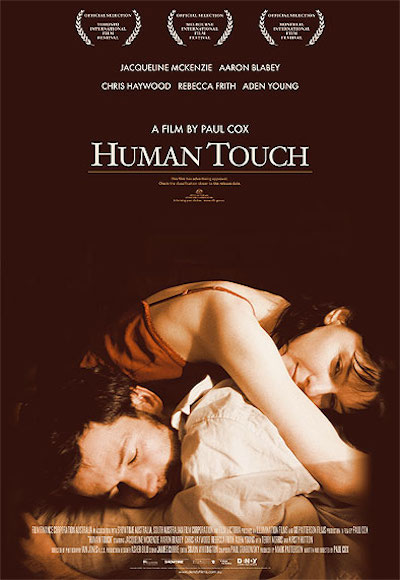
The wealthy Edward (Haywood) sparks to Anna (Mckenzie), the lead voice in a choir that’s raising money for an upcoming trip to China. He donates money to her choir, and she agrees to sit for him for a series of still-life drawings. As Anna is drawn more into Edward’s life, their relationship — quite platonic — nevertheless causes problems at home for Anna, who lives with David (Blabey), a frustrated artist.Read More »
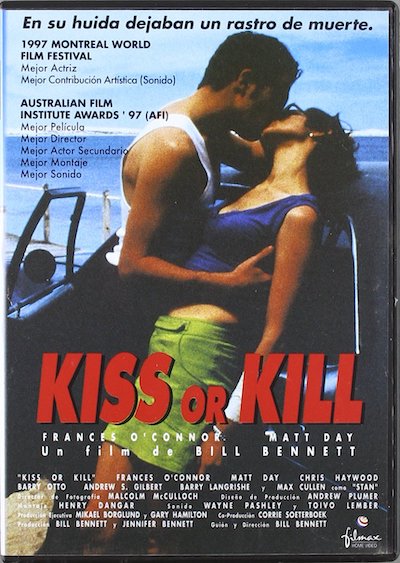
Quote: Set amidst the eerie desolation of the Australian outback, Kiss or Kill is a superior reworking of vintage film noir materials from the veteran director Bill Bennett. Its lovers-on-the-run story focuses on Nicole (Frances O’Connor) and Al (Matt Day), a pair of petty thieves running a scam targeting married businessmen; when one of their victims accidentally dies, they flee his hotel room, absconding with his briefcase. The case contains a videotape of Zipper Doyle (Barry Langrishe), a national soccer hero, molesting a young boy; Nicole and Al soon take off for Perth, intending to blackmail Doyle — never suspecting that he, as well as the police, are already in hot pursuit. As the two make their way across the country, they leave a trail of dead bodies in their wake; both Nicole and Al begin to suspect that the other is a murderer, and as their journey continues, their paranoia only grows. A similar feeling of mistrust and dread informs virtually every interpersonal relationship in the film, effectively gnawing at our own perceptions and expectations; a stylistically aggressive picture, brimming with jump cuts and inventive camera work, its distinctive take on the noir tradition is fresh and exciting.Read More »
Namatjira the Painter (1947)
Australian contemporary art has no more interesting tale to tell than that of Aboriginal watercolour artist, Albert Namatjira. Namatjira was thirty years old before his hand first held a paintbrush. In about 1934 Rex Battarbee, a well-known Australian artist, visited Hermannsberg mission near Alice Springs. He took with him into the field as cook and general assistant the Arunta tribesman, Namatjira. This film tells the story of Namatjira’s preoccupation with Battarbee’s work, how he was determined to learn to paint and how Battarbee, realising the talent of his friend and assistant, taught him the elements of his craft. Today Namatjira’s watercolours sell for high prices. Despite controversy, the power of Namatjira’s rendering of his beloved ancestral land is not denied. Throughout his life and despite his success, he remained in the bush with his people and his paints. In this film, we see Albert Namatjira at work in the glowing country that he knows so well.
This is the 1947 film re-edited by Lee RobinsonRead More »
Quote: Set in Sydney, Australia. A (heterosexual) father and his gay son are trying to find Ms/Mr Right respectively. The film shows their relationships with one another and the objects of their affection as tradgedy strikes.Read More »