

Quote:
A fictional account of the life of Japanese author Yukio Mishima, combining dramatizations of three of his novels and a depiction of the events of November 25th, 1970.Read More »
Quote:
A fictional account of the life of Japanese author Yukio Mishima, combining dramatizations of three of his novels and a depiction of the events of November 25th, 1970.Read More »

Aliens arrive on Earth and ask permission to be given a certain tract of land for their people to live on. But when they are discovered to be invaders, responsible for the giant robot that is destroying cities, the armed forces attempt to stop them with every weapon available. -imdbRead More »

SUMMARY
Can a sinful man change and find peace? It’s unlikely in gang-plagued Japan. Jokichi of Mikogami, a drifter (and hired sword), goes straight after protecting a woman in distress: they marry, have a son, and Jokichi pursues his father’s craft. After three years, the gangs he embarrassed when he saved his wife find the family and leave Jokichi in grief, vowing revenge.
jhailey on IMDbRead More »
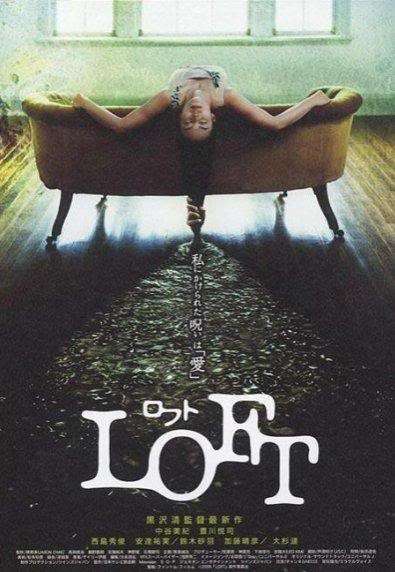
This film was seen at the Film Society of Lincoln Center’s Film Comment Selects series, February 2006
Sloppy, silly, and incoherent writing mars writer/director Kurosawa Kiyoshi’s moodily detailed atmosphere in Loft, a story of mummies, cloying book editors, a haunted archeologist, and a hodgepodge of other, random horror paraphernalia. The film starts out with prize-winning novelist Reiko (Nakatani Miki) suffering not only from writer’s block but also from hallucinations and fits that involve coughing up viscous black mud. To help his famous protégé write a “popular romance novel,” Reiko’s editor rents her a house in the countryside, one that borders a creepy concrete building housing the local university’s head mummy researcher, Yoshioka (Toyokawa Etsushi). Reiko is not the only one suffering pressures of work and spirit. Yoshioka himself is experimenting on preserving a 1000-year old female mummy dredged up from the local lake, but is hounded by a colleague who wants him to present the find, and a spooky ghost-girl clad in black who peaks around corners at the most inopportune times.Read More »

A doctor, gynaecologist, discover the corpse of his wife. His nurse advises to him to declare her death a simple heart attack, to clear himself without the slightest doubt. He refuses and calls the police force there. The interrogation of the doctor, then other witnesses, slowly reveals the truth of her demise…Read More »

A documentary was made during the production process of Bright Future, called Aimai Na Mirai (Ambivalent Future). It was released in theaters in Japan and it’s available on the Japanese DVD release of Bright Future. The documentary was not so much a making-of as an interpretation of your work, with Bright Future functioning as a case study. What did you think when you saw it?
I didn’t watch it so attentively, because I felt a bit embarrassed about watching myself. I kept thinking “What a liar this director is!” (laughs). And I understood the difference between documentary filmmakers and fiction filmmakers. Documentarists shoot elements of reality, and after that in post-production they try to turn it into a lie as much as possible. Directors like me who make fiction – and I’ve never made a documentary – we deal with fictional elements such as the script, but after that we try to make them as close to reality as possible, and try not to lie as much possible. It’s the complete opposite.

The Isle is a case in point. Based around a primitive fishing community on a lake, it’s beautifully shot though morally bankrupt, far too eager to visually astound one moment then deeply shock the next. It focuses on a pseudo sado-masochistic relationship between a mute woman and a murderous ex-cop and, seemingly, is out to break almost every taboo available. There’s animal cruelty on a grand scale. There’s at least one rape scene, and one scene in which sexual violence towards women is almost justified by the filmmaker. There’s self-mutilation; a myriad of bodily functions; and, perhaps only a hundred lines of dialogue in the entire movie. It’s almost as if Kim is setting himself up to be Korea’s Takashi Miike, only with better cinematography.Read More »

Quote:
In 1954, Akira Ifukube was asked by Toho to score Gojira (Godzilla), a giant monster film to be directed by Ishiro Honda. Many of Ifukube’s colleagues tried to convince him not to take the job, thinking the film would not be a success. Ifukube did not listen to his detractors and accepted the project. As a result, his score for Gojira has become one of the most famous film scores in history and propelled Ifukube to heights of fame that no other Japanese film composer has ever reached. Additionally, Ifukube regarded his Gojira music as the best score he had ever written for a motion picture.Read More »

…Shohei Imamura presents an unsentimental, provocative, and compassionate examination of resilience, pragmatism, and the essence of human behavior in The Insect Woman. Using informal, cinéma vérité-styled camerawork, freeze-framed scene changes (accompanied by melancholic folksong verses), and historical context (Japanese isolationism, World War II, postwar occupation, Korean War) Imamura achieves a clinically objective, yet sympathetic portrait of his archetypally sensual, primal, and strong-willed heroine as she perseveres through the turbulence and uncertainty of her economic and societal confines: Tomé’s job at the mill during wartime Japan, her attempts at an honest living by working as a cleaning woman during postwar occupation, her resort to prostitution during the economic depression, her rise to the role of madame during the 1950s social reforms (similarly explored in Kenji Mizoguchi’s Street of Shame). By correlating episodic fragments of Tomé’s life with the dynamic events and profound changes of everyday existence in early twentieth century Japan (and Asia in general), Imamura illustrates the instinctuality, mysticism, and idiosyncrasies embedded in the native culture that is often suppressed and aestheticized (especially evident in the films of Yasujiro Ozu) in the country’s postwar, westernized, “official view” of Japan, and in the process, celebrates the resilient soul of a marginalized national identity.
Acquarello, Strictly Film SchoolRead More »