Asian

  • Chan-wook Park – Saibogujiman kwenchana aka I’m a Cyborg But That’s OK (2006)

    2001-2010AsianChan-wook ParkComedySouth Korea

    Free Image Hosting at www.ImageShack.us

    29f7c043f76a2bde437fd0d52a185152

    Plot Synopsis [AMG]
    After wrapping-up his critically-acclaimed “Vengeance Trilogy” with the award-winning 2005 thriller Sympathy for Lady Vengeance, South Korean filmmaker Chan-wook Park shifts gears for this gently comic romantic drama concerning a delusional young mental patient who believes herself to be a cyborg. Convinced that she is not entirely human but in fact part android, Young-goon (Lim Su-jeong)’s health begins to deteriorate as she gives up eating food and instead decides to “charge her batteries” by administering electric shocks to herself via a small transistor radio. Read More »
  • Kon Ichikawa – Bonchi (1960)

    1951-1960AsianDramaJapanKon Ichikawa

    29f7c043f76a2bde437fd0d52a185152

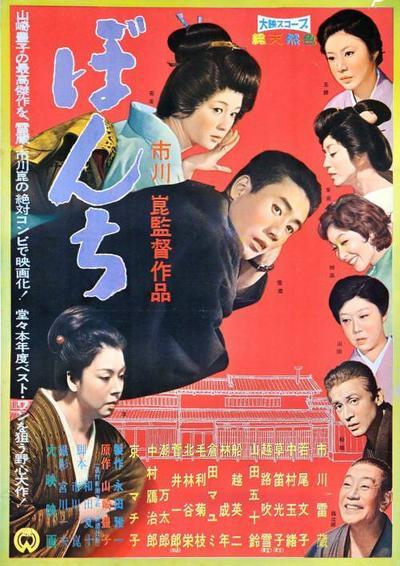
    Where Ichikawa skewered patriarchal family values in Her Brother, in this savage satire he hoists the matriarchal system on its own apron strings. Raizo Ichikawa (“in his best role yet”-Variety) is the scion of an Osaka merchant family whose traditional power is matrilineal. Instructed by his overbearing mother and grandmother to give them an heiress for the family business, he stands by helplessly as wife after wife is thrown out of the house for producing sons. Driven to a life of dissipation-his mistresses also fail to produce daughters-in the end he is just too tired to care. Ichikawa’s frighteningly funny picture of the matriarchy’s efforts to perpetuate itself was received as antifeminist, if not downright misogynistic, but Joan Mellon suggests that the target once again is “the institution of the family [which] places its own survival ahead of the needs and feelings of individuals.” If this looks forward to The Makioka Sisters, so does Donald Richie’s comment, “We find this cruel matriarchal story…told in terms of the most transcendental beauty.”Read More »

  • Kwon-taek Im – Sibaji aka Surrogate Woman (1987)

    1981-1990AsianDramaKwon-taek ImSouth Korea

    29f7c043f76a2bde437fd0d52a185152

    Quote:

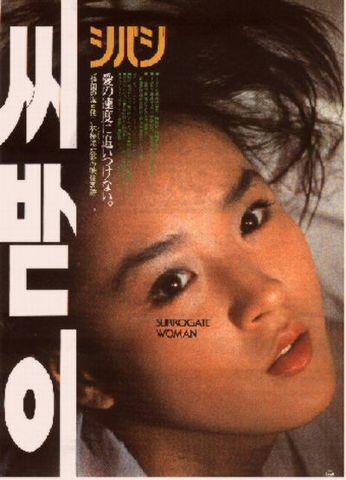
    m’s first international prize-winner (best actress for Kang at Venice) is a more-in-sorrow-than-in-anger attack on the principles of male lineage and ancestor worship in the traditional Korean family. It’s set in the late Yi Dynasty (late 19th century) to stress how deep rooted these things are, but its resonances are squarely contemporary. The well-born Shin and his wife are happy but lack an heir; behind his back, the family conspires with his wife to bring in a surrogate to bear him a son. Their choice is Ok-Nyo (Kang), a free-spirited girl who endures various physiological and sexual indignities (intended to ensure that she produces a boy) because she comes to like Shin and enjoy the relatively pampered life – forgetting she is there only as a servant. The emphasis on female suffering has come in for some critical stick, but Im’s analysis of Confucian blockages in the Korean psyche seems all too cogent. And his mastery of image, tone and rhythm is unassailable. TRRead More »

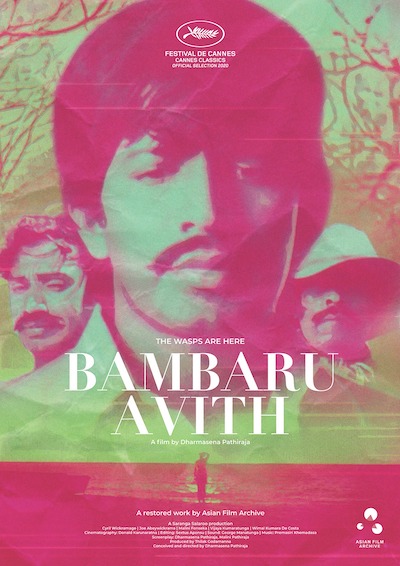
  • Dharmasena Pathiraja – Bambaru Avith AKA The Wasps Are Here (1977)

    Drama1971-1980AsianDharmasena PathirajaSri Lanka

    Set in a fishing village named Kalpitiya, explores tradition and exploitation because of capitalism in this small village.Read More »

  • Dharmasena Pathiraja – Ponmani AKA Younger Sister (1977)

    1971-1980AsianDharmasena PathirajaDramaSri Lanka

    29f7c043f76a2bde437fd0d52a185152

    Ponmani comes from the highest caste in Tamil society, but her family has fallen on hard times and can’t even pay what they owe on her married eldest sister’s dowry, let alone find dowries for her and her middle sister. Her father sits idly by, reflecting on past glories, while her brother works to pay the money owed and preserve the family honor. When she takes matters into her own hands and elopes with a boy from the lower fisherman caste, the family honor takes a deathblow. The difficulty of life for a Tamil woman whatever her caste, religion or marital status is given a feminist analysis. This black and white film from Sri Lanka’s rebel Sinhalese auteur, Dharmasena Pathiraja, shows the beauty of Jaffna, an ancient city of temples, churches and beaches, and gives us an idea of the forces behind the civil war that broke out later. Festivals: Singapore International Film Festival 2003.Read More »

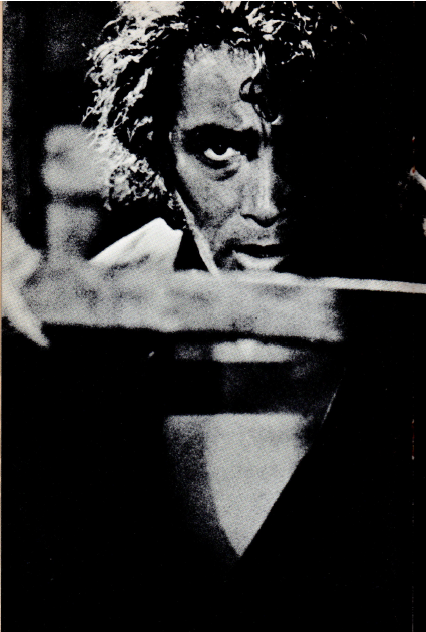
  • Kazuo Kuroki – Ryoma ansatsu aka The Assassination of Ryoma (1974)

    1971-1980ActionAsianJapanKazuo Kuroki

    29f7c043f76a2bde437fd0d52a185152

    This was also voted No.55 on 1999’s Kinema Jumpo Poll of Top 100 Japanese Films of All Time.
    It’s a samurai film but its style is rather different from those Toei & Daiei jidaigeki in 50s & 60s (probably not surprising as an ATG production), It has a non-heroic (or at least, unorthodoxy) portrait of the protagonist: Ryoma, at times even a parody, with the wry humor everywhere in the film. But it also looks a bit like a documentary, as the film is very grainy and the cinematographer is Masaki Tamura, who’s responsible for the look of many Shinsuke Ogawa & later, Kiyoshi Kurosawa’s films. Read More »

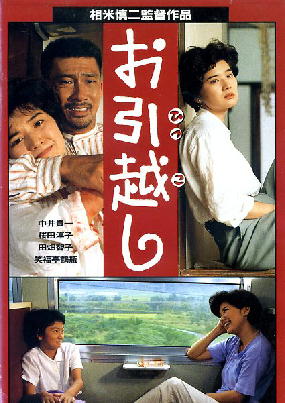
  • Shinji Sômai – Ohikkoshi AKA Moving (1993)

    1991-2000AsianDramaJapanShinji Sômai

    29f7c043f76a2bde437fd0d52a185152

    Quote:
    Renko’s mum and dad are splitting up, and her heart is burning. So she plays with fire, tears up the rule book, holds herself hostage, even starts talking to the weird girl in school who’s the only other one with divorced parents. But as Renko watches her childhood go up in flames, she learns how to forge a new self from the embers. Director Shinji Somai is hugely regarded in Japan, but only starting to be known in the West, more than a decade after his death. Formally surprising and emotionally thrilling, Moving is the work of a remarkable filmmaker at the height of his powers.Read More »

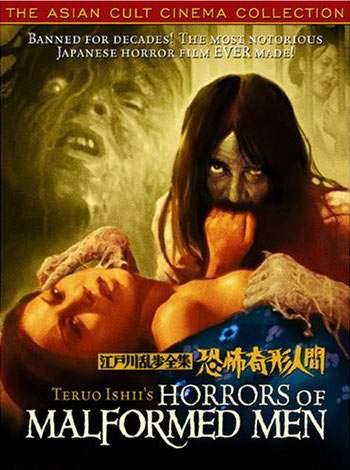
  • Teruo Ishii – Edogawa ranpo taizen: Kyofu kikei ningen AKA Horrors of Malformed Men (1969)

    1961-1970AsianCultJapanTeruo Ishii

    http://img706.imageshack.us/img706/7253/hmcover1ko8.jpg

    29f7c043f76a2bde437fd0d52a185152

    PLOT SUMMARY
    After escaping from an asylum, young medical student Hirosuke assumes the identity of a dead man in order to solve the mystery of a weird doppelganger whose picture he sees in the newspaper. Traveling to faraway Panorama Island, he discovers a mad scientist surgically remaking normal human beings into misshapen monsters…but that is only the beginning. Hirosuke soon learns the horrible truth about the island and his own family’s shameful past, and finds himself plunged into the depths of incest, murder, and madness.Read More »

  • Hiroshi Shimizu – Hachi no su no kodomotachi AKA Children of the Beehive (1948)

    Drama1941-1950AsianHiroshi ShimizuJapan

    Free Image Hosting at www.ImageShack.us

    29f7c043f76a2bde437fd0d52a185152

    The movie focuses on the plight of ten war orphans hailing from different cities across Japan. With nowhere to go, they scavenge around train stations, scratching out an existence by means of black market work for a one-legged tramp whilst avoiding being picked up by the police for vagrancy. Soon however, they find a more inspiring role model in the figure of a nameless soldier just repatriated after the war. An orphan himself, the soldier also has no home to return to, and so sets out across the country with the kids in tow in search of work before settling on the goal of leading them to the orphanage where he himself grew up.Read More »

Back to top button