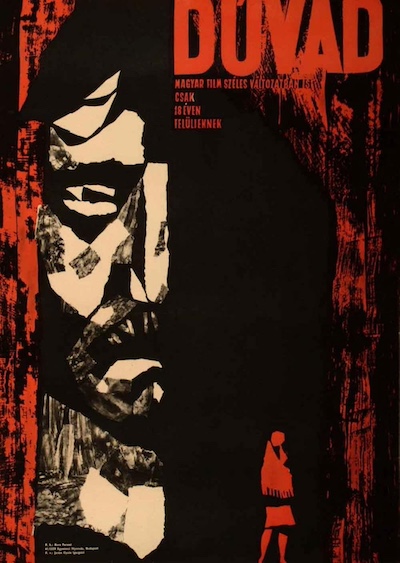
The setting is the countryside, where an independent, landowning farmer busies himself in his free time by bedding down the women on his farm and then tossing them aside. One such ill-treated lass ends up marrying a young man who is in charge of a communal farm, a farm the womanizing “beast” of the title is later forced to join. The arrogant, formerly independent farmer does not reform his ways and is soon chasing after the young manager’s wife, the woman he dropped not that long ago.Read More »
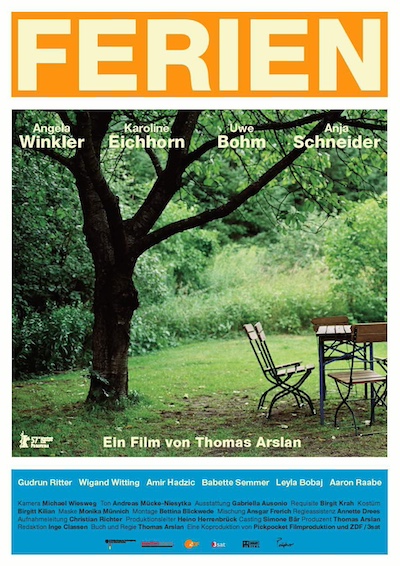
Synopsis Ferien (Vacation, 2007) was perhaps the festival’s best German feature. Thomas Arslan’s latest outlines the strained composition of a family and the disintegration of a marriage, set in a luminous Brandenburg summer. The film is confined: the story takes place almost exclusively on the grounds of the mother’s country house and the cinematic language speaks only static shots and long takes. Just at the very end of the film does one see the whole family together. Arslan’s feat reveals the shifting constellations of family members in individual conversations and encounters: the grandmother is tender and wise while alone with granddaughter Laura, cold when Laura’s sister Sophie enters, and bitchy in scenes with her daughter Anna. Read More »
After twenty-five years, Silva rides a horse across the desert to visit his friend Sheriff Jake. They celebrate the meeting, but the next morning Jake tells him that reason for his trip is not to go down the memory lane of their friendship.Read More »
A Palestinian boy becomes entranced with a beautiful Gypsy girl and a fairy tale world she weaves amidst conflict in Gaza. The children explore nature, mysticism and what their future holds, while learning to live with the surrounding brutality c. 1990. Yusef’s family scrapes by in a seaside camp while his father’s in prison and his heavily-armed brother’s on the run, parrying with Israeli troops. Salah, Yusef’s schoolmate from a well-off Arab family strives faithfully to assist them, while Yusef helps an elderly, blind neighbor escape from his lonely abandonment into the North American dreamworld he’s waited so long for.Read More »
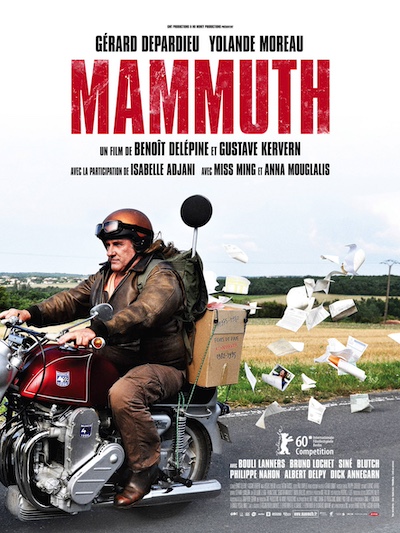
Serge Pilardosse has just turned 60 and is about to retire from his job in a slaughterhouse. He has always worked from the age of sixteen, never been on sick leave. So, how will this man fill his days? He does not like reading; doing odd jobs about the house is not his cup of tea; shopping is not his passion … To make matters worse, his wife Catherine, who still works in a supermarket, notices that her husband will not get full retirement benefits since some of his former employers failed to do the requisite paperwork. So off goes Serge, riding his old Munch “Mammut” bike, in search of the missing documents … (IMDb)Read More »
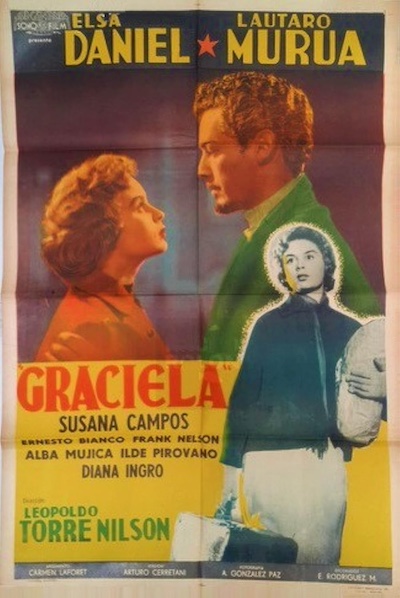
Quote: Graciela is a 1956 Argentine film directed by Leopoldo Torre Nilsson, which earned its Chilean star, Lautaro Murúa, the 1957 Silver Condor Award for Best Actor. It was Murúa’ debut film in Argentina and his first principal role, which he played opposite, Elsa Daniel.Read More »
Summary: Director Zdeněk Sirový made his most important contribution to the Czechoslovak New Wave with the film Smuteční slavnost (Funeral Ceremonies, 1969). As a result, one of his earlier achievements, the intimate psychological drama Finský nůž (The Finnish Knife, 1965), has been somewhat overlooked. The main protagonists are two young men who have become convinced that they have killed someone in a fight that they unfortunately might have provoked. Twenty-year-old Tonda (Karel Meister) and seventeen-year-old Honza (Jaromír Hanzlík) flee from justice even before their guilt for the death has been determined. They make it to Poland but the tension between them mounts and after their return home they part ways… Besides the spectacular chiaroscuro in the camera work of Jan Čuřík, this intimate film offers a convincing testimony of a period wherein young people leading externally untroubled, purposeful lives were typically beset by deep internal fears and uncertainties about their place in life.Read More »
Synopsis: A man bored with his wife goes to the Munich Oktoberfest. He meets a pregnant student who discusses the problems of bourgeois marriage with him and finally returns home disappointed. “The dialogues are peculiar, the man not very sympathetic, a feminist emphasis is occasionally perceptible that does not directly facilitate understanding. The men’s interest in women is examined, and whether this can be associated with love or merely with pastime, curiosity, frustration.” (Doris Kuhn: Die Stärke der Frauen, in: Formen der Liebe. Die Filme von Rudolf Thome, Marburg 2010)Read More »
An expatriate American doctor in London allows herself to lighten up when her freewheeling younger sister and a mysterious man enter her life. Her inhibitions released, the beautiful doctor learns that freedom has its own price.Read More »