Arthouse

  • Konstantin Lopushansky – Gadkie lebedi aka The Ugly Swans (2006)

    2001-2010ArthouseKonstantin LopushanskyRussiaSci-Fi

    29f7c043f76a2bde437fd0d52a185152

    Based on the novel of the same title by the Strugatsky brothers

    “Konstantin Lopushansky was a student of classic Soviet director Andrei Tarkovsky, and master’s influence is highly visible in “The Ugly Swans” — not just as a ghost in the background, but as full-fledged foreground presence. Which is not to deny Lopushansky his originality. More than anything, it’s a sign of a certain artistic style being handed down over the generations… The film is …aesthetically outstanding and emotionally moody in a way that’s very hard to gauge… Tarkovsky would have been proud.” (Tom Birchenough, “The Moscow Times”)
    Read More »

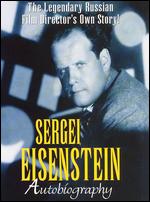
  • Oleg Kovalov – Sergei Eisenstein. Avtobiografiya AKA Sergei Eisenstein: Autobiography (1996)

    1991-2000ArthouseDocumentaryOleg KovalovRussiaSergei M. Eisenstein

    29f7c043f76a2bde437fd0d52a185152

    Quote:
    The great Russian film director Sergei Eisenstein, whose Potemkin, Alexander Nevsky, and Ivan the Terrible stand as masterpieces of world cinema, is the subject of this eccentric and puzzling production. Though based on memoirs Eisenstein wrote before his death in 1948, most of this film is barely a documentary at all, but rather a composite of images, many of which are fascinating and arresting. Eisenstein himself was known for startling and memorable images (perhaps the most famous of which is the shot of the baby carriage rolling down the steps in Potemkin), so memorializing him with clips from his own films interspersed with readings from his memoirs seems somewhat appropriate. But the voice-over in Russian (with English subtitles) is quite sparse, and at times the images onscreen, which include clips from Buster Keaton films and Hollywood musicals from the 1930s, are utterly mystifying.. –Robert J. McNamaraRead More »

  • David Hugh Jones – Betrayal (1983)

    1981-1990ArthouseDavid Hugh JonesDramaUnited Kingdom

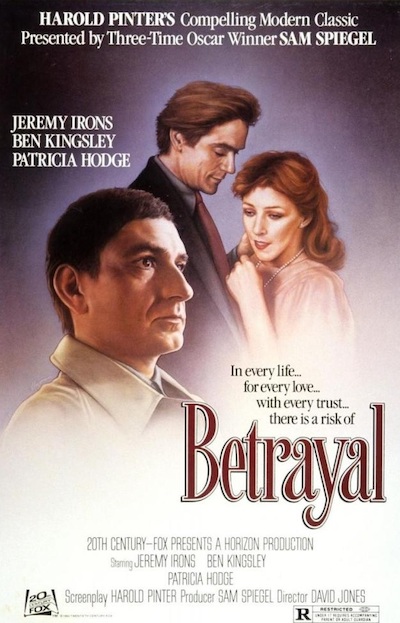
    The film version of what is widely regarded as one of Nobel Prizewinner Harold Pinter’s greatest plays. Betrayal traces a seven year affair played out in reverse – from its poignant end to its illicit first kiss. This version is from it’s first British TV screening and is upped to celebrate 50 years of Harold Pinter plays. In 1958 Harold Pinter wrote the following:
    “There are no hard distinctions between what is real and what is unreal, nor between what is true and what is false. A thing is not necessarily either true or false; it can be both true and false.” The film is little more than the stage play on celluloid and has great performances from Ben Kingsley, Patricia Hodge and Jeremy Irons. The silence after the opening credits is intentional.Read More »

  • Jean Vigo – Zéro de conduite AKA Zero for conduct (1933)

    1931-1940ArthouseDramaFranceJean VigoQueer Cinema(s)

    29f7c043f76a2bde437fd0d52a185152

    from allmovie guide.com

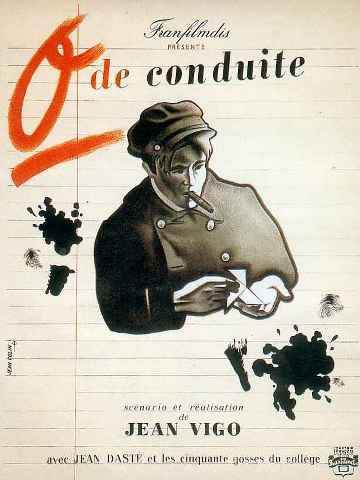
    The shortest of French filmmaker Jean Vigo’s two feature-length films, Zero for Conduct (Zero de Conduite) is also arguably his most influential. The overtly autobiographical plotline takes place at a painfully strict boys’ boarding school, presided over by such petit-bourgeous tyrants as a discipline-dispensing dwarf. The students revolt against the monotony of their daily routine by erupting into a outsized pillow fight. Their final assault occurs during a prim-and-proper school ceremony, wherein the headmasters are bombarded with fruit. Like all of Vigo’s works, Zero for Conduct was greeted with outrage by the “right” people. Thanks to pressure from civic and educational groups, this exhilaratingly anarchistic film was banned from public exhibition until 1945. Among the future filmmakers influenced by Zero for Conduct was Lindsay Anderson, who unabashedly used the Vigo film as blueprint for his own anti-establishment exercise If…. Read More »

  • Theodoros Angelopoulos – To vlemma tou Odyssea Aka Ulysses’ Gaze (1995)

    Arthouse1991-2000EpicGreeceTheodoros Angelopoulos

    Quote:
    Starring Harvey Keitel, just a year after his turn in the American masterpiece Pulp Fiction and two years after the controversial indie double whammy of Bad Lieutenant and Reservoir Dogs, Ulysses’ Gaze would win multiple awards the world over, including the Special Jury Prize at the Cannes Film Festival (the film would not take the Palme d’Or, the festival’s highest honor, prompting Angelopoulos to shockingly declare, “If this is what you have to give me, I have nothing to say.”).Read More »

  • Giorgos Lanthimos – Kinetta (2005)

    2001-2010ArthouseDramaGiorgos LanthimosGreece

    29f7c043f76a2bde437fd0d52a185152

    Synopsis

    filmfestival.gr wrote:
    Kinetta. A defunct Greek resort town, inhabited during the off-season by migrant workers. A plain-clothes cop, with a passion for automobiles, tape recorders and Russian women, investigates a series of recent murders in the area. He enlists the help of a photo-store clerk, a loner type who is a part-time videographer, and a young hotel maid, who will be performing the role of the female victims. This oddball trio engages in a succession of murder re-enactments, directed by the cop with exhaustive attention to detail but questionable scientific purpose.

    filmref.com wrote:
    “Something of a hybrid between Tsai Ming-liang’s eccentric, temp morts snapshots of human idiosyncrasy crossed with the glacially paced visual abstraction of Sharunas Bartas by way of Philippe Grandrieux’s murky, destabilized, and defocused gaze”
    Read More »

  • Theodoros Angelopoulos – Topio stin omichli aka Landscape in the Mist (1988)

    Drama1981-1990ArthouseGreeceTheodoros Angelopoulos

    Synopsis:
    The movie portrays the journey of two children in search of their father, whom they believe lives in Germany. On the way they meet many people, including a troupe of actors (a reference to Angelopoulos’ early movie The Travelling Players), and encounter dangers.Read More »

  • Federico Fellini – I vitelloni (1953)

    1951-1960ArthouseDramaFederico FelliniItalian Neo-RealismItaly

    Free Image Hosting at www.ImageShack.us

    29f7c043f76a2bde437fd0d52a185152

    Quote:
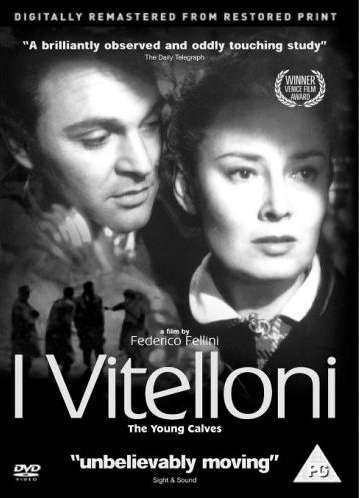
    Federico Fellini’s second feature, *I Vitelloni* (literal trans.: “fatted veal calves”; figurative trans.: “the guys”), is an honest, unpretentious work from the Master before he became besotted with his own self-indulgence.

    It’s autobiographical in several indirect ways. The depictions here of young men who are not quite so young anymore, living with their mothers, settling for dead-end jobs or simply not working, and generally languishing their lives away, are based on Fellini’s own observations of such fellows in his boyhood home of Rimini. Autobiographical too in its sense of style: the movie is inescapably stamped by the Neo-Realism of Fellini’s apprenticeship. The grimy faces of working-class people, crumbling tenements, and weed-choked rail-yards are all here. But with a difference: Fellini casts a critical eye on this scene, eschewing the usual Neo-Realist appeal to our presumed socialist sympathies. *I Vitelloni* is not a political film in the usual mid-century Italian manner. Fellini gives us a quintet of heroes who, for the most part, aspire to be bourgeois big-shots of their shabby seacoast town. Not content with that, he makes them lazy, as well . . . and then he asks us to root for them, to actually like them! Needless to say, the intelligentsia of the period didn’t warm to this film, even as the film-going public in Europe loved it, recognizing themselves and their friends and their own hometowns in it.Read More »

  • Souleymane Cissé – Yeelen AKA Brightness (1987)

    1981-1990African CinemaArthouseFantasyMaliSouleymane Cissé

    29f7c043f76a2bde437fd0d52a185152

    IMDB:
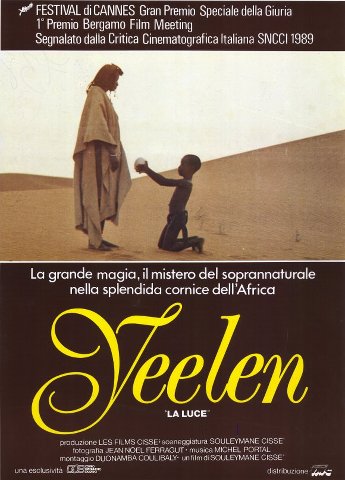
    A young man with magical powers journeys to his uncle to request help in fighting his sorcerer father.
    Read More »

Back to top button