Arthouse

  • Walter Hugo Khouri – Amor Voraz (1984)

    1981-1990ArthouseBrazilSci-FiWalter Hugo Khouri

    29f7c043f76a2bde437fd0d52a185152

    Synopsis:

    Ana is going through psychological problems. She and lifelong friend Cléia decide to revisit the place they spent their childhood together in an attempt to get better results in her treatment. But they meet a stranger who will upset their plans.Read More »

  • Abderrahmane Sissako – Heremakono aka Waiting for Happiness [+Extras] (2002)

    2001-2010Abderrahmane SissakoAfrican CinemaArthouseDramaFrance

    29f7c043f76a2bde437fd0d52a185152

    Description: Synopsis
    Waiting for Happiness depicts life in the seaside town of Nouadhibou in Mauritania. A young man, Abdallah (Mohamed Mahmoud Ould Mohamed), visits the town, where his mother lives, before emigrating. He feels disconnected from his people because he dresses in Western clothes, and he does not speak the language, but he connects in small ways during his stay. A taciturn elderly electrician, Maata (Maata Ould Mohamed Abeid), teaches an energetic boy, Khatra (Khatra Ould Abdel Kader), his trade, while a traditional singer (Nema Mint Choueikh) teaches a talented young girl hers. One would-be émigré washes up on the beach amid massive ships long ago run aground. Abdallah’s mother vainly urges him to follow traditional customs while he’s in town. Nana (Nana Diakite) tells Abdallah a sad tale about tracking down the father of her lost child in Europe. The film jumps forward in time at several points, and eventually both Khatra and Abdallah try to leave the village.Read More »

  • Shuji Terayama – Den-en ni shisu aka Pastoral : To Die in the Country aka Pastoral Hide-and-Seek (1974)

    1971-1980ArthouseAsianJapanShuji Terayama

    29f7c043f76a2bde437fd0d52a185152

    Quote:
    Terayama’s second feature recapitulates some of the main themes of Throw Away Your Books in more directly personal terms: it’s a film about a film-maker’s re-examination (and attempted revision) of his own childhood. His boyhood self is an unprepossessing lad who lives with his monstrous, widowed mother, fantasises about the desirable girl-next-door, and finds the visiting circus a touchstone for his dreams of escape. With passion, wit and a genuinely engaging charm, Terayama poses the burning question: Does murdering your mother constitute a true liberation? The autobiographical stance and the circus motif have evoked countless comparisons with Fellini, but they’re very wide of the mark: the film isn’t burdened with bombast or rhetoric, but it is rich in (authentically Japanese) poetry, and its modernist approach is challenging in the best and most accessible sense.Read More »

  • Hans Richter – Everyday (1929)

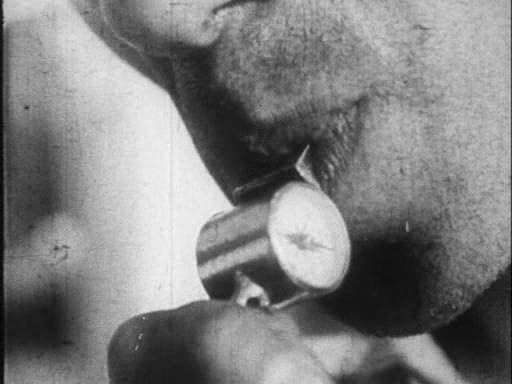
    1921-1930ArthouseGermanyHans RichterShort FilmWeimar Republic cinema

    Image Hosted by ImageShack.us

    Quote:
    Every Day was a film that German avant-garde filmmaker Hans Richter made as part of a film production course run by the Film Society. It features filmmaker Sergei Eisenstein playing a policeman, whilst Len Lye and Basil Wright provided technical assistance. These contributions reflect the sense of internationalism occurring at this time in British film circles. The film was completed in 1929 under the title The Daily Round, but was never released because Richter was unhappy with the result. Richter began to rework the film in 1975, but died before its completion. It was finally restored, with the addition of a soundtrack, after his death.Read More »

  • Pál Sándor – Szabadíts meg a gonosztól aka Deliver Us from the Devil (1979)

    1971-1980ArthouseClassicsHungaryPál Sándor

    29f7c043f76a2bde437fd0d52a185152

    A Hungarian masterpiece from Sándor Pál.

    The film’s story take place in Budapest, in 1944 in the very end of the 2nd WW. The film’s photographer, Elemér Ragályi won prize in Montreal in 1979. Montreal, 1979.

    PLOT DESCRIPTION
    In this very dark comedy, the loss of a coat from a dance hall cloakroom sets off a frantic search which results in widespread death and mayhem. It is 1944, and the loss of the coat represents the family’s loss of social standing, even during a time when everyone is suffering from the Nazi occupation. The whole family is called in to search for it, and a cross-section of the social chaos of the times is exposed during their search, which involves murders and more. ~ Clarke Fountain, All Movie GuideRead More »

  • Majid Barzegar – Fasle Baranhaye Mousemi (2010)

    2001-2010ArthouseDramaIranMajid Barzegar

    29f7c043f76a2bde437fd0d52a185152

    Sina, a sixteen years old teenager from today’s Tehranian middle class, experiences a new life on the verge of his parents’ divorce. Added to his very real sense of having been abandoned is the threat of a local thug who believes that Sina owes him a considerable sum of money. Things become even more complicated when Sina, taking advantage of his parents’ constant absence, allows an older girl, Nahid, to temporarily move in with him. Sina finds himself with the prospect of making choices that threaten his body and soul.Read More »

  • Harmony Korine – Julien Donkey-Boy (1999)

    Drama1991-2000ArthouseDogma FilmsHarmony KorineUSA

    http://upload.wikimedia.org/wikipedia/en/d/d7/Julien_donkey_boy_poster.png

    29f7c043f76a2bde437fd0d52a185152

    Quote:
    O, mio babbino caro plays as a woman skates gracefully. In contrast, little is graceful and daddy is not dear in Julien’s world. His father listens to blues wearing a gas mask; dad prods, lectures, and derides Julien as well as Julien’s brother and pregnant sister, while grandma attends to her dog. Julien is different, schizophrenic. He wears gold teeth. He bowls, sings, worships, and chats with a group of young adults with disabilities. His sister’s child is probably his own. He talks on the phone, imagining it’s his mother, who died in childbirth years before. He may be a murderer of children. From his point of view (perhaps), the film follows this odd family for a few weeks.Read More »

  • Ingmar Bergman – För att inte tala om alla dessa kvinnor aka All These Women (1964)

    Arthouse1961-1970ComedyIngmar BergmanSweden

    Quote:
    Conceived as an amusing diversion in the wake of Ingmar Bergman’s despairing trilogy, this comedy is the director’s first film in color, and it is an opulent visual feast. Working from a bawdy screenplay he cowrote with actor Erland Josephson, about a supercilious critic drawn into the dizzying orbit of a famous cellist, Bergman brings together buoyant comic turns by a number of his frequent collaborators, including Jarl Kulle, Eva Dahlbeck, Harriet Andersson, and Bibi Andersson. All These Women, in which Bergman pokes fun at the pretensions of drawing-room art, possesses a distinctly playful atmosphere and carefree cadences.Read More »

  • René Clément – Jeux interdits aka Forbidden Games [+ Extras] (1952)

    1951-1960Amos Vogel: Film as a Subversive ArtArthouseDramaFranceRené Clément

    29f7c043f76a2bde437fd0d52a185152

    Quote:
    Parisians flee into the countryside, strafed by German planes. Her parents shot, a small girl (Brigitte Fossey) wanders into the countryside, finding refuge with a peasant family. She and their youngest son (Georges Poujouly) form a liason against the adults. The French authorites hated it, but the film triumphed abroad and confirmed Clemént as a director of compassion and brilliance.Read More »

Back to top button