Set in the highest settlement in the world, La Rinconada y Cerro Lunar (5500m), in the Peruvian Andes. Moved by the same interests as in the ancient times, people live and work in the most precarious of conditions. An illusion of gold and a better life leads men to self destruction.Read More »
Synopsis: This drama takes the form of a story told using documentary material as an intrinsic part of the narrative. In this journey through the dark side of 1950s urban life, the camera follows Judith – a newly divorced woman looking for a fresh start – through the streets of Los Angeles as she encounters the strange denizens of the city, ranging from trendsetters to religious fanatics. All the tawdry and desperate faces of this world become a mirror for Judith’s personal failures and struggles to claim her new life.– IMDb.Read More »
Clavis Films wrote: A cinematographic fresco on the Philippine revolution against the Spanish colonial regime at the end of the 19th century. The film tells the story of several women, one of whom is in search of her husband kidnapped by the settlers. These damned souls roam a jungle of astonishing beauty. Like Bela Tarr, Lav Diaz is reinventing cinema here.Read More »
Quote: The life of a peaceful family changes when two drifters come in. The two men are met with hospitality. They repay it by kidnapping the family’s child.Read More »
Quote: An intersectional narrative of two families in Brooklyn and the unraveling of unspoken unhappiness that occurs when a young foreign girl spending time abroad upsets the balance on both sides.Read More »
Synopsis: Two friends take two prostitutes for a night of pleasure. But the night turns out to be frustrating for all involved, as much bitterness is revealed in their conversation and attitudes, uncovering their anguish and deeper feelings, and the emptiness of their lives.Read More »
From Amos Vogel’s Film as a Subversive Art: Possibly the most ‘aesthetic’ and ‘experimental’ of revolutionary Cuba’s films, this outstanding work utilizes high-contrast photography, over-exposure, and solarization to create the faded chiaroscuro and poetic authenticity of the period it depicts. The film deals with an 1870 uprising against the Spanish occupation troops in Cuba, in which the machete, originally used to cut sugar cane, becomes a weapon of the people’s warfare. The portrayals of decadent upper classes and heroic peasants are sharp and incisive, and distancing devices – such as characters addressing the camera – are used to induce attitudes of analysis instead of involvement. The emergence of such a strongly poetic work within the Cuban film industry testifies to the divergent aesthetic tendencies permitted expression within the revolution.Read More »
Synopsis: Siberia. Late autumn. In taiga, in the deserted village there lives an old man Ivan & his seven-year-old grandson Leshia. A pack of feral dogs devours everything alive in the neighborhood. One of these dogs is Leshia’s best friend. Sometimes their relative uncle Yuri brings food to them. Once on his way back from Ivan’s village uncle Yuri is attacked by dogs & perishes. Ivan & Leshia stay without supply. Once Leshia witnesses Ivan shooting at ‘his’ dog & runs away. The old Man finds him in a dry well, but he fails to get him out on his own. Ivan sets out through taiga in search of help. Now the dogs are hunting him… And the boy is waiting for his father…Read More »
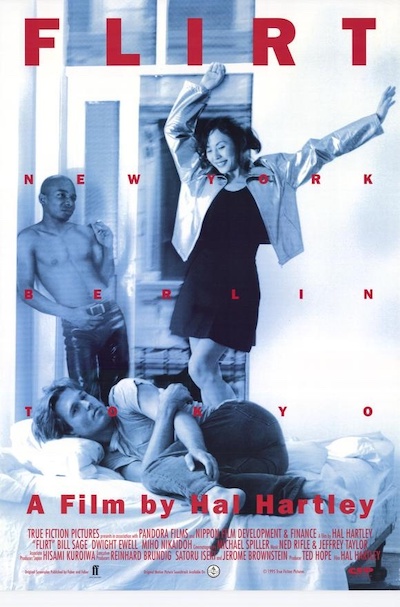
Flirt is one of Hartley’s more experimental works. It is, essentially, three variations on one short film, each set in different parts of the world (the US, Germany and Japan). Those that know and love Hartley’s work (especially his shorts) will find themselves right at home. It’s smart, funny and ultimately quite touching.Read More »