Quote: Bresson’s first film is, totally uncharacteristically, a slapstick comedy, centred around two neighbouring republics, Crogandia and Miremia, and the various disasters that befall the ceremonial unveiling of a statue, the launching of a ship, and the crash-landing of a Miremian pilot in Crogandian territory.Read More »
The Lower East Side of Manhatttan. One day. Three women. Colleen is a single mother and photographer. She spends her time in a bar on Avenue B. She wants a better life for her child. Kate is a musician. She came to the city to free herself of a secret she has been carrying her whole life. Now, all she wants is to make music. Kacey works in a restaurant. She has lost her boyfriend, her girlfriend and her dog. Most of all, she wants to find her dog. Woven into these portraits of Colleen, Kate and Kacey is a fourth portrait: that of New York City itself.Read More »
A decade in the making, Mariano Llinás’s La Flor is an unrepeatable labor of love and madness that redefines the concept of binge viewing. The director himself shows up at the start to preview the six episodes that await, each starring the same four remarkable actresses: Elisa Carricajo, Valeria Correa, Pilar Gamboa, and Laura Paredes. Overflowing with nested subplots and whiplash digressions, La Flor shape-shifts from a B-movie to a musical to a spy thriller to a category-defying metafiction—all of them without endings—to a remake of a very well-known French classic and, finally, to an enigmatic period piece that lacks a beginning (granted, all notions of beginnings and endings become fuzzy after 14 hours). An adventure in scale and duration, La Flor is a wildly entertaining exploration of the possibilities of fiction that lands somewhere close to its outer limits.Read More »
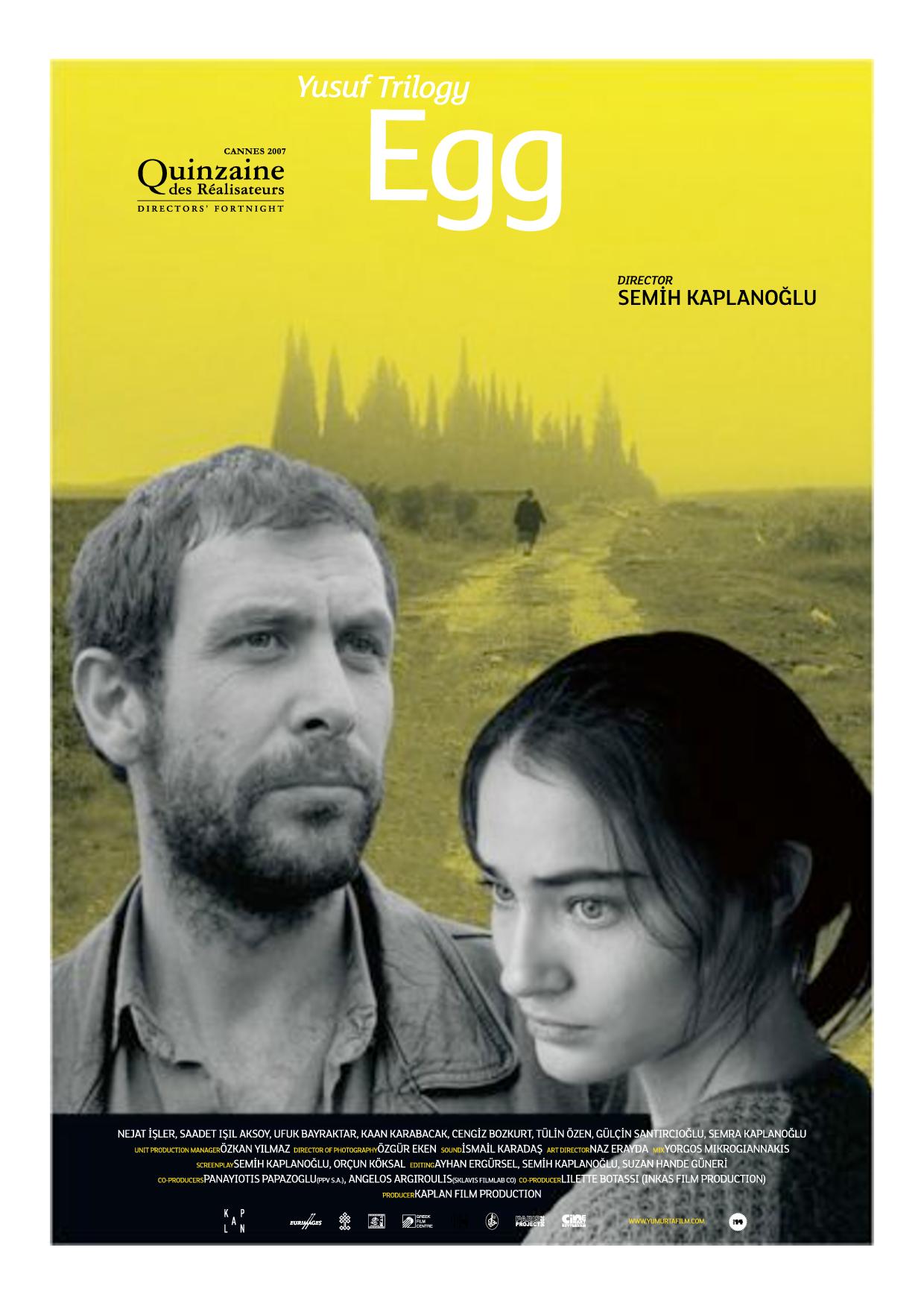
Quote: Poet Yusuf (35-38) returns to his childhood hometown, which he hadn’t visited for years, upon his mother’s death. He is faced with a neglected, crumbling house. Ayla, a young girl (17-19) awaits him there. Yusuf has been unaware of the existence of this distant relation who had been living with his mother for five years; He stays by his dead mother’s bedside for a while on the morning of his return. Ayla’s presence alleviates the emotions evoked by death to an extent. But how will Yusuf cope with the guilt that embraces him after the funeral? Will he manage to overcome it? The maternal household’s chattels, and everyday habits, the staid rhythm of the provinces and the spaces filled with ghosts&; The town he once had left to escape all this, re-enchants Yusuf. Yusuf finds out on the day he’s due to return to Istanbul that he is obliged to perform the sacrifice his mother had been prevented by death from fulfilling. Ayla pressures him.Read More »
Quote: […]The Hunters (1977), a thematic epilogue to the historical trilogy that centers on a group of middle-aged hunters who discover the perfectly preserved, 30 year-old frozen remains of a partisan (bearing an uncoincidental resemblance to the Byzantine image of Jesus Christ) and, compelled to deliberate on its ‘proper’ disposition, spend a haunted, restless evening confronting their past. Set in post-junta era Greece, the film is a contemporary allegory on the nation’s deliberate suppression of painful and unflattering history and collective deflection of personal accountability.Read More »
SUMMARY A young woman lives sadly in a small garrison town with a soldier. Little by little, won over by boredom, sadness, total inaction, she develops a relationship with plants and starts talking to plants.
Prize for the best Mannheim short film 1965. Participation in the Cracow Festival in 1965.Read More »
Desperate sexuality, desperate emotions; every gesture and inflection an act of grave import; a film of young adults, infused with a new existentialist humanism, devoid of certainty or illusion. The sharp contrast and graniness of the still indicate the film’s distance from slick commercial cinema. A major new talent. – Amos VogelRead More »
A story that mixes fantasy, philosophy and everyday reality. The problem with Antoine Martin is that he only exists one day out of two. And it is from this circumstance so personal that he meets Clémentine, a girl who lives full time. All this will only deepen his anguish.Read More »
Quote: In Hezké chvilky bez záruky (English title: Pleasant Moments), acclaimed director Věra Chytilová manages to make profound statements on the nature of humanity with such a striking concealment that most viewers won’t even notice them. It’s a continuation of her post-New Wave career; the surrealist masterpiece Daisies is often pointed to as her greatest achievement, but she continued to make equally important films under communist rule – they just had to be so subversive the censors wouldn’t even notice. One of my favorites is 1977’s Panelstory, the definitive story of life in a panelak (apartment complex) with biting political commentary so hidden that it makes it all the more worthwhile to discover. As a senatorial candidate from the political party Strana Rovnost Šancí, Chytilová no longer remains in obscurity. Unfortunately for some, her post-New Wave films still do. But for those of us willing to give them a chance, they’re still as relevant and sublime as her efforts from forty years ago.Read More »