Arthouse

  • Michelangelo Antonioni & Wim Wenders – Al di la delle nuvole AKA Beyond the Clouds (1995)

    Michelangelo Antonioni1991-2000ArthouseDramaFranceWim Wenders

    Synopsis:
    The many ways in which men are fascinated, compelled, and confused by their attraction to women are explored in this four part drama. As a filmmaker (John Malkovich) tries to sort out his plans for his next film, he considers several stories about women and the men who love them. Silvano (Kim Rossi Stuart) meets Carmen (Ines Sastre) and immediately asks her for a date, but despite his attraction, he can’t follow through on his feelings for her. The director spies a woman on the streets (Sophie Marceau) and follows her obsessively, but when he finally meets her, he’s disappointed, despite their mutual physical attraction. Read More »

  • Steven Soderbergh – Full Frontal (2002)

    USA2001-2010ArthouseComedySteven Soderbergh

    -Synopsis-
    Arty film-within-a-film revolves around seven people with little in common whose lives collide.

    A day in the life of a group of men and women in Hollywood, in the hours leading up to a friend’s birthday party.Read More »

  • Rainer Werner Fassbinder – Die Niklashauser Fart aka Niklashuasen Journey (1970)

    1961-1970ArthouseDramaGermanyRainer Werner Fassbinder

    In the 15th century, Hans Bohm, a shepherd, claimed to have been visited by the Virgin Mary. He began preaching and gathered around him thousands of disciples who believed him to be the New Messiah. He was arrested and burned at the stake by the church. Fassbinder uses this true story to reflect the sexual and political upheaval in Germany, showing how and why revolution fails.Read More »

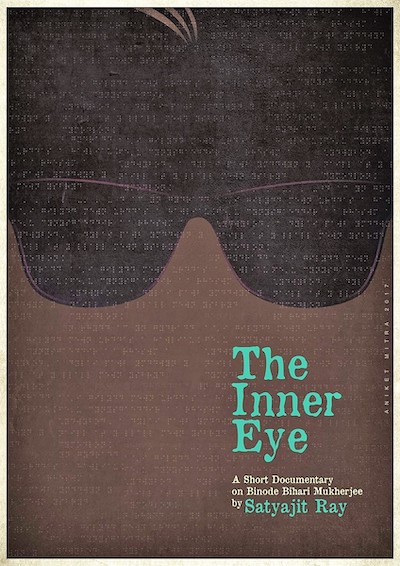
  • Satyajit Ray – The Inner Eye (1972)

    1971-1980ArthouseDocumentaryIndiaSatyajit Ray

    Synopsis
    The Inner Eye is the second of Satyajit Ray’s four great documentaries and tells you about the life and art of Binode Behari Mukherjee (1904-1980). Mukherjee was one of the most admired renaissance painters of Bengal. Trained by the great Nandalal Bose during his early years in Santiniketan (Rabindranath Tagore’s university for the liberal arts), Benode Behari painted profusely.Read More »

  • Roman Polanski – Rozbijemy zabawe… AKA Break Up The Dance… (1957)

    Roman Polanski1951-1960ArthousePolandShort Film

    Quote:
    Youths get ready for a party, decorating the dance floor, cleaning out the fountain of a pond. That evening, the party starts and guests arrive: everyone has a ticket, and a guy at the gate, wearing a formal shirt, tails, and shorts, makes sure only those with tickets gain entrance. Some are in costume, some dressed informally, some in fancy clothes: everyone is there to have a good time. A group of tough-looking guys watch through the high fence while the band plays jazzy rock and couples dance or kiss. With the party in full swing, as the band plays “When the Saints Go Marching In,” over the wall comes the gang. Is there any chance they’ll join in the festivities?Read More »

  • Yoshishige Yoshida – Kokuhakuteki Joyûron AKA Confessions Among Actresses (1971)

    1971-1980ArthouseDramaJapanYoshishige Yoshida

    Synopsis:
    The film’s narrative follows three leading actresses, all appearing in the same movie (but not appearing in the same shot until the end of the film), and all undergoing their own personal crises. It’s very formally worked out, through a series of carefully balanced dialogues with confessors, synchronized confrontation scenes, and staggered flashbacks. If Farewell was Yoshida’s self-conscious Resnais tribute, this is him in Bergman mode (Mariko Okada’s story even begins with her experience hysterical mutism, à la Persona), though the finished product is much livelier and more pungent than anything Bergman would have come up with (maybe Zetterling’s The Girls is a more apposite reference point). On another level, it’s also referencing a big old Hollywood melodrama, pastel panoramas in various shades of bitch (there are also nods to All About Eve).Read More »

  • Nina Menkes – The Great Sadness of Zohara (1983)

    Nina Menkes1981-1990ArthouseDramaIsrael

    Storyline
    A young, orthodox Jewish woman is alienated from her Jerusalem community and drawn into the world of spirit. Surrounded by dark sounds of the “Other Side,” she moves into remote and increasingly desolate regions of Arab lands. Her journey, like a mystical quest through her own inner landscapes, culminates in her return to Jerusalem. There, indelibly marked, she confronts her deeper loneliness and a devastating sense of exile.Read More »

  • Mark Rappaport – Exterior Night (1993)

    Mark Rappaport1991-2000ArthouseShort FilmUSA

    Quote:
    Despite its many connotations, black and whte is most frequently used to signify the past––especially the past ihabited by our parents and grandparents, which we can see in old movies but never experience directly. A highly intelligent commentary on this phenomenon is independent filmmaker Mark Rappaport’s EXTERIOR NIGHT, made for high-definition color TV (HDTV) which combines original color imagery with archival footage of sets or backgrounds from THE MALTESE FALCON, THE BIG SLEEP, MILDRED PIERCE, POSSESSED, DARK PASSAGE, THE FOUNTAINHEAD, YOUND MAN WITH A HORN, STRANGERS ON A TRAIN, and a score of other black-and-white movies. Using a blue-screen technique, Rappaport and HDTV cameraman Serge Roman frequently pose contemporary actors against studio nightclubs and streets from the 1940s.Read More »

  • Jean-Luc Godard & Anne-Marie Miéville – France/tour/détour/deux/enfants (1977)

    Arthouse1971-1980Anne-Marie MiévilleFranceJean-Luc GodardTV

    In this astonishing twelve-part project for and about television — the title of which refers to a 19th-century French primer Le tour de la France par deux enfants — Godard and Mieville take a detour through the everyday lives of two children in contemporary France.

    This complex, intimately scaled study of the effect of television on the French family is constructed around Godard’s interviews with a school girl and school boy, Camille and Arnaud. Godard’s provocative questions to the children range from the philosophical (Do you think you have an existence?) to the social (What does revolution mean to you?). The programs’ symmetrical structure alternates between Camille’s and Arnaud’s segments (or movements), each of which is labelled with on-screen titles: Obscur/Chimie is paired with Lumiere/Physique; Realitie/Logique with Reve/Morale; Violence/Grammaire with Desordre/Calcul.Read More »

Back to top button