Arthouse

  • Shûji Terayama – Les fruits de la passion AKA Fruits of Passion (1981)

    1981-1990ArthouseEroticaFranceShuji Terayama

    A girl loves an older man. He demands that she goes in a brothel, as evidence that she loves him.

    Shuji Terayama adapted his 1981 film, The Fruits of Passion, from the eponymous Pauline Reage’s sequel to her well regarded book, The Story of O. However, ‘adapted’ is used very loosely in this instance, as Terayama uses the opportunity to completely reshape the structure of the novel, and use only it’s themes and characters to create a story that is uniquely his. According to the credits, the text of the narration and O’s dialogue itself was taken directly from the short novel, but everything else is pure Terayama.Read More »
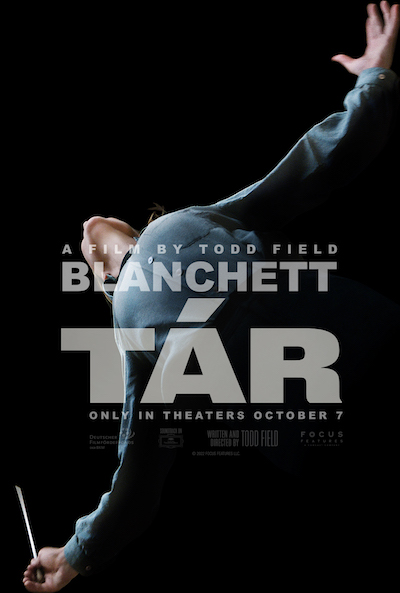
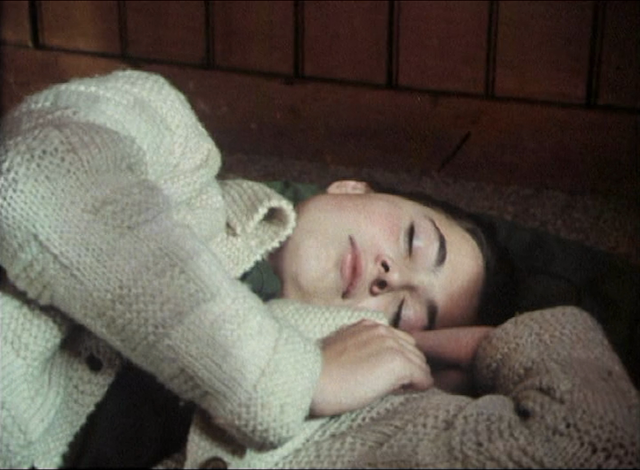
  • Todd Field – Tár (2022)

    Drama2021-2030ArthouseTodd FieldUSA

    One of the most controversial and talked-about films of last year, receiving mostly praise from critics and audiences alike, but also some dissenting voices that consider the film overrated, contrived and ethically questionable. The film has received many prizes at various festivals, especially for the titular performance by Cate Blanchett, but it was snubbed at the Oscars, winning none of its six nominations. Is it art, or should the writer-director be tarred and feathered for depicting thinly-masked real-life figures in a questionable light? See the film and decide for yourself.Read More »

  • Frans van de Staak – Lastpak AKA Nuisance (2001)

    2001-2010ArthouseDramaFrans van de StaakNetherlands

    Quote:
    A man performs infectious playlets for his surroundings.

    A court-jester without a king. The protagonist in the film is an actor (René van het Hof) who is acting his life. He is a nuisance, but only for those who have had enough of his play acting or who are ashamed to be around this clown. His wife breaks up with him because she just can’t tolerate the man any more and he seems to accept that in an apparently matter-of-fact way. He leaves the city for a cottage in the countryside. He soon has a new audience. The woman next door and her daughter are curious to make his acquaintance and are at once enthusiastic about the ingenious simplicity of the shows by this nuisance who is not yet a nuisance to them, but a welcome change in there all-too-ordinary life. Read More »

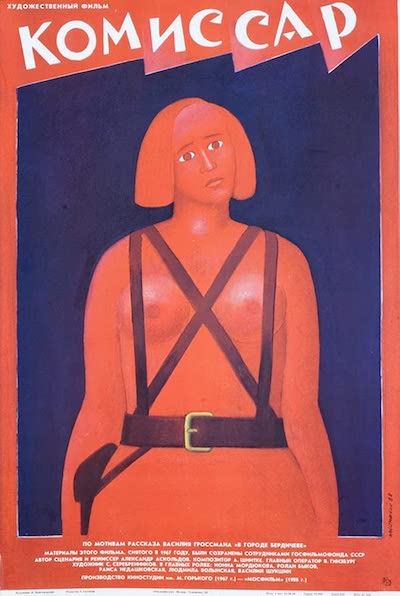
  • Aleksandr Askoldov – Komissar AKA The Commissar (1967)

    1961-1970Aleksandr AskoldovArthouseDramaUSSR

    Banned for over 20 years by the Russian authorities for its controversial stance on anti-Semitism and women’s rights, THE COMMISSAR was finally screened at the Berlin Film Festival in 1988, where it won the Silver Bear and met with international acclaim.Read More »

  • Koji Wakamatsu – Shinjuku Mad (1970)

    1961-1970ArthouseAsianJapanKoji Wakamatsu

    Synopsis
    Shinjuku Mad is about a desperate father’s search for the killer of his son. The father has rushed from the countryside to comb the seamy, filthy gutters and alleys of Tokyo. He meets some no-good, pot-smoking, guitar-playing, orgy-having hippies who knew his son but just won’t cooperate. Eventually, he discovers that “Shinjuku Mad” killed his son for the sake of some social revolution. The father tracks down the man and his group — if he can’t get a satisfactory answer as to why his son was killed, he wants to at least understand the “revolution” that claimed his son’s life.Read More »

  • Yvan Lagrange – Tristan et Iseult (1972)

    1971-1980ArthouseEpicFranceYvan Lagrange

    This magnificently photographed French film tells the ancient legend of Tristan and Isolde to the accompaniment of an operatic musical score by MAGMA. Tristan is a young warrior who has been sent to Ireland from Cornwall to bring back Isolde, the bride of his king. The two of them drink a love potion, fall in love, and, despite the wrath of their people, persist in their tragic love.Read More »

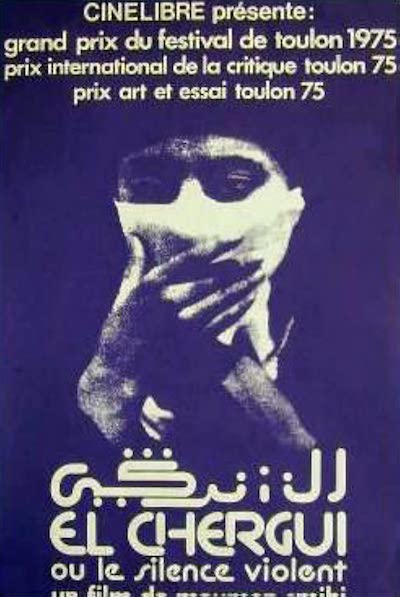
  • Moumen Smihi – El chergui AKA The East Wind (1975)

    1971-1980African CinemaArthouseDramaMoroccoMoumen Smihi

    Set in the mid-1950s when Tangier was still an international zone, El Chergui presents the city on the eve of its independence, as Aïcha resorts to magical practices to try to prevent her husband from taking a second wife. Around her, a society of women creates its own form of active resistance even as the larger independence movement grows around it. Through his unique use of montage, Smihi creates arresting images that present a society torn by the contradictions of colonialism, religion, patriarchy, and resistance.Read More »

  • Gonzalo García Pelayo – Vivir en Sevilla (1978)

    1971-1980ArthouseGonzalo García PelayoSpain

    García Pelayo’s cardinal film is an urban collage: The love story between Ana and Miguel is determined by constant movement, towards each other and away from each other. It is the story of love as a starting point and a point of escape. Driven by a fantastic mix of eagerness to experiment on the one hand, and to act as a witness of the time period on the other, García Pelayo provides a first interim report on the after-effects of the Franco period and the transition; pointing out what political change makes people do, and what it does to them. Towards the end, this culminates in a powerfully eloquent speech about the Constitution, and the very need for it. This is an exercise in democracy by people who have been under oppression for too long. Besides, VIVIR EN SEVILLA is a perfect alternative city guide for an era, an Andalusia that has ceased to exist: García Pelayo dwells on street signs and local bars, loses himself occasionally when shooting bustling plazas, and enjoys casting local celebrities (or, at least, making actresses and actors appear as such).Read More »

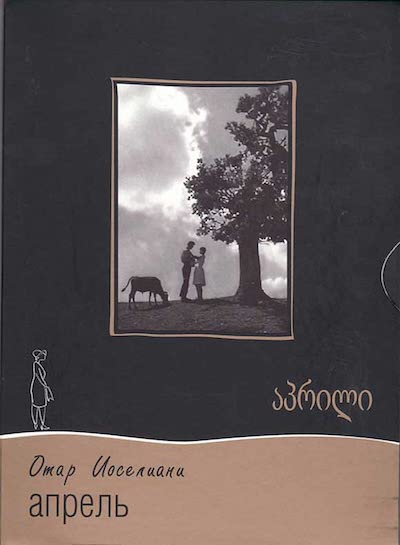
  • Otar Iosseliani – Aprili (1961)

    1961-1970ArthouseOtar IosselianiShort FilmUSSR

    Recalling the charm and humor of a Jacques Tati film, this fantasy, by noted Georgian director Otar Iosseliani, is about young love undone by consumerism. Using almost no dialogue, and set amid the dilapidated architecture of Tbilisi, the film focuses on a tall young man (Tanya Chantouria) as he woos a pretty lass (Gia Chirakadze). Though their apartment is rundown and nearly empty, their love makes the water flow, the electricity run, and the flames flicker on their stove. Yet when they start outfitting their abode with newly purchased furniture and precious odds and ends, they start to squabble. Shot in 1962, and almost immediately banned by the Soviet authorities for excessive formalism, this film made its first screening with its full 50-minute running time at the 2000 Cannes Film Festival.Read More »

Back to top button