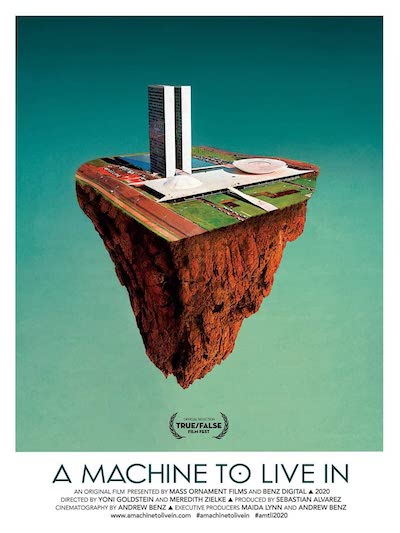

A Machine to Live In is a hybrid documentary linking the cosmic power structures of the state to the mystical architecture of cults and utopian cities in the remote hinterlands of Brazil.Read More »
A Machine to Live In is a hybrid documentary linking the cosmic power structures of the state to the mystical architecture of cults and utopian cities in the remote hinterlands of Brazil.Read More »

Carl is having trouble writing. As the film progresses, his novelistic character develops into a real person who intervenes in his life with increasing menace. The lector Roy supports Carl but is marked by a severe illness. To escape his difficulties, Carl accompanies Jon and Liza on an architectural journey. Bela and Fred remain behind with Roy and are confronted with his approaching death. For his friends, his death becomes the motive to reconstruct their life spent together.Read More »

The films of pre-eminent documentary filmmaker Heinz Emigholz present the most important architects of the 20th century not through explanation or biography, but by using the camera to reveal the structures that define their art. From Bruce Goff’s churches to Gabriele D’Annunzio’s villas to Robert Maillart’s bridges, each exploratory and contemplative film is dedicated to the work of a single architect; taken together, the series shows us some of the most beautiful buildings of our time.Read More »
I am concerned with the cinematic recreation of the immediate experience of spaces, with the most accurate possible portrait of these spaces and its details in cinema.
Heinz EmigholzRead More »
Quote:
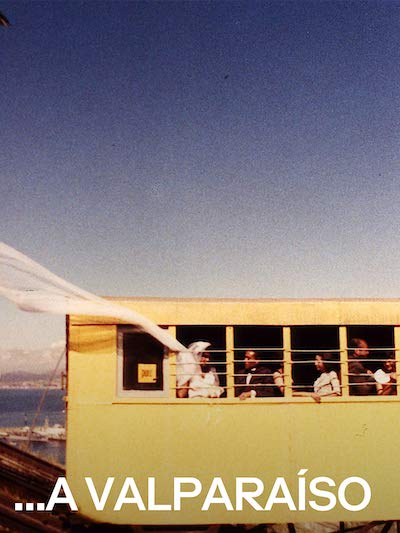
Before the Panama Canal was dug in 1911, Valparaiso was one of the main seaports on the passage around Cape Horn. Over the centuries, the city fell into the hands of different conquerors, and natural violence repeatedly destroyed it for the greater part. In cooperation with the university of Santiago de Chile, Joris Ivens made a semi-documentary about the daily life in Valparaiso, where the contrasts between poor and rich immediately strike the eye. Ivens chose realistic, but also poetical images. The abrupt shift from black-and-white to colour in the film marks the transition from the initial pessimistic part to the later, more hopeful images.Read More »

The first film Joris Ivens made when he returned from Eastern Europe is a film poem about Paris and Parisian life on the borders of the Seine river. The film follows the flow of the river through the city of Paris, making a portet of this city and its people living, strolling, sun-bathing, fishing, working, swimming, loving and laughing beside the Seine. The poem written by Jacques Prévert gives the film an extra dimension, and the music, with the recurring theme of a children song, gives it a melancholic touch.Read More »

This captivating exploration of Alver Aalto, the defining figure in Scandic design and one of Europe’s greatest modern architects, focuses on his remarkable and loving partnership with wife, Aino. Theirs was a profoundly humanist vision that put people at the centre of design, and ranged from work in furniture design through to huge architectural projects. They mixed with, and influenced, major figures of modernist art and design including Le Corbusier, Gropius, Moholy-Nagy, and Frank Lloyd Wright. Come on a cinematic tour of their iconic buildings all over the world, from a library in Russia, a student dormitory at MIT, an art collector’s private house near Paris, to a pavilion in Venice. Narrated by experts in the field and featuring never before seen archive footage, Aalto tells the love story of an extraordinary couple with a great passion for human scale architecture.Read More »

The third film in Ogawa Productions’ Narita/Sanrizuka series of documentaries about the resistance by farmers and activists to the construction of the Narita Airport.Read More »

Quote:
In the summer of 1924 Claude Friese-Greene, a pioneer of colour cinematography, set out from Cornwall with the aim of recording life on the road between Land’s End and John O’Groats. Entitled The Open Road, his remarkable travelogue was conceived as a series of shorts, 26 episodes in all, to be shown weekly at the cinema.
Claude’s experimental colour process failed to reach a large audience owing to heavy flicker and colour fringing. Following on from the BBC’s recent documentary The Lost World of Friese-Greene, the BFI National Archive has restored a special compilation of highlights from the journey, using digital intermediate technology to remove the technical defects of the original.Read More »