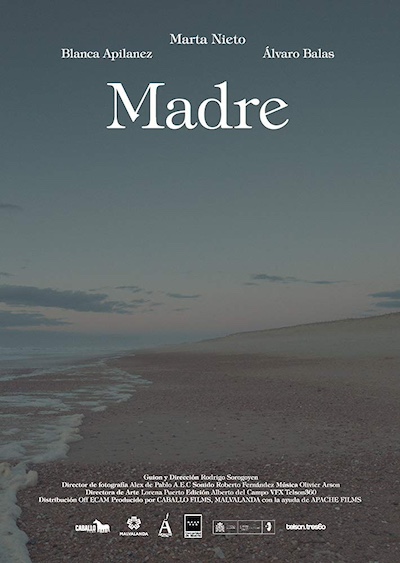

While at home in her apartment with her own mother in Spain, a woman gets a phone call from her six-year-old son, who’s on holiday in France with his father. Every parent’s nightmare ensues.Read More »
While at home in her apartment with her own mother in Spain, a woman gets a phone call from her six-year-old son, who’s on holiday in France with his father. Every parent’s nightmare ensues.Read More »

From the makers of “FantastiCozzi”, a new documentary about the life and career of controversial Italian director Ruggero Deodato.Read More »

An abandoned seaside resort. The shooting for a fantasy film about the end of an era wraps up. Two women, both members of the film crew, one an actress, the other a director, Apocalypse and Joy, are on the verge of concluding their love affair.Read More »

Likened by Buddhists to the Vatican City, Ganden is considered the most influential monastery of Tibetan Buddhism. Monks lived in the monastery for more than 500 years before a brutal invasion drove them to India. Ganden: A Joyful Land is a look at the lives and remembrances of the remaining generation of monks to have studied at the monastery in Tibet where the Dalai Lama’s lineage began.Read More »

A big family that like any other one includes relatives that see each other often and others that rarely meet, reunite to celebrate the 50th wedding anniversary of grandma Alba and grandpa Pietro in a big Villa, on the island they moved to. Because of weather conditions they all remain stranded on the island and the idyll between them seems to be over.Read More »

A young woman is unwittingly drawn into a sinister cult-like group in A Certain Kind of Silence, the debut feature of Czech writer-director Michal Hogenauer. Inspired by real events, this beautifully composed psychological thriller has some of the eerie domestic-horror feel of The Handmaid’s Tale or Rosemary’s Baby in places.
A Certain Kind of Silence opens with twenty-ish Prague native Mia (Eliska Krenkova) arriving at an upscale suburban home in a non-specific European city to begin her new job as an au pair. The house is a pristine minimalist fortress, elegantly finished in pastel watercolor shades, its chilly elegance mirrored by its impeccably groomed owners. Mia’s employers, credited simply as Mother (Monic Hendrickx) and Father (Roeland Fernhout), make it clear she is on temporary trial, her future prospects resting on how well she bonds with their 10-year-old boy, Sebastian (Jacob Jutte).Read More »

A patient expresses himself using the lyrics and titles of tango songs as a result of a post traumatic stress disorder discovered by a psychiatrist.Read More »

Synopsis
Thomas, thirty-five, has decided that he will not go outside again. He llives in a caravan in a hanger in the middle of metropolis and invites to his place his family, friends, and neighbours. He organizes parties.Read More »

Synopsis:
Bo Hee, a 14 year old boy, was raised by a single mother and has always thought his father had passed away. Bo Hee hears that his father may be alive, and he sets out in search for him with his best friend Nok Yang (Sungreen). He finds his half sister on the way and forms a friendship with her boyfriend.Read More »